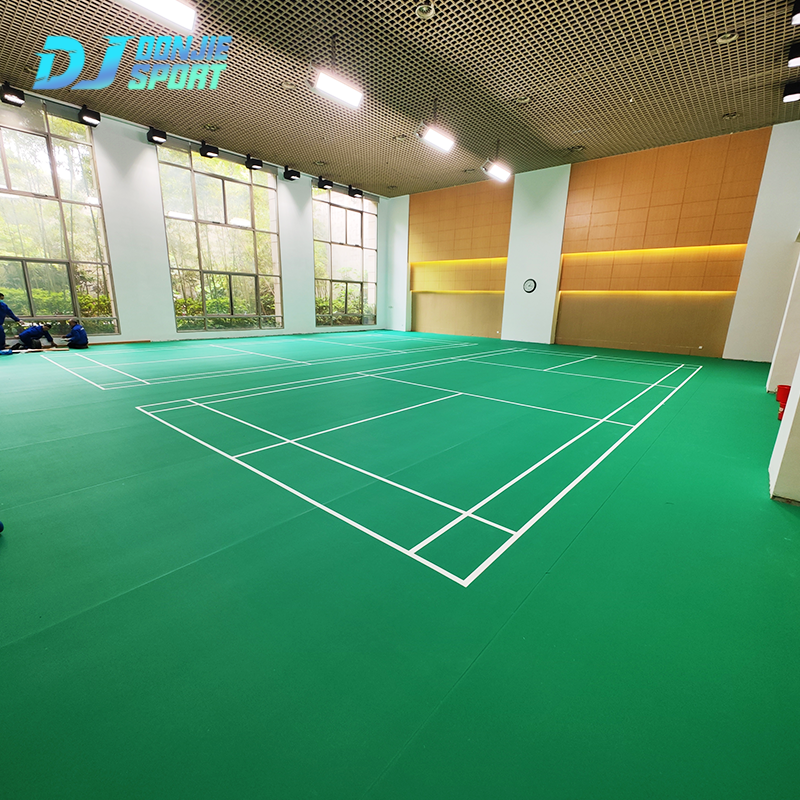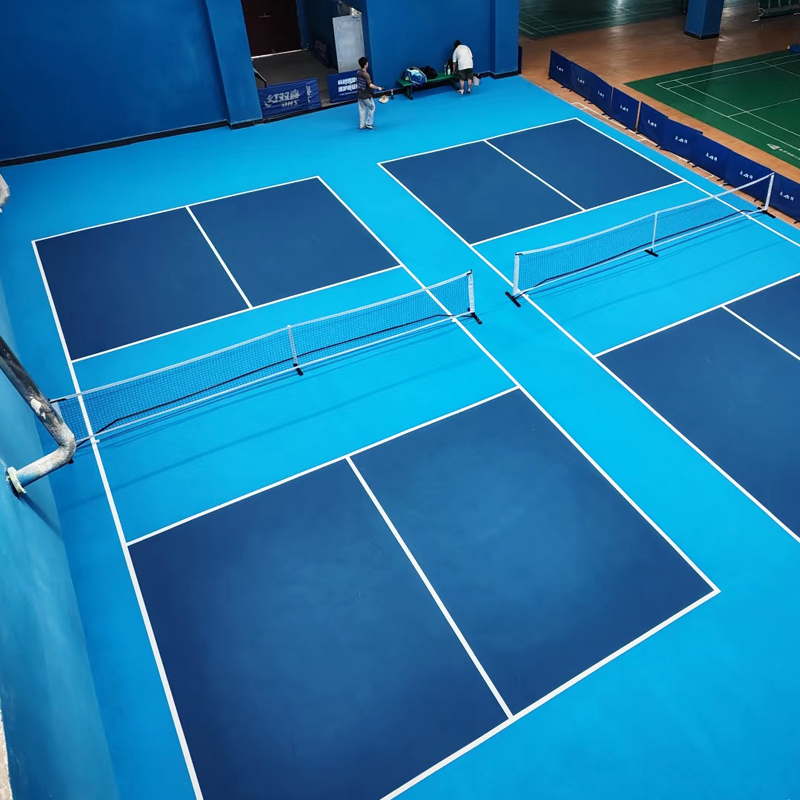
When it comes to outfitting indoor sports venues, few elements are as critical as PVC sports flooring—especially the roll-type options that dominate spaces like indoor gymnasiums, basketball courts, badminton courts, and pickleball courts. This flooring doesn’t just serve as a surface; it’s a foundational component that directly impacts safety, athlete performance, and the long-term usability of your venue.
A poor choice in PVC sports flooring can lead to far-reaching consequences: increased risk of player injuries from inadequate shock absorption, frequent repairs that disrupt venue operations, and wasted budget on replacements that could have been avoided.
For example, an indoor basketball court with low-quality roll-type PVC sports flooring might lack the bounce needed for consistent gameplay, while a badminton court with subpar slip resistance could lead to slips and falls during fast-paced rallies. Even multi-purpose indoor gymnasiums, which host a range of activities, rely on PVC sports flooring that balances adaptability with durability to handle shifting use cases. The good news is that these issues are preventable—if you steer clear of common pitfalls.

Mistake 1: Ignoring the Specific Performance Requirements of Your Sports Venue When Selecting PVC Sports Flooring
One of the biggest errors in choosing PVC sports flooring is treating it as a “one-size-fits-all” solution. Every sport and venue has unique demands, and roll-type PVC sports flooring that works for a pickleball court won’t necessarily perform well in a basketball court—or vice versa. This mismatch not only hurts athlete experience but also shortens the flooring’s lifespan, forcing you to invest in replacements sooner.
The key is to prioritize performance metrics that align with your venue’s primary use. For indoor gymnasiums that host multiple sports (from volleyball to dodgeball), roll-type PVC sports flooring needs multi-sport adaptability—meaning it should offer consistent shock absorption, ball response, and traction across different activities. It should also have strong wear resistance to handle frequent setup and breakdown of equipment.
For pickleball courts, precision is key: the PVC sports flooring must provide a consistent ball bounce to keep games fair, along with a textured, anti-slip surface to prevent players from sliding during quick lateral movements. Basketball courts, meanwhile, require high shock absorption to protect players’ knees and ankles from the impact of jumping and running, as well as a smooth surface that allows for seamless dribbling and footwork.
Mistake 2: Overlooking the Durability and Wear Resistance of Roll-Type PVC Sports Flooring
Durability and wear resistance are non-negotiable when it comes to roll-type PVC sports flooring—yet many venue owners overlook these factors in favor of lower upfront costs. The problem? Indoor sports venues see intense foot traffic, repeated impact from equipment (like basketballs or volleyball nets), and constant movement from athletes. A PVC sports flooring that lacks durability will quickly show signs of damage: scratches from shoes, tears from equipment, or fading from exposure to gym lights. Over time, these issues don’t just look unprofessional—they compromise safety and performance.
To avoid this, you need to know how to assess a roll-type PVC sports flooring’s durability before buying. Start with the wear layer thickness: the top layer of the flooring, which protects against scratches and impact. For high-traffic venues like indoor basketball courts or busy gymnasiums, look for a wear layer of at least 1.5mm—thicker layers mean better resistance to daily wear. Next, check the material density: higher-density PVC sports flooring is more resistant to dents and tears, as it can absorb impact without losing its shape. You should also verify manufacturer certifications: reputable brands will have third-party testing to prove their flooring meets durability standards for sports use, such as resistance to abrasion or heavy loads.
The consequences of skipping these checks are clear. A community center in a small town recently chose a low-cost roll-type PVC sports flooring for its pickleball courts, opting for a thin 0.8mm wear layer to save money. Within a year, the flooring had developed deep scratches from players’ shoes, and the edges near the net had started to peel—creating a tripping hazard. The center had to close the courts for two weeks to repair the damage, losing revenue from court rentals and disappointing local players.
The solution is to match the PVC sports flooring’s durability to your venue’s usage. For high-use spaces like indoor basketball courts or gymnasiums that host daily activities, invest in heavy-duty roll-type PVC sports flooring with a thick wear layer and high density. For less-frequented venues—like a pickleball court that’s only used on weekends—a standard durability option may suffice, but never skimp on the minimum wear layer thickness required for sports use. By aligning durability with usage, you’ll extend your PVC sports flooring’s lifespan and avoid costly mid-term repairs.
Mistake 3: Neglecting Installation Quality and Professional Expertise for PVC Sports Flooring
Even the highest-quality roll-type PVC sports flooring will fail if it’s installed poorly—but many venue owners underestimate the importance of professional installation. Some try to cut costs with DIY projects, while others hire unqualified contractors who lack experience with sports-specific flooring. The result? Uneven surfaces, loose seams, or improper adhesion to the subfloor—all of which turn a premium PVC sports flooring into a safety risk and performance liability.
Poor installation undermines every key benefit of roll-type PVC sports flooring. For badminton courts, an uneven surface can cause the shuttlecock to bounce unpredictably, ruining gameplay. In basketball courts, loose seams can catch players’ shoes, leading to trips and falls. Even small gaps between rolls of PVC sports flooring can trap dust and moisture, which weakens the material over time and leads to mold growth—further shortening the flooring’s lifespan.
The fix is to prioritize professional installation from contractors with expertise in roll-type PVC sports flooring. Start by vetting their experience: ask for examples of past projects, especially in venues similar to yours (like indoor gymnasiums or pickleball courts). A good installer will also conduct a thorough inspection of your subfloor before starting—ensuring it’s level, clean, and dry, as uneven subfloors are a top cause of installation failures. They should also offer post-installation inspections to check for seams, adhesion, and surface levelness, and provide a warranty for their work.
When you compare costs, professional installation is a smart investment. A venue that hires a qualified installer for its roll-type PVC sports flooring might pay 15-20% more upfront than a DIY project—but they avoid the 50-100% cost of fixing poor installation later.
Mistake 4: Failing to Consider Maintenance Needs and Long-Term Care of PVC Sports Flooring
Many venue owners assume that once roll-type PVC sports flooring is installed, it can be left alone— but this couldn’t be further from the truth. PVC sports flooring requires regular maintenance to preserve its performance, durability, and appearance. Failing to plan for these needs leads to premature wear, increased repair costs, and even safety hazards. The worst part? Many of these issues are avoidable with a simple, tailored maintenance routine.
The first step is to ditch the myth that all roll-type PVC sports flooring needs the same care. Maintenance requirements vary based on the venue’s use case. For indoor basketball courts, the PVC sports flooring is exposed to sweat, dust, and constant impact from balls. It needs regular cleaning: sweep daily to remove dust and debris (which can scratch the surface), and mop weekly with a pH-neutral cleaner to eliminate sweat and stains. Occasional waxing (every 3-6 months) will also help maintain traction, ensuring players don’t slip during games. For badminton courts, the focus is on gentle care: the anti-slip surface is delicate, so avoid harsh cleaners or scrub brushes that can wear down the texture. Instead, use a soft mop and mild cleaner to remove dirt, and wipe up spills immediately to prevent staining. Pickleball courts fall somewhere in between: sweep regularly to remove small debris (like dirt or leaves that blow in from outside), and deep clean monthly to keep the ball bounce consistent.
Mistake 5: Choosing PVC Sports Flooring Based Solely on Price, Not Value
It’s tempting to choose the cheapest roll-type PVC sports flooring option to save money upfront—but this is one of the costliest mistakes you can make. “Budget-friendly” PVC sports flooring often cuts corners on key features: thin wear layers, low shock absorption, or low-quality materials. Over time, these shortcomings lead to more expenses: frequent repairs, early replacements, or even liability costs from athlete injuries. The true value of PVC sports flooring isn’t just its upfront price—it’s the total cost of ownership (TCO), which includes installation, maintenance, and replacement costs over its lifespan.
To avoid this trap, you need to calculate the true value of a roll-type PVC sports flooring before buying. Start by comparing upfront costs to lifespan: a mid-range PVC sports flooring might cost 30% more upfront than a budget option, but if it lasts twice as long (10 years vs. 5 years), it’s actually cheaper in the long run. Next, factor in maintenance costs: budget PVC sports flooring often requires more frequent cleaning products or repairs, while high-quality options need minimal upkeep. Finally, consider the cost of downtime: a budget flooring that needs frequent repairs will force you to close your venue (like an indoor basketball court or gymnasium), losing revenue from rentals or classes.
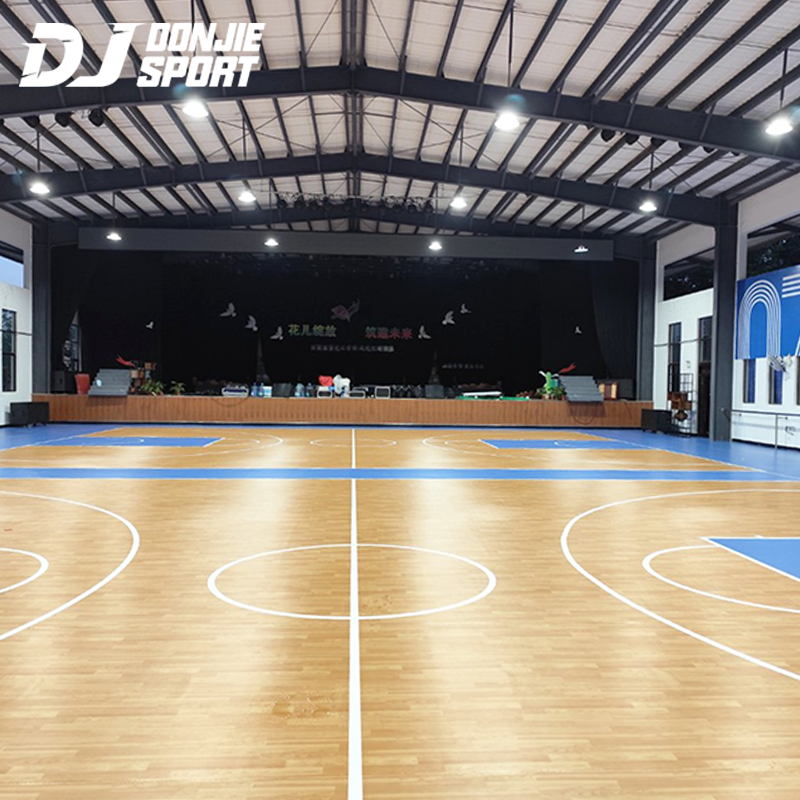
How to Correctly Select Roll-Type PVC Sports Flooring: Step-by-Step Guide
Now that you know the mistakes to avoid, let’s break down the steps to choose the right roll-type PVC sports flooring for your venue—whether it’s an indoor gymnasium, basketball court, badminton court, or pickleball court. This process ensures you prioritize performance, durability, and value, leading to a flooring choice that serves your venue for years.
Step 1: Assess your venue’s specific needs. Start by answering key questions: What sports will the venue primarily host? How much foot traffic will it see (daily, weekly, or monthly)? What safety concerns are top priorities (e.g., anti-slip for badminton, shock absorption for basketball)? For example, an indoor gymnasium that hosts daily high school sports will need more durable, multi-purpose PVC sports flooring than a pickleball court used only on weekends. This assessment narrows down your options and ensures you don’t pay for features you don’t need.
Step 2: Research and compare PVC sports flooring products. Look for reputable manufacturers that specialize in roll-type sports flooring—avoid generic brands that don’t have sports-specific testing. Compare performance metrics: wear layer thickness (1.5mm+ for high-traffic venues), shock absorption (aim for 20-30% impact reduction for basketball courts), and slip resistance (check for a coefficient of friction of at least 0.5, per industry standards). Read reviews from other venue owners: did a basketball court owner praise the flooring’s durability? Did a gymnasium manager note its multi-sport adaptability? This real-world feedback helps you avoid low-quality products.
Step 3: Vet and hire professional installers. Once you’ve chosen a flooring, find installers with expertise in roll-type PVC sports flooring—not just general flooring contractors. Ask for references from similar venues: for example, if you’re outfitting a badminton court, ask to see past badminton court installations. Verify that they conduct subfloor inspections before starting—uneven subfloors are a top cause of installation failure. Also, check their warranty: a good installer will guarantee their work for at least 1-2 years, covering issues like loose seams or uneven surfaces.
Step 4: Develop a long-term maintenance plan. Work with your installer or flooring manufacturer to create a maintenance schedule tailored to your PVC sports flooring and venue. For indoor basketball courts, this might include daily sweeping, weekly mopping with pH-neutral cleaner, and quarterly waxing. For pickleball courts, it could be daily sweeping and monthly deep cleaning. Assign staff to specific tasks and set reminders for periodic checks (e.g., inspecting seams every 6 months). Stock up on recommended cleaning products to avoid using harsh chemicals that damage the flooring.
Step 5: Evaluate total cost of ownership (TCO). Before finalizing your choice, calculate the TCO to ensure it fits your budget long-term. Add upfront costs (flooring + installation) to annual maintenance costs (cleaning products, minor repairs) and divide by the flooring’s expected lifespan. This gives you a per-year cost—making it easy to compare options. For example, a $15,000 PVC sports flooring with a 10-year lifespan and $500 annual maintenance costs $2,000 per year, while a $10,000 option with a 5-year lifespan and $1,000 annual maintenance also costs $2,000 per year. The difference? The longer-lasting option avoids downtime from replacements. Choose the option that aligns with your budget and long-term goals.
Invest in the Right PVC Sports Flooring to Avoid Costly Regrets
Choosing roll-type PVC sports flooring for your indoor venue—whether it’s a basketball court, badminton court, pickleball court, or multi-purpose gymnasium—is a decision that impacts safety, athlete experience, and your budget for years. The 5 mistakes we’ve covered—ignoring sport-specific needs, overlooking durability, neglecting professional installation, skipping maintenance, and focusing solely on price—are all avoidable with careful planning. By steering clear of these pitfalls, you’ll avoid costly repairs, premature replacements, and liability risks, turning your PVC sports flooring into a long-term investment rather than a recurring expense.
Remember: the best roll-type PVC sports flooring isn’t just the one that fits your upfront budget—it’s the one that meets your venue’s unique performance needs, stands up to daily use, and requires minimal upkeep over time. Whether you’re outfitting a new indoor gymnasium or replacing old flooring in a basketball court, take the time to assess your needs, research products, hire experts, and plan for maintenance. By doing so, you’ll create a space that athletes love, staff can maintain easily, and your budget can sustain—no costly regrets required.