
In recent years, roll-type PVC sports flooring has become a top choice for indoor sports facilities worldwide. Its versatility, adaptability, and balance of performance and cost make it ideal for spaces like basketball courts, badminton halls, and dance studios. However, investing in PVC sports flooring without proper pre-purchase checks can lead to costly mistakes—from flooring that fails to handle a sport’s specific demands to safety hazards that risk player injuries. Even minor oversights, such as ignoring subfloor compatibility, can shorten the flooring’s lifespan and force early replacements.
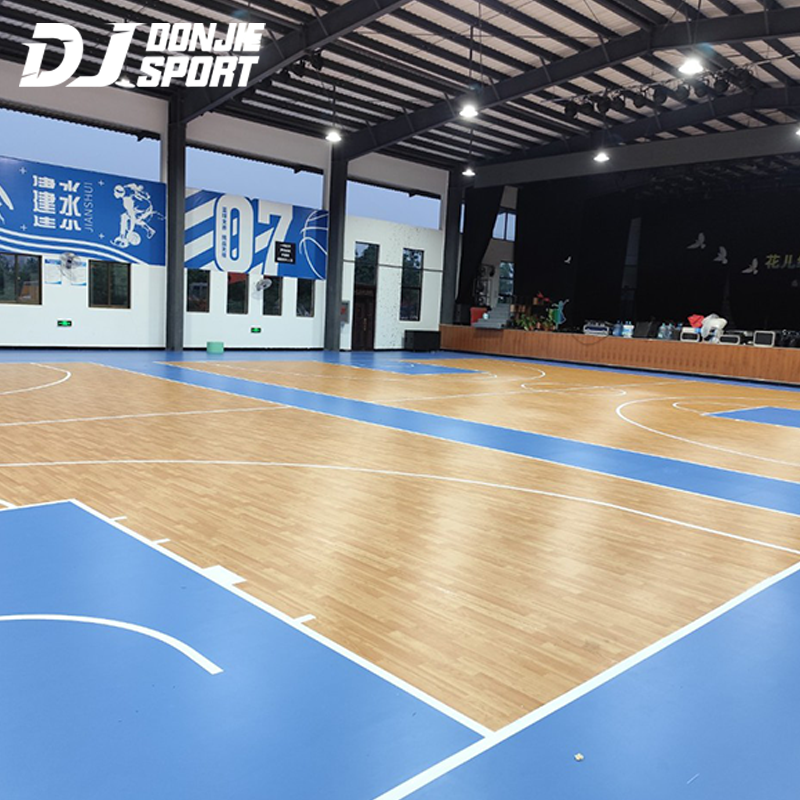
1. Understand Your Specific Sports Facility Needs to Match PVC Sports Flooring
Before browsing PVC sports flooring options, you must first map your facility’s unique requirements. Every sport and space has distinct demands, and choosing flooring that aligns with these needs is the foundation of a successful purchase.
1.1 Analyze the Primary Sport Played in the Facility
The sport your facility hosts most often dictates the core performance features your PVC sports flooring must have. For indoor basketball courts, PVC sports flooring needs strong shock absorption—ideally a rating of 20% or higher—to cushion players’ jumps and reduce joint strain, while also maintaining consistent ball bounce (typically 85% of the bounce on a concrete surface) to keep games fair. Badminton courts, on the other hand, require PVC sports flooring with exceptional slip resistance; quick lateral movements and sudden stops mean the surface must grip shoes firmly, even during intense rallies, to prevent falls. Pickleball courts need a middle ground: PVC sports flooring that balances durability (to handle frequent footwork) with mild cushioning, as the sport’s fast-paced exchanges demand both stability and comfort. Dance studios, too, have specific needs—PVC sports flooring here should offer enough flexibility to absorb impact during jumps and turns, reducing stress on dancers’ feet and ankles without feeling too soft or unstable.
1.2 Evaluate the Facility’s Foot Traffic and Usage Frequency
How often your facility is used directly impacts the durability required from your roll-type PVC sports flooring. High-traffic spaces like public indoor gymnasiums or community sports centers, which host daily games, practices, or classes, need PVC sports flooring with a thick, reinforced wear layer (usually 1.5mm or more). This layer resists scuffs, scratches, and general wear, ensuring the flooring stays functional for years. Low-to-moderate traffic facilities—such as school indoor sports halls used only for weekly physical education classes or occasional tournaments—can opt for more cost-effective PVC sports flooring, but still, prioritize basic durability to avoid premature damage. Even less-frequented spaces, like private dance studios used a few times a week, benefit from PVC sports flooring that stands up to repeated movement patterns (e.g., consistent footwork in the same area).
1.3 Consider the Facility’s Existing Structure and Installation Space
The physical layout and condition of your facility will influence how much roll-type PVC sports flooring you need and whether additional prep work is required. Start by measuring the space accurately, including irregular areas like corners or alcoves, to calculate the total square footage of PVC sports flooring needed—adding a 5-10% buffer to account for cutting waste. Next, inspect the subfloor: PVC sports flooring performs best on flat, smooth, and dry surfaces. Uneven subfloors (with gaps or bumps) can cause the flooring to warp or create tripping hazards, while excess moisture can lead to mold growth or delamination. For facilities with concrete subfloors, check for cracks and seal them if necessary; for wooden subfloors, ensure they are sturdy and free of rot. Addressing subfloor issues upfront prevents costly delays during installation and protects the performance of your PVC sports flooring.
2. Assess the Core Performance Features of Roll-Type PVC Sports Flooring
Once you’ve defined your facility’s needs, the next step is to evaluate the performance features of roll-type PVC sports flooring. These features directly impact safety, player experience, and the flooring’s longevity—making them non-negotiable checkpoints.
2.1 Shock Absorption and Impact Resistance of PVC Sports Flooring
Shock absorption refers to PVC sports flooring’s ability to absorb impact when a player jumps, runs, or falls. This feature is critical for preventing injuries, especially in high-impact sports like basketball or dance, where repeated jumps can strain knees, ankles, and hips. To check shock absorption, look for industry-standard ratings: most reputable PVC sports flooring manufacturers provide data on how much impact the surfaceabsorbs (e.g., 25% absorption means 25% of the impact force is dissipated, and 75% is returned). For indoor basketball courts, aim for PVC sports flooring with a shock absorption rating between 20-30%; dance studios may need slightly higher absorption (25-35%) to protect dancers during floor work. Avoid flooring with absorption below 15%, as it offers minimal protection and increases injury risk.
2.2 Slip Resistance to Ensure Safety on PVC Sports Flooring
Slip resistance is a non-negotiable safety feature for any PVC sports flooring, regardless of the sport. Even minor slips can lead to serious injuries, especially in fast-paced sports like badminton or pickleball, where players change direction quickly. To assess slip resistance, look for products tested to standards like EN 14411, which measures the coefficient of friction (COF) of flooring surfaces. A COF rating of 0.5 or higher is considered safe for most indoor sports facilities—higher ratings (0.6+) are ideal for spaces prone to moisture, such as dance studios where sweat may accumulate on the floor. When examining samples, run your hand over the surface: it should feel slightly textured, not overly smooth. Avoid PVC sports flooring with a glossy, slippery finish, even if it looks aesthetically pleasing—function and safety always come first.
2.3 Ball Bounce Consistency for Sports-Specific PVC Sports Flooring
For ball sports like basketball, badminton, or pickleball, consistent ball bounce is essential for fair play and a positive user experience. If PVC sports flooring has uneven bounce (e.g., the ball bounces higher in one area and lower in another), it disrupts gameplay and frustrates players. To test bounce consistency, ask suppliers for a sample of the roll-type PVC sports flooring and perform a simple test: drop a standard ball (e.g., a basketball inflated to 7.5-8.5 psi) from a height of 1.8 meters. Measure how high it rebounds—for basketball courts, the ideal rebound is 75-85% of the original height (around 1.35-1.53 meters). Repeat the test in multiple spots on the sample to ensure consistency. Reputable manufacturers will also provide third-party test data on ball bounce, so be sure to request this documentation. For non-ball sports like dance, ball bounce is less critical, but it’s still a sign of overall flooring quality.
2.4 Durability and Wear Resistance of Roll-Type PVC Sports Flooring
The durability of roll-type PVC sports flooring determines how long it will last under regular use—making it a key factor in value for money. Durability is primarily driven by the flooring’s wear layer, a top coating that resists scuffs, scratches, and fading. Look for PVC sports flooring with a wear layer thickness of at least 1mm; high-traffic facilities like public indoor stadiums should opt for 1.5mm or thicker. Another way to assess durability is through the Taber abrasion test, a standard that measures how well flooring resists wear from repeated friction. A lower weight loss in the test indicates higher durability—aim for PVC sports flooring with a Taber weight loss of less than 10mg after 10,000 cycles. Additionally, check if the flooring has a UV-resistant coating: this prevents fading if the facility has large windows or overhead lights. For facilities that host multiple sports (e.g., a school gym used for basketball, volleyball, and assemblies), durability is even more critical—invest in a heavy-duty roll-type PVC sports flooring that can handle diverse usage.
3. Verify the Quality and Compliance of PVC Sports Flooring
High performance means nothing if PVC sports flooring fails to meet safety standards or is made with harmful materials. Verifying quality and compliance ensures your flooring is safe for users and meets industry regulations.
3.1 Check for Certifications and Industry Standards Compliance
Certifications are a reliable way to confirm that roll-type PVC sports flooring meets global safety and performance standards. Look for products certified to EN 14904, the European standard specifically for sports surfaces—it covers key factors like shock absorption, slip resistance, and ball bounce. For chemical safety, check for REACH compliance (Registration, Evaluation, Authorization, and Restriction of Chemicals), which restricts the use of harmful substances like heavy metals (lead, cadmium) and certain phthalates. In North America, certifications like ASTM F2772 (for sports flooring performance) or GREENGUARD (for low volatile organic compounds/VOCs) are also reputable. Always ask suppliers to provide physical copies or digital certificates—never take their word for it. Non-certified PVC sports flooring may save money upfront, but it poses risks like toxic off-gassing or poor performance, which can lead to legal issues or health complaints.
3.2 Inspect the Material Composition for Safety and Environmental Friendliness
The materials used in PVC sports flooring directly impact user health and the environment. Traditional PVC products sometimes contain harmful additives like phthalates (used to make PVC flexible) or formaldehyde (used in adhesives), which can off-gas and reduce indoor air quality. When evaluating roll-type PVC sports flooring, ask suppliers for a material safety data sheet (MSDS) that lists all components. Look for flooring labeled “phthalate-free” or “low-VOC”—these options are safer for facilities used by children (e.g., school sports halls) or individuals with allergies or asthma. Additionally, consider eco-friendly PVC sports flooring made from recycled materials or designed for easy recycling at the end of its lifespan. While these options may cost slightly more, they reduce your facility’s environmental footprint and appeal to eco-conscious users.
3.3 Evaluate the Manufacturing Process and Brand Reputation
A brand’s reputation and manufacturing practices are strong indicators of PVC sports flooring quality. Start by researching the manufacturer: how long have they been producing roll-type PVC sports flooring? Do they specialize in sports surfaces, or is it a side product? Brands with decades of experience in sports flooring (e.g., those that supply professional gyms or sports centers) are more likely to have refined their manufacturing processes for consistency. Read customer reviews and case studies—look for feedback from facilities similar to yours (e.g., basketball courts or dance studios) to see how the PVC sports flooring performed over time. You can also inquire about the manufacturer’s quality control measures: do they test every batch of flooring for performance and safety? Avoid unknown or new brands with little to no track record—while they may offer lower prices, their PVC sports flooring may have hidden defects like uneven thickness or weak adhesion.
4. Consider Installation Requirements and Post-Purchase Support for PVC Sports Flooring
Even the best roll-type PVC sports flooring will underperform if installed incorrectly or not maintained properly. Factor in installation needs and post-purchase support to ensure a smooth experience.
4.1 Assess the Installation Complexity and Professional Requirements
Roll-type PVC sports flooring requires professional installation—this is not a DIY project. Unlike tile flooring, rolls are large (often 2-4 meters wide) and need precise alignment to avoid gaps or overlaps. Improper installation can lead to issues like bubbling, delamination, or uneven surfaces, which ruin the flooring’s performance and safety. When evaluating suppliers, ask if they offer in-house professional installation or partner with certified installers. A good installer will first inspect your subfloor, prepare it (e.g., leveling, cleaning, sealing), and then lay the PVC sports flooring with the correct adhesives and edge treatments. Also, confirm the installation timeline: most medium-sized facilities (e.g., a 1,000-square-meter basketball court) take 3-5 days to install, so plan around facility closures. Avoid suppliers who sell PVC sports flooring without offering installation support—finding a third-party installer later can lead to miscommunication and shoddy work.
4.2 Inquire About Maintenance Needs and Long-Term Care for PVC Sports Flooring
Proper maintenance extends the lifespan of roll-type PVC sports flooring and keeps it performing well. Before purchasing, ask suppliers for a detailed maintenance guide tailored to their product. Most PVC sports flooring requires simple daily care: sweeping with a soft-bristle broom to remove dust and debris, and mopping with a mild, pH-neutral cleaner (avoid harsh chemicals like bleach or ammonia, which can damage the wear layer). For high-traffic areas, you may need to buff the surface occasionally to restore its texture. Dance studios, which often have sweat or lotion on the floor, may need more frequent mopping—ask about cleaners that are safe for these specific residues. Also, inquire about replacement parts: if a small section of PVC sports flooring gets damaged (e.g., a deep scratch), can you buy a matching roll to repair it, or do you need to replace the entire floor? Knowing this upfront helps you plan for future maintenance costs.
4.3 Check Warranty Coverage and After-Sales Support
A strong warranty is a sign that the manufacturer stands behind their roll-type PVC sports flooring. Before buying, read the warranty terms carefully—pay attention to three key details: duration, coverage, and exclusions. Most high-quality PVC sports flooring comes with a 5-10 year warranty, but some premium products offer up to 15 years. Coverage should include defects in materials (e.g., delamination, uneven thickness), performance issues (e.g., loss of shock absorption), and wear (e.g., excessive scuffing). Be wary of warranties that exclude “normal wear and tear” or require strict maintenance to remain valid—make sure the maintenance requirements are realistic for your facility. Additionally, ask about after-sales support: if you notice a problem with the PVC sports flooring a few months after installation, how quickly will the supplier respond? Do they offer on-site inspections or troubleshooting? A supplier with reliable after-sales support ensures you’re not left dealing with issues alone.
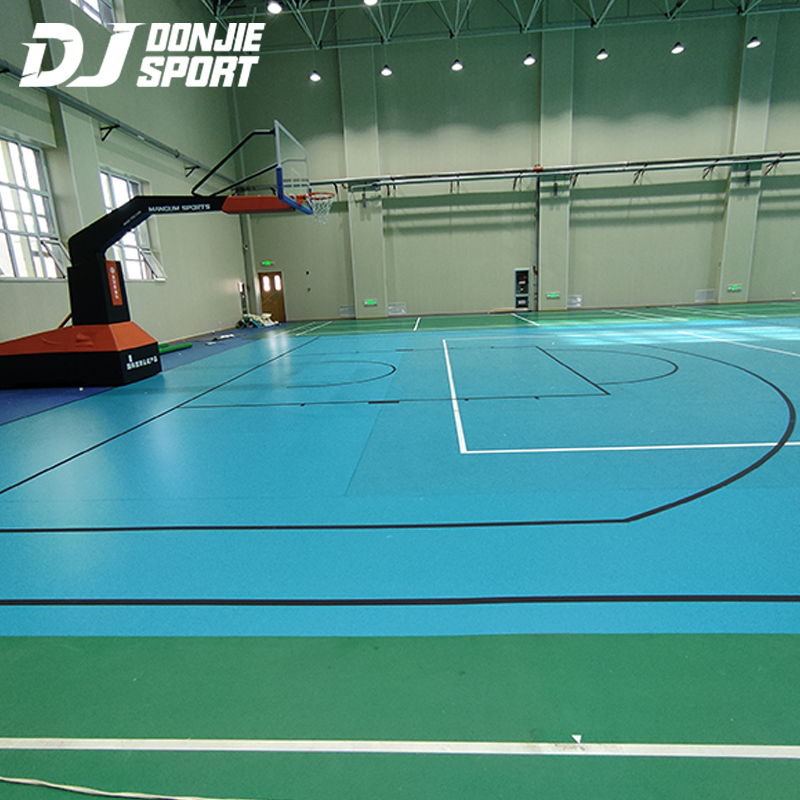
5. Compare Costs and Value for Money of Roll-Type PVC Sports Flooring
Cost is a key factor, but focusing solely on the initial price of PVC sports flooring can lead to poor value. Instead, compare total costs and value for money to make an informed decision.
5.1 Break Down the Total Cost Beyond the Initial Purchase Price
The initial cost of roll-type PVC sports flooring (usually per square meter) is just one part of the total investment. You must also account for hidden costs, including installation fees, subfloor preparation, and long-term maintenance. Installation fees typically range from $5-$15 per square meter, depending on the complexity of the job (e.g., subfloor repairs add to the cost). Subfloor preparation—such as leveling a concrete floor or replacing a damaged wooden subfloor—can cost an additional $3-$10 per square meter. Maintenance costs, while lower, add up over time: cleaning products, occasional buffing, and minor repairs may cost $100-$500 per year, depending on the facility size. For example, a 1,000-square-meter basketball court with $20-per-square-meter PVC sports flooring, $10-per-square-meter installation, and $5-per-square-meter subfloor prep would have a total upfront cost of $35,000—not just $20,000. Ignoring these hidden costs can lead to budget overruns, so factor them into your planning.
5.2 Evaluate the Cost-Performance Ratio for Your Facility
The best roll-type PVC sports flooring is not the cheapest or the most expensive—it’s the one that offers the best balance of performance and cost for your specific needs. For a high-traffic indoor stadium hosting professional basketball games, investing in premium PVC sports flooring ($25-$40 per square meter) with a 15-year warranty and top-tier shock absorption makes sense: it will last longer, require less maintenance, and meet professional standards. For a small community badminton court used a few times a week, a mid-range option ($15-$25 per square meter) with good slip resistance and a 5-10 year warranty is more cost-effective—you don’t need professional-grade performance, but you still want durability. Avoid the cheapest PVC sports flooring ($10 or less per square meter): these products often have thin wear layers, poor shock absorption, and short warranties, meaning you’ll need to replace them within 2-3 years—costing more in the long run than a mid-range option.
5.3 Negotiate with Suppliers for Added Value
Don’t be afraid to negotiate with suppliers to get more value from your roll-type PVC sports flooring purchase. If you’re buying a large quantity (e.g., for a full indoor stadium), ask for a volume discount—many suppliers offer 5-10% off for orders over 1,000 square meters. You can also request added perks, such as free installation, an extended warranty (e.g., 10 years instead of 5), or complimentary cleaning products for the first year. For facilities on a tight budget, ask about financing options or payment plans that spread the cost over several months. Additionally, compare quotes from 2-3 suppliers to leverage competition—let each supplier know you’re considering other options, and ask if they can match or beat a competitor’s price. Remember, suppliers want your business, so negotiating can help you get a better deal without sacrificing quality.
Making the Right Choice for Your PVC Sports Flooring Investment
Buying roll-type PVC sports flooring is a significant investment, and taking the time to check every critical detail ensures you get a product that is safe, durable, and tailored to your facility’s needs. From understanding your sport-specific requirements (e.g., shock absorption for basketball courts or slip resistance for dance studios) to verifying certifications, evaluating installation support, and comparing total costs, each step plays a role in avoiding costly mistakes. By focusing on value for money—not just initial price—and prioritizing safety and performance, you’ll select PVC sports flooring that enhances user experience, reduces long-term costs, and lasts for years. Whether you’re outfitting an indoor basketball court, a badminton hall, or a dance studio, the pre-purchase checks outlined in this guide will help you make a confident, informed decision.



