Choosing the right flooring for your sports facility is critical not only for aesthetic appeal but also for performance, safety, and long-term sustainability. Flooring impacts everything from the safety of athletes to the maintenance costs of a facility. With numerous options available on the market, PVC sport flooring and PP (Polypropylene) flooring are two of the most popular choices for various sports venues. Both offer unique benefits, but the question remains: which one is the best fit for your sports facility? In this post, we’ll explore the differences between PVC and PP flooring, evaluating their strengths and weaknesses, and help you decide which is the better choice for your needs.
What is PVC Sport Flooring?
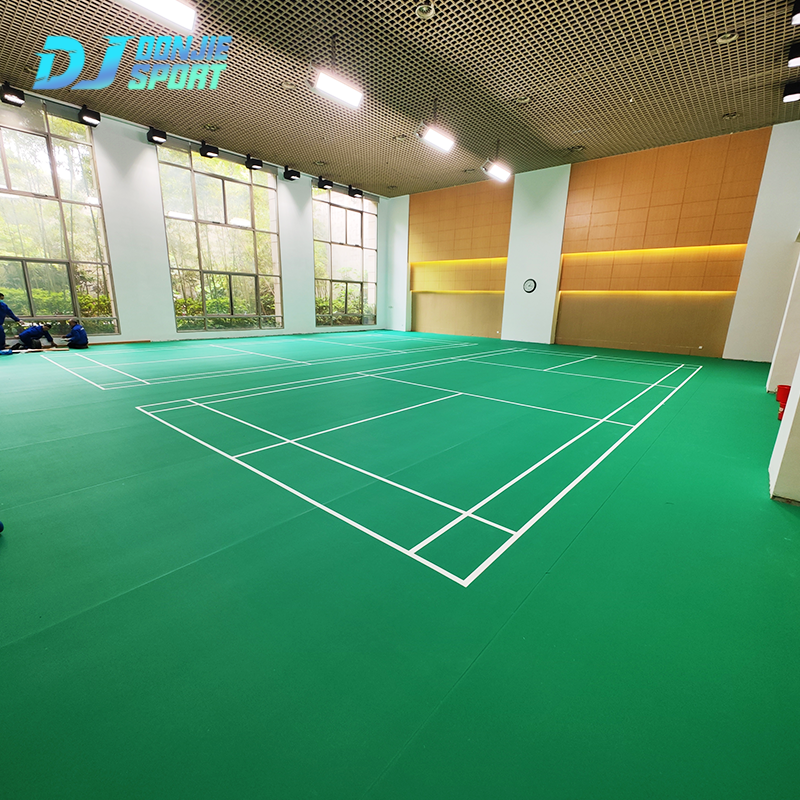
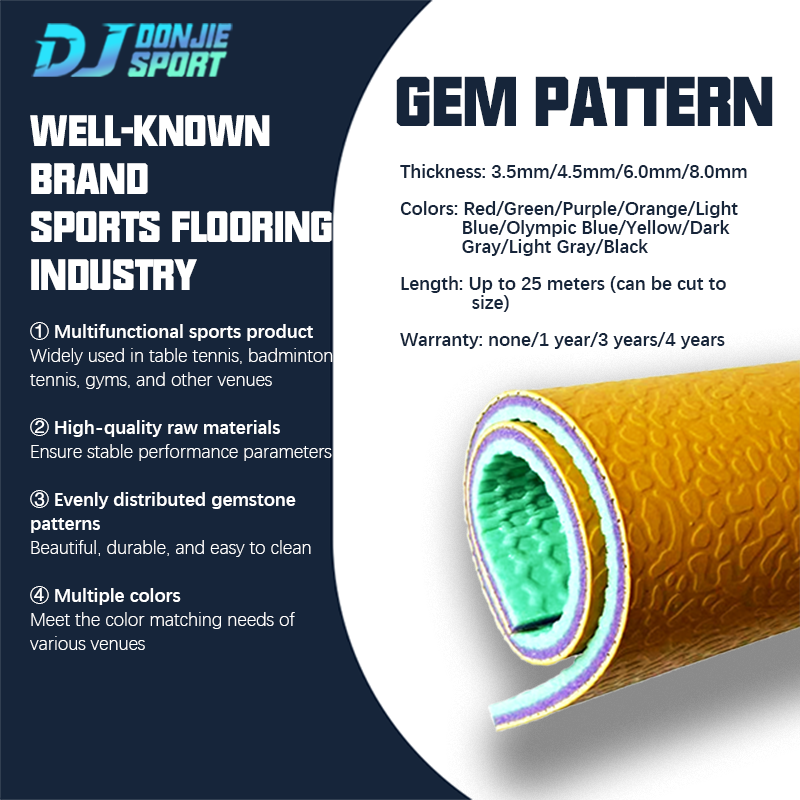
PVC flooring, or Polyvinyl Chloride flooring, is made from a synthetic plastic polymer that is commonly used in a variety of commercial and residential applications. When it comes to sports flooring, PVC offers excellent durability, a smooth finish, and high versatility, making it a popular choice for indoor sports courts.
Key Characteristics of PVC Sport Flooring:
-
Durability: PVC sport flooring is known for its strong resistance to wear and tear. It can withstand the impacts of heavy foot traffic, sports equipment, and intense gameplay.
-
Shock Absorption: PVC flooring provides a good balance of shock absorption and resilience, which helps reduce the risk of injuries caused by falls or sudden movements.
-
Ease of Maintenance: PVC flooring is relatively easy to clean, making it a practical choice for busy sports facilities. Its smooth surface helps prevent dirt and grime from accumulating, while regular mopping keeps the flooring looking new.
-
Variety of Designs: PVC flooring is available in a wide range of colors, patterns, and finishes, allowing facility owners to customize the look of their space.
PVC flooring is typically used in sports such as basketball, volleyball, indoor tennis, and even dance studios, where performance, safety, and visual appeal are equally important.
What is PP Flooring?
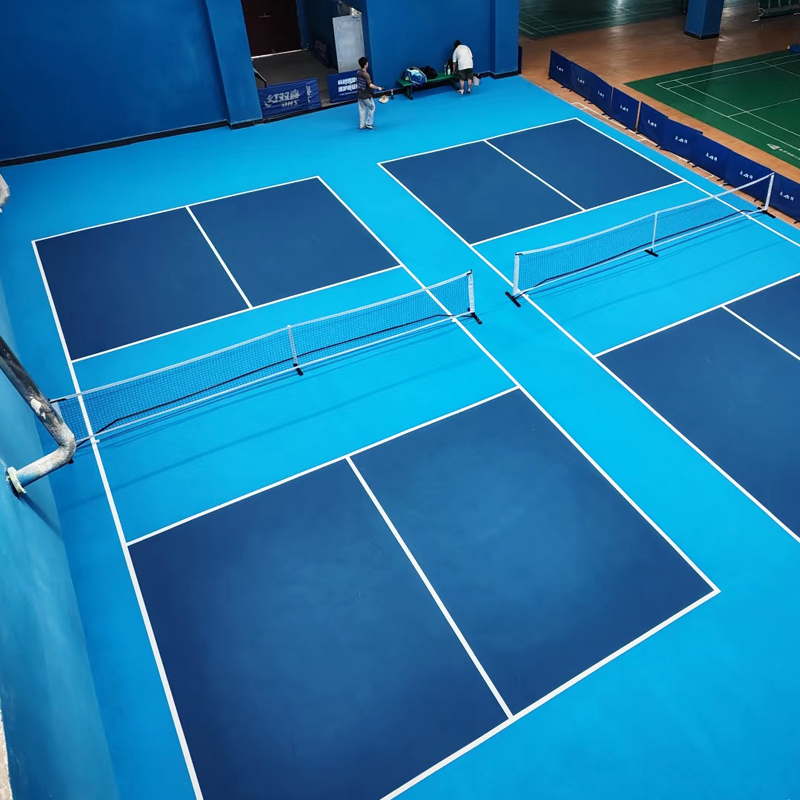
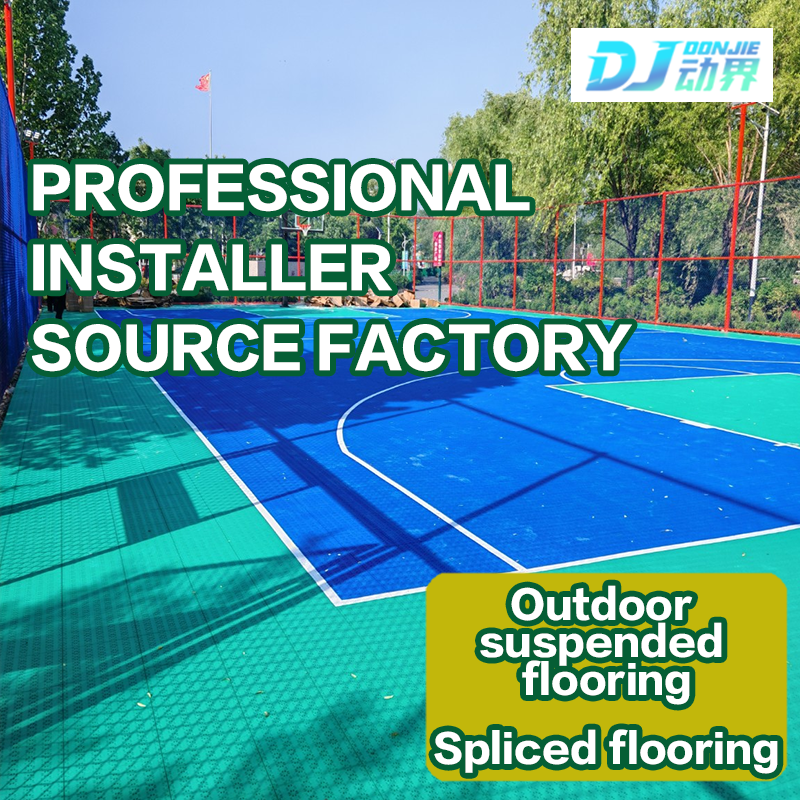
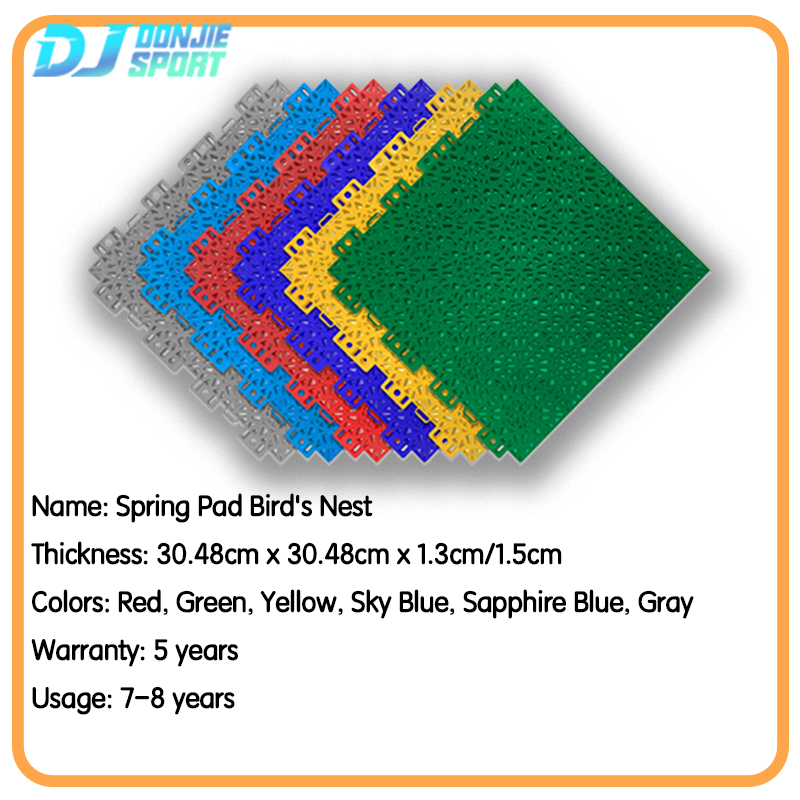
Polypropylene (PP) flooring is a thermoplastic material made from polymerized propylene monomers. It is lightweight and flexible, often used in interlocking tiles that can be installed without adhesives, which makes it an attractive option for temporary or semi-permanent installations.
Key Features of PP Sport Flooring:
-
Interlocking Design: PP flooring typically comes in modular interlocking tiles that can be easily installed and removed. This is ideal for temporary setups or facilities that may require frequent changes in layout.
-
Durability: While not as long-lasting as PVC, PP flooring still provides a durable surface that can withstand moderate wear and tear. It is resistant to chemicals, moisture, and UV damage, which makes it suitable for various environments.
-
Shock Absorption: PP flooring provides decent cushioning, although it may not offer the same level of shock absorption as PVC. It is still suitable for light to moderate athletic activities.
-
Low Maintenance: PP flooring is easy to maintain, as the individual tiles can be cleaned or replaced as needed, without having to redo the entire surface.
PP flooring is commonly used in multipurpose sports halls, gyms, and recreational areas. It’s also used for indoor sports such as pickleball, badminton, and table tennis.
Key Differences Between PVC Flooring and PP Flooring
Material Composition
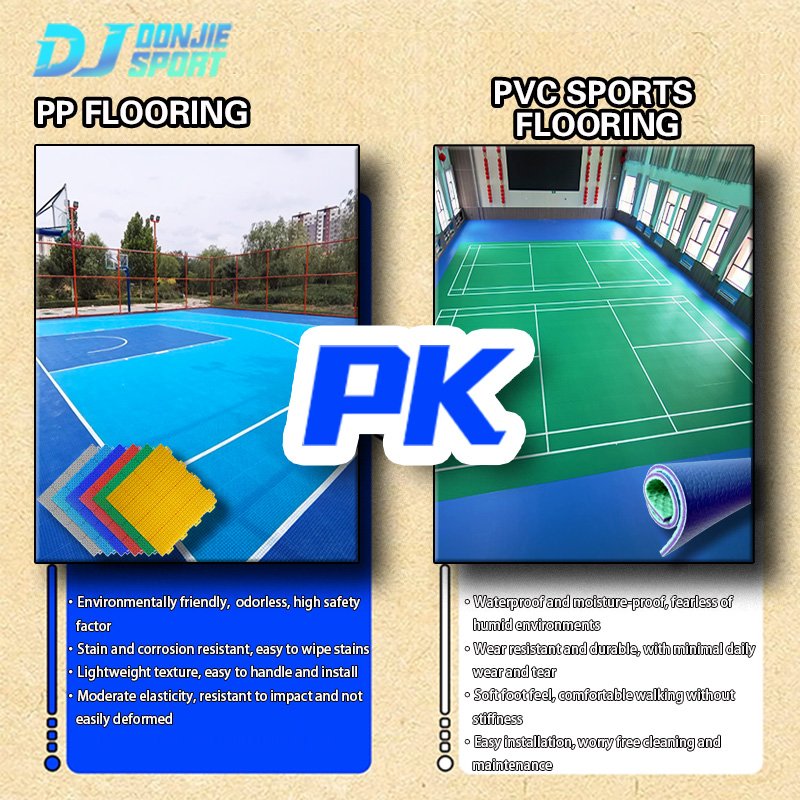
The most significant difference between PVC and PP flooring lies in their material composition. PVC is a more rigid material, designed for durability and long-lasting performance in high-traffic environments. PP, on the other hand, is more lightweight and flexible, which is why it is often used in modular tile formats.
Durability
PVC flooring outperforms PP flooring when it comes to longevity. It’s designed to resist the impacts of constant foot traffic, heavy equipment, and the repetitive movements of athletes. PP flooring, while durable, tends to show signs of wear and tear more quickly, especially in high-traffic areas.
Shock Absorption and Comfort
PVC flooring offers superior shock absorption, which is crucial for preventing injuries, especially in high-impact sports. The material’s resilience allows it to absorb the force from falls and sudden movements. While PP flooring offers some cushioning, it doesn’t provide the same level of protection, making it less ideal for sports that involve heavy jumping or quick directional changes.
Slip Resistance and Safety
Both PVC and PP flooring are designed with slip resistance in mind, though PVC generally offers better traction. Its smooth yet textured surface provides a more stable footing, which is particularly important in fast-paced sports like basketball and volleyball. PP flooring, while providing decent grip, may not be as consistent in providing the level of safety needed for high-intensity sports.
Maintenance
PVC flooring is easy to maintain and clean, but it may require periodic resurfacing or polishing to maintain its shine and integrity. PP flooring, thanks to its modular nature, is easier to replace in sections if damage occurs, but the tiles themselves may require more frequent cleaning to prevent dirt build-up.
Performance Impact: Which Flooring Supports Athlete Performance Better?
When it comes to performance, PVC sport flooring tends to have the edge due to its superior shock absorption and durability. The cushioning effect of PVC reduces the strain on joints and muscles, allowing athletes to perform at their best without worrying about potential injuries from the flooring.
PP flooring, while still functional, may not offer the same level of comfort, particularly for athletes who perform high-impact moves or require more traction during rapid movements. It’s more suitable for lighter sports or for facilities where budget constraints require a more economical option.
Cost Comparison: Which Flooring is More Cost-Effective?
In terms of initial investment, PP flooring is typically the more affordable option. Its modular design allows for easy installation and removal, making it ideal for temporary or multi-use sports facilities.
However, when considering long-term costs, PVC flooring is a more cost-effective choice. While the initial installation may be higher, PVC flooring requires fewer repairs and maintenance, ultimately saving money over the life of the facility. Additionally, PVC flooring’s durability ensures that it will last for years without the need for frequent replacements.
Environmental Considerations: Which is More Eco-Friendly?
When it comes to sustainability, PVC flooring is often criticized for its environmental impact during the manufacturing process, which involves the use of certain chemicals. However, modern advancements have made it possible to recycle PVC flooring at the end of its life cycle, reducing its environmental footprint.
PP flooring, on the other hand, is considered to be more environmentally friendly due to its simpler manufacturing process and recyclability. If sustainability is a top priority for your facility, PP flooring may be the better option.
Making the Right Choice for Your Sports Facility
Choosing between PVC and PP flooring ultimately depends on your specific needs. If you’re looking for a long-lasting, durable flooring solution that offers excellent shock absorption, performance benefits, and minimal maintenance, PVC flooring is likely the best choice for your sports facility. It excels in high-performance environments where safety and comfort are key.
If you’re working with a smaller budget or need a flexible, modular solution for a temporary sports venue, PP flooring can provide an affordable and functional option. It’s suitable for recreational centers, schools, or gyms where high-impact sports are less frequent.
Consider factors like the type of sports being played, expected foot traffic, long-term budget, and environmental priorities when making your decision. Both materials have their merits, but PVC flooring tends to offer superior performance and durability in professional athletic settings.