
Choosing the right flooring for an outdoor basketball court is crucial for both performance and longevity. Whether you’re setting up a recreational court in your backyard or designing a professional-level arena, the type of floor material you select can greatly influence the game experience. Not only does the flooring affect the ball’s bounce and player safety, but it also impacts maintenance costs and the overall aesthetic appeal of the court. In this guide, we will explore the different materials available for outdoor basketball courts, helping you make an informed decision based on your needs and budget.

Types of Outdoor Basketball Court Floor Materials
When it comes to outdoor basketball court flooring, there are several materials to choose from. Each option offers its own set of advantages and disadvantages, which are essential to understand before making a final decision.
Asphalt
Asphalt is one of the most common materials used for outdoor basketball courts. It’s widely available and relatively affordable compared to other options. Asphalt surfaces are durable and long-lasting, especially in regions with dry climates. The smoothness of the material provides a consistent bounce, making it ideal for recreational and amateur play.
Pros:
-
Durability: Asphalt is resilient and can withstand heavy use.
-
Affordability: It’s one of the most cost-effective flooring materials.
-
Ease of Repair: Cracks and damages can be patched easily.
Cons:
-
Maintenance: Asphalt surfaces require periodic sealing and crack repairs.
-
Joint Impact: The hard surface can be tough on players’ joints, increasing the risk of injury over time.
Concrete
Concrete is another popular choice for outdoor basketball court flooring, known for its robustness and stability. It’s a long-lasting material that can support a variety of weather conditions. Concrete courts are often found in public parks and school yards due to their low maintenance needs.
Pros:
-
Longevity: Concrete can last for decades with proper care.
-
Low Maintenance: Minimal upkeep compared to asphalt.
-
Stability: Concrete doesn’t warp or deform over time.
Cons:
-
Rough Surface: The rigid nature of concrete can lead to a bumpy playing surface, which may affect the ball bounce.
-
Installation Cost: The upfront installation costs are higher than asphalt.
Rubber Flooring
Rubber flooring has gained popularity in recent years due to its safety features. It’s an excellent option for players who prioritize comfort and injury prevention. Rubber provides a cushioned surface that absorbs shock, reducing the impact on joints during high-intensity play.
Pros:
-
Safety: The cushioning reduces the likelihood of injuries from falls.
-
Non-slip: Provides superior traction, even in wet conditions.
-
Sustainable: Many rubber flooring options are made from recycled materials.
Cons:
-
Weather Sensitivity: Rubber can degrade over time due to exposure to UV rays, particularly in hotter climates.
-
Cost: It can be more expensive than asphalt and concrete options.
Modular Tiles
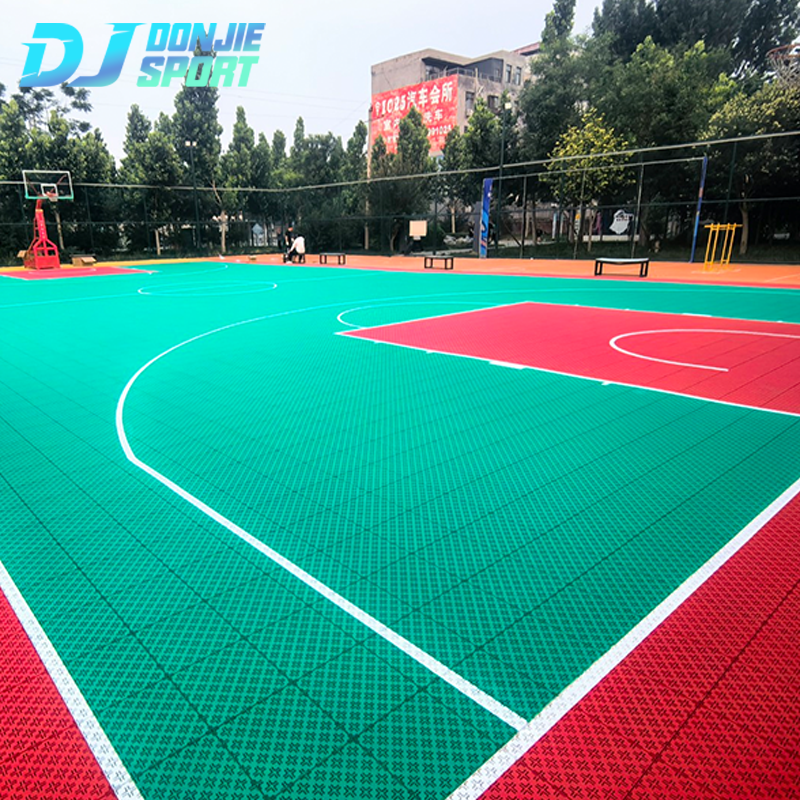
Modular interlocking tiles are a newer option for outdoor basketball courts. These tiles are made from durable, high-performance materials and snap together easily for quick installation. They come in a variety of colors and designs, making them a customizable choice for those who want an aesthetic element along with functionality.
Pros:
-
Easy Installation: The interlocking system allows for DIY installation, saving on labor costs.
-
Customizable: Available in multiple colors and patterns to suit your design preferences.
-
Weather Resistant: These tiles are designed to handle harsh outdoor conditions.
Cons:
-
Cost: The initial investment can be higher than traditional flooring.
-
Durability Issues: Over time, the tiles can experience wear, especially in high-traffic areas.
Polymer Flooring (PVC or Synthetic)
Polymer flooring, such as PVC or other synthetic materials, is designed for high-performance outdoor courts. It offers excellent shock absorption and durability, making it a popular choice for professional basketball courts and arenas.
Pros:
-
Longevity: Polymer flooring is built to last and can withstand heavy use.
-
Performance: The surface provides excellent grip and ball bounce.
-
Shock Absorption: It minimizes the impact on players’ joints, enhancing safety.
Cons:
-
Cost: The installation of polymer flooring can be quite expensive.
-
Heat Retention: These materials can absorb heat in sunny climates, making the surface uncomfortable to play on during hot weather.
Factors to Consider When Choosing a Floor Material
The decision on which material to use for your outdoor basketball court floor should take several key factors into account:
Climate
The local weather conditions will greatly affect the longevity and performance of your court floor. In regions with extreme temperatures, you need a material that can withstand both intense heat and freezing conditions. Asphalt and concrete are well-suited for areas with stable weather, while modular tiles and rubber flooring can be ideal for temperate climates.
Level of Play
The type of play that will take place on your court is crucial. For recreational or neighborhood games, affordable materials like asphalt or concrete may suffice. However, for competitive or professional-level courts, it’s worth investing in high-performance flooring options like rubber or polymer surfaces.
Maintenance Requirements
Maintenance is an ongoing consideration for outdoor basketball courts. While materials like concrete require minimal upkeep, others, such as asphalt, demand more attention to prevent cracking. Rubber and modular tiles may require cleaning and occasional repairs to maintain their appearance and functionality.
Budget Considerations
Cost is always a major factor. While higher-end materials like polymer flooring may offer superior performance, they come with a higher upfront price. Be sure to weigh the long-term value and maintenance costs against the initial investment.
Advantages of Specialized Outdoor Basketball Court Flooring
Specialized outdoor basketball court flooring materials come with numerous benefits that enhance the game experience and safety.
Enhanced Performance
Floor materials like rubber and polymer offer superior grip, improving player control during the game. These materials ensure consistent ball bounce and reduced slippage, which is especially important for professional games.
Player Safety
Safety is one of the most important aspects of outdoor basketball flooring. Surfaces like rubber or modular tiles provide cushioning that minimizes the risk of injury during falls, making them an excellent choice for youth or recreational courts.
Weather Resistance
Flooring materials designed for outdoor use need to handle varying weather conditions. Asphalt and concrete are highly durable in all weather, but modular tiles and polymer floors also offer superior resistance to UV rays, rain, and snow.
Installation Process for Outdoor Basketball Court Flooring
Installing outdoor basketball flooring requires planning and precision. Here’s a general guide:
-
Prepare the Surface: Clear the area and ensure it’s level.
-
Choose the Flooring Material: Select the best flooring based on your budget and intended use.
-
Install the Base Layer: For materials like asphalt and concrete, lay down a sturdy foundation.
-
Place the Flooring: Whether you’re laying down rubber, concrete, or modular tiles, ensure each layer is securely placed.
-
Sealing and Finishing: For asphalt and concrete, sealing the surface will prolong its life.
Professional installation is recommended for high-end materials, while modular tiles offer an easier DIY option.
How to Maintain Your Outdoor Basketball Court Floor
Keeping your outdoor basketball court in pristine condition requires regular maintenance:
-
Cleaning: Sweep or wash the surface regularly to remove dirt and debris.
-
Repairs: Patch cracks or worn areas to prevent further damage.
-
Seasonal Care: Ensure the surface is protected during extreme weather conditions, such as heavy snow or rain.
Cost Considerations: Is It Worth the Investment?
When comparing the initial costs of outdoor basketball flooring materials, consider the long-term benefits. While materials like modular tiles and polymer flooring may have a higher upfront cost, they often require less maintenance and offer superior performance, making them worthwhile investments for long-term use.
Conclusion
Choosing the right material for your outdoor basketball court flooring is essential for both performance and safety. Whether you opt for asphalt, concrete, rubber, modular tiles, or polymer flooring, each material has its own set of benefits. Carefully consider factors like climate, maintenance, budget, and the level of play before making your decision. Investing in quality flooring will ensure a durable, safe, and enjoyable basketball court for years to come.



