Choosing the right Outdoor Basketball Court Flooring is crucial for ensuring a safe, comfortable, and high-performance environment for players. The surface you choose not only impacts the game’s quality but also affects the durability of the court, maintenance requirements, and overall safety. Whether you’re designing a court for residential, commercial, or professional use, understanding the different types of surfaces available is key to making an informed decision.
In this article, we’ll explore the most common types of outdoor basketball court flooring, comparing their advantages, drawbacks, and ideal applications. By the end of this guide, you’ll have a better understanding of how to choose the best surface for your basketball court, ensuring both player satisfaction and longevity of the court itself.
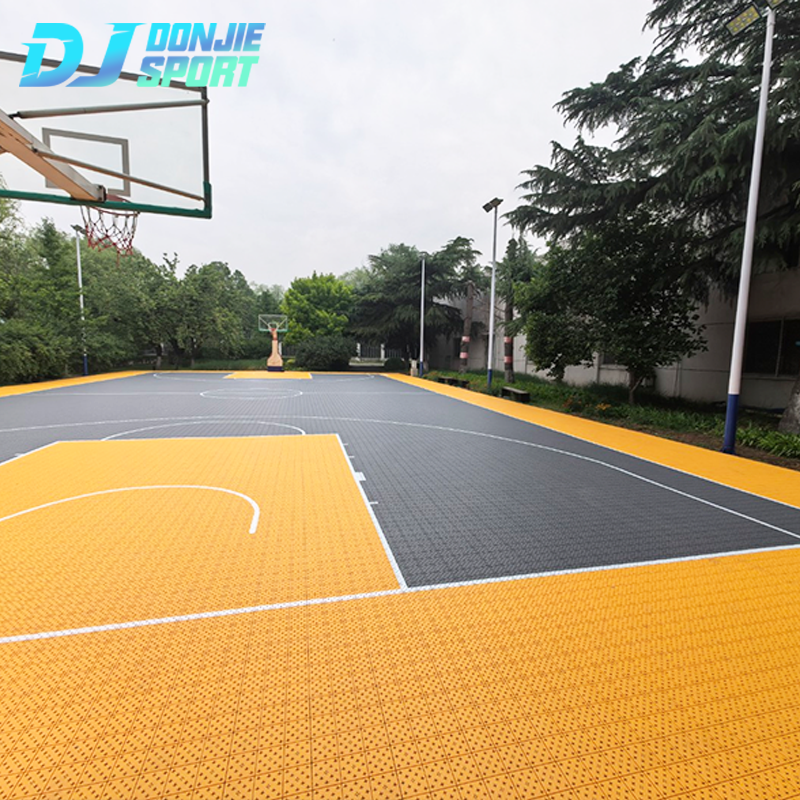
Types of Outdoor Basketball Court Flooring
When selecting the Outdoor Basketball Court Flooring, it’s essential to weigh the pros and cons of each material. Each type of surface has unique characteristics that influence the game, player comfort, and the longevity of the court. Here’s a breakdown of the most common outdoor basketball court flooring options:
Asphalt Courts: Pros and Cons
Asphalt is one of the most widely used materials for outdoor basketball courts due to its affordability and durability. It’s a reliable choice for budget-conscious projects, especially for residential and community courts.
Pros:
-
Durability: Asphalt is incredibly tough and can withstand harsh weather conditions, including heat and cold.
-
Cost-Effective: Asphalt is cheaper to install compared to some other materials, making it a popular choice for budget-conscious court designs.
-
Long Lifespan: With proper maintenance, asphalt courts can last for decades.
Cons:
-
Maintenance: While durable, asphalt can crack over time, particularly in regions with extreme temperature fluctuations. Regular seal coating is required to prevent damage.
-
Surface Texture: The rough texture of asphalt can be abrasive on players’ knees and joints, leading to discomfort during extended play sessions.
-
Limited Aesthetic Appeal: Asphalt courts tend to have a more basic, utilitarian look compared to other flooring types.
Ideal Use: Asphalt is best suited for residential courts and public recreational spaces where budget and durability are top priorities.
Concrete Courts: Strengths and Limitations
Concrete offers an incredibly sturdy and long-lasting surface, making it another popular choice for outdoor basketball courts. It provides a smooth playing surface with consistent bounce, but it’s also prone to wear over time.
Pros:
-
Long-Lasting: Concrete is highly durable, with the potential to last several decades if properly maintained.
-
Smooth Surface: The smoothness of concrete provides consistent ball bounce, which is essential for competitive play.
-
Versatility: Concrete can be molded into various designs and shapes, allowing for customized court layouts.
Cons:
-
Hard on Joints: Similar to asphalt, concrete doesn’t provide much shock absorption, which can cause joint pain and fatigue for players during long games.
-
Cracking: Concrete is prone to cracking, especially in regions with freeze-thaw cycles. Cracks can develop due to settling or heavy usage.
-
Expensive: Concrete courts are generally more expensive to install than asphalt, and repairs can be costly as well.
Ideal Use: Concrete is a good option for high-traffic courts where longevity is important, and the budget allows for higher upfront costs.
Rubber Courts: Advantages and Performance
Rubber flooring is a relatively new but increasingly popular choice for outdoor basketball courts. Known for its shock-absorbing qualities, rubber provides a more comfortable playing surface for athletes.
Pros:
-
Shock Absorption: Rubber offers excellent cushioning, reducing the strain on players’ joints and muscles, making it ideal for prolonged play.
-
Weather Resistant: Rubber courts are designed to withstand various weather conditions, including extreme temperatures and rain.
-
Low Maintenance: Unlike asphalt or concrete, rubber surfaces require minimal upkeep. They are resistant to cracking and fading.
Cons:
-
Higher Initial Cost: Rubber floors can be more expensive to install compared to traditional asphalt or concrete surfaces.
-
Durability Issues: While rubber is durable, it can become worn down over time with heavy usage, especially if exposed to intense sunlight or chemicals.
-
Limited Availability: Rubber flooring may not be as widely available as more traditional materials, depending on your location.
Ideal Use: Rubber is an excellent choice for courts that prioritize player comfort, particularly in high-use areas like gyms or public recreation centers.
Polyurethane Courts: Features and Benefits
Polyurethane flooring is a top-tier option for high-performance outdoor basketball courts. Known for its smooth, consistent surface and resilience, polyurethane is often used in professional and competitive courts.
Pros:
-
Durability: Polyurethane surfaces are highly durable, resistant to wear and tear, and can withstand heavy foot traffic and weather conditions.
-
Smooth and Consistent: This flooring provides a smooth surface that offers consistent ball bounce and excellent grip, making it ideal for competitive play.
-
UV Resistance: Polyurethane is resistant to UV rays, preventing the surface from fading or deteriorating in the sun.
Cons:
-
High Cost: The installation of polyurethane courts can be significantly more expensive compared to asphalt or concrete options.
-
Maintenance: While the material is durable, it may require occasional resurfacing to maintain its appearance and performance.
Ideal Use: Polyurethane is best for commercial or professional-grade basketball courts where performance and aesthetics are top priorities.
Synthetic Outdoor Basketball Court Flooring
While traditional materials like asphalt and concrete are still prevalent, synthetic outdoor basketball court flooring options are becoming increasingly popular due to their ease of installation and versatile properties.
Artificial Turf: Pros and Cons
Artificial turf is another synthetic option that’s becoming popular for sports courts. While it’s more commonly associated with soccer fields, turf is also used for basketball courts, especially in areas with warmer climates.
Pros:
-
Aesthetic Appeal: Turf offers a natural look and feel, making it an attractive option for courts in residential areas.
-
Durability: High-quality artificial turf is designed to withstand heavy use without showing signs of wear and tear.
-
Comfortable Play: The soft surface of turf provides better cushioning, reducing stress on joints and muscles.
Cons:
-
Maintenance: While low-maintenance compared to other surfaces, turf still requires periodic cleaning and brushing to prevent the fibers from becoming matted.
-
Heat Retention: Artificial turf can become very hot under direct sunlight, which may make it uncomfortable to play on during the summer months.
Ideal Use: Artificial turf is a great option for residential courts or in areas with warmer climates, where player comfort and aesthetics are important.
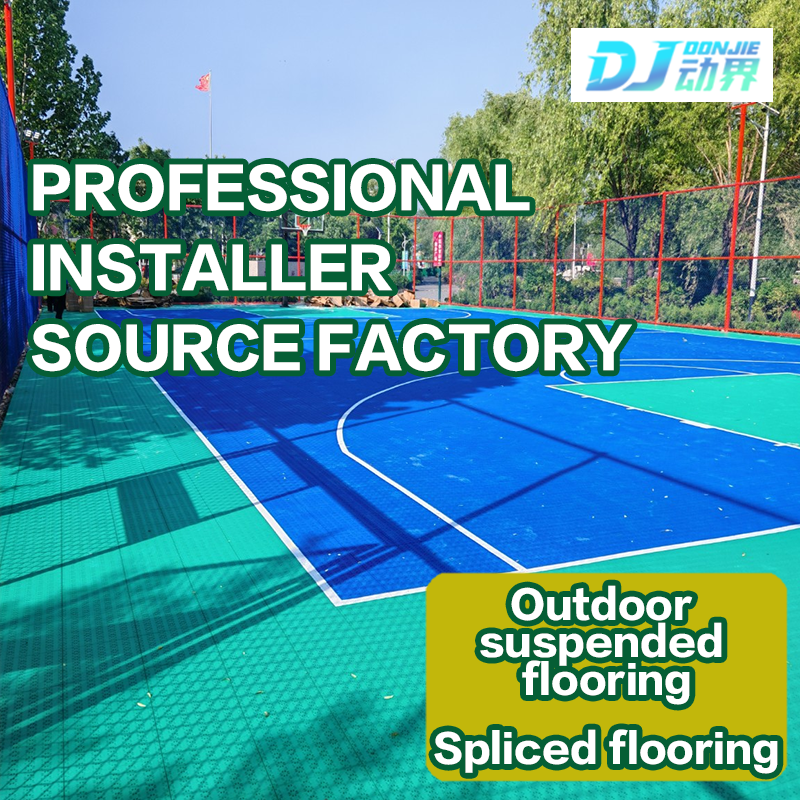
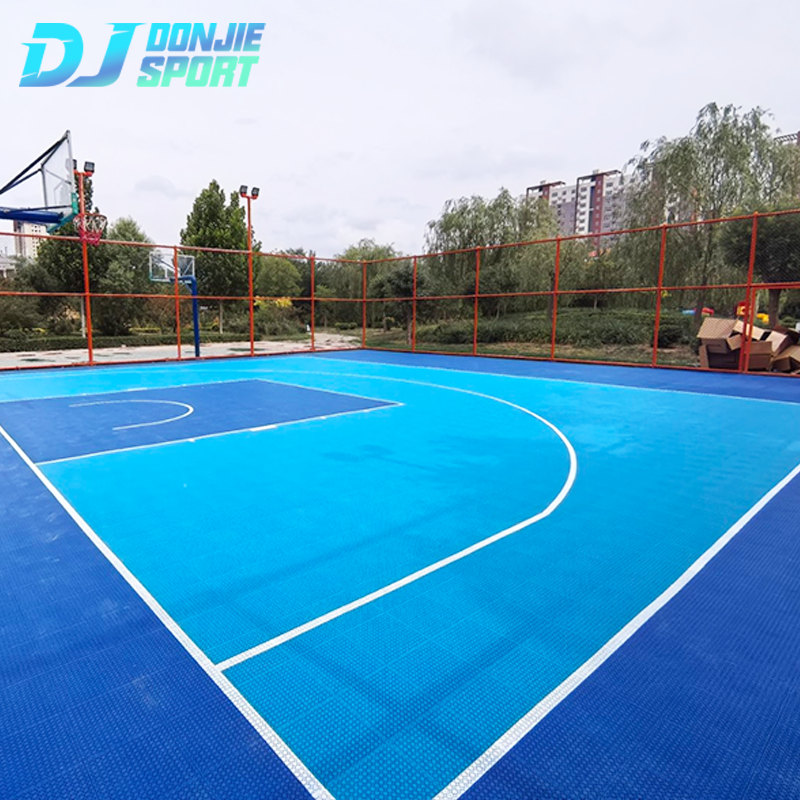
Modular Interlocking Tiles: Versatility and Convenience
Modular interlocking tiles have gained popularity due to their easy installation and ability to create a customized playing surface.
Pros:
-
Easy Installation: These tiles snap together quickly and don’t require adhesives or complicated setups, making them ideal for DIY projects.
-
Portability: Interlocking tiles are a great choice for temporary or portable courts that may need to be moved or reconfigured.
-
Weather Resistance: These tiles are designed to withstand outdoor elements, providing a durable surface for year-round play.
Cons:
-
Cost: While they’re easy to install, interlocking tiles can be more expensive than asphalt or concrete.
-
Limited Longevity: Over time, the edges of the tiles can become worn, especially with heavy usage.
Ideal Use: Interlocking tiles are ideal for temporary courts, community centers, or schools where flexibility is needed.
Comparing the Materials: Which is Best for Your Court?
Choosing the best Outdoor Basketball Court Flooring depends on several factors, including your location, budget, and the level of play you expect. Here’s a quick guide to help you decide:
-
Budget: If cost is your primary concern, asphalt and concrete are your best options. They offer durability at a reasonable price.
-
Climate: If you live in an area with extreme weather conditions, consider rubber or polyurethane for their weather resistance and long-term durability.
-
Player Comfort: For courts where comfort is a priority, rubber flooring or artificial turf provides the best cushioning and shock absorption.
-
High Performance: If you need a professional-grade court, polyurethane flooring is your best bet for its smoothness and consistency.
Maintenance and Longevity of Different Outdoor Basketball Court Surfaces
Maintaining your Outdoor Basketball Court Flooring is crucial for prolonging the life of the court and ensuring it remains safe and playable. Some materials, like rubber and synthetic tiles, require minimal upkeep, while others, like asphalt and concrete, need regular maintenance to prevent cracking and wear. Regardless of the flooring material you choose, be sure to follow a regular cleaning and maintenance routine to keep the court in optimal condition.
Conclusion
Choosing the right Outdoor Basketball Court Flooring is a decision that requires careful consideration of several factors, including performance, comfort, durability, and cost. Each flooring material has its advantages and disadvantages, so understanding the specific needs of your court is key. By selecting the right surface, you can enhance the player experience, reduce maintenance costs, and ensure the longevity of your basketball court for years to come.