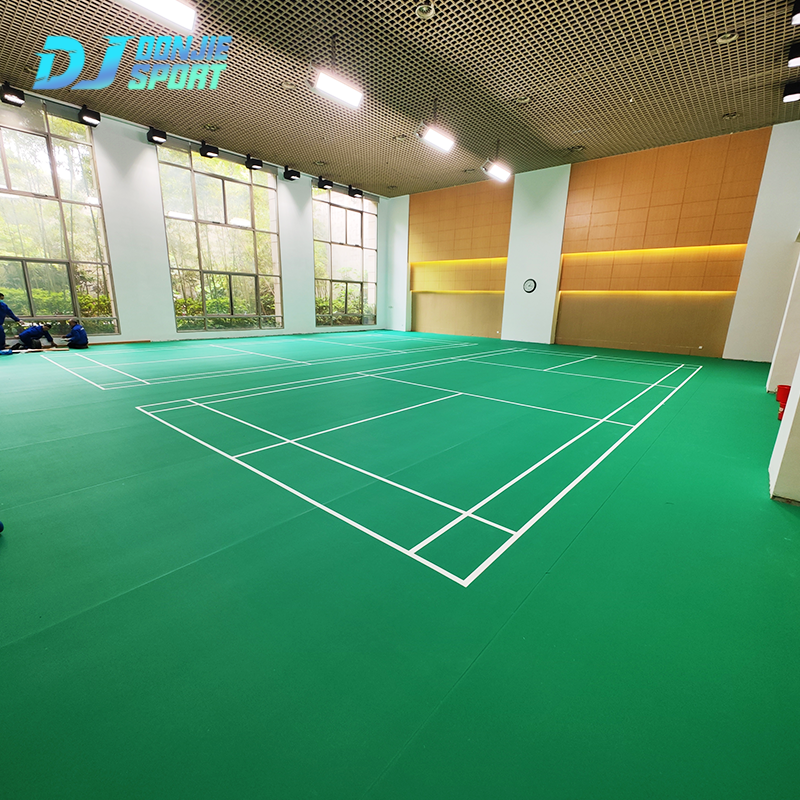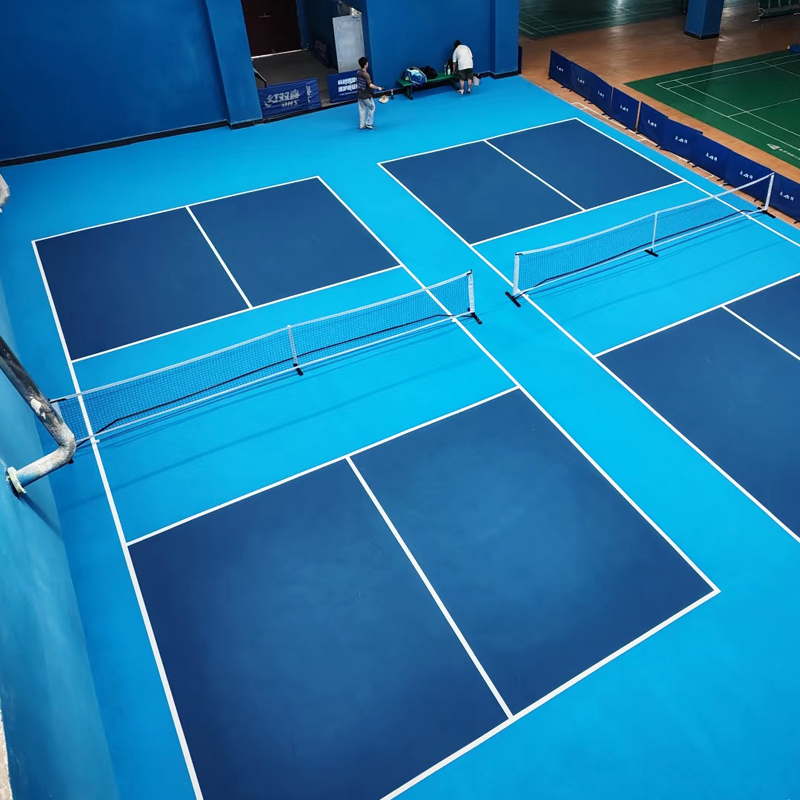
Installing Badminton Court Flooring correctly is one of the most critical steps in creating a safe, high-performing, and long-lasting badminton facility. Even premium flooring materials can fail prematurely if installation standards are not followed. By understanding proven installation techniques and preparation methods, facility owners and sports managers can significantly extend the lifespan of their Badminton Court Flooring while maintaining consistent playing performance.
Understanding Why Proper Badminton Court Flooring Installation Matters
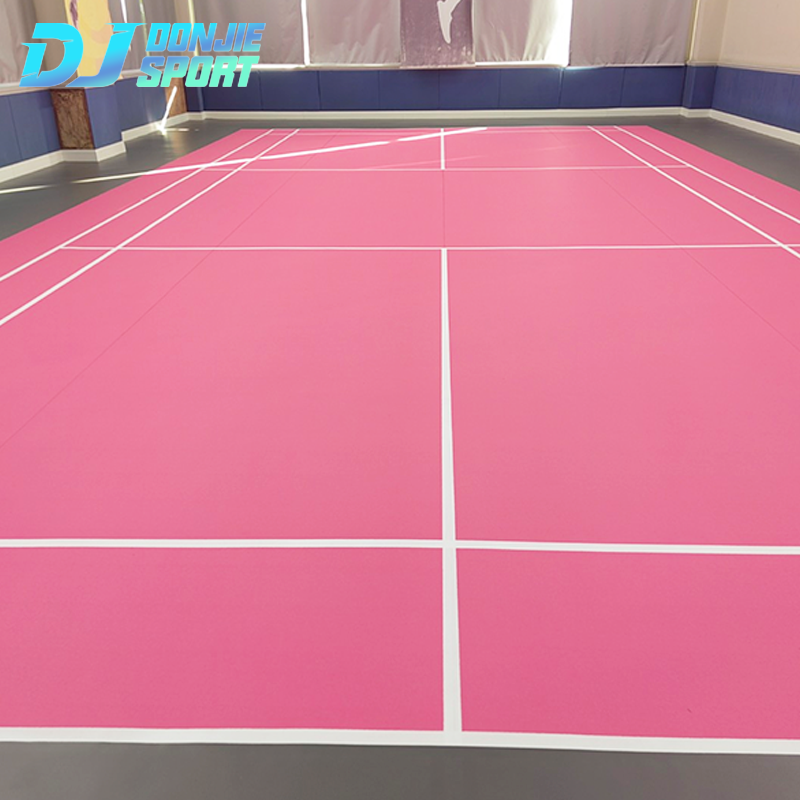
Badminton Court Flooring is subjected to constant foot traffic, rapid directional changes, and repetitive impact forces. Proper installation ensures that these stresses are evenly distributed across the surface, reducing localized wear and structural fatigue. Poor installation often leads to issues such as surface bubbling, seam separation, and loss of shock absorption, all of which compromise player safety and flooring durability.
Choosing the Right Badminton Court Flooring Before Installation
Selecting the appropriate Badminton Court Flooring material is the foundation of long-term durability. High-traffic training centers may require thicker PVC or synthetic flooring with reinforced wear layers, while recreational halls may prioritize ease of maintenance. Indoor Badminton Court Flooring should emphasize shock absorption and grip, whereas outdoor applications require UV resistance and moisture stability.
Preparing the Subfloor for Badminton Court Flooring Installation
A stable and level subfloor is essential for any Badminton Court Flooring system. Concrete subfloors must be smooth, crack-free, and fully cured before installation. Moisture testing is critical, as excessive moisture can weaken adhesives and cause long-term delamination. Wooden subfloors should be structurally sound and securely fastened to prevent movement beneath the Badminton Court Flooring surface.
Environmental Conditions Required for Badminton Court Flooring Installation
Temperature and humidity play a significant role in Badminton Court Flooring installation success. Flooring materials should be acclimatized to the installation environment for at least 24 to 48 hours. Ideal conditions help prevent expansion or contraction after installation, which can otherwise lead to curling edges or seam stress over time.
Installation Methods That Enhance Badminton Court Flooring Durability
Different installation methods offer varying durability benefits. Glue-down installation is often preferred for professional Badminton Court Flooring because it provides superior stability and minimizes surface movement. Loose-lay systems allow for easier replacement and are suitable for multi-use halls. Interlocking Badminton Court Flooring systems combine flexibility with structural consistency, making them popular for modular installations.
Precision Marking and Alignment of Badminton Court Flooring
Accurate layout and alignment are essential for both performance and aesthetics. Properly measured court markings ensure fair play and reduce uneven wear in high-impact zones. Expansion gaps around the perimeter allow the Badminton Court Flooring to respond naturally to environmental changes without buckling or lifting.
Adhesives and Accessories for Long-Lasting Badminton Court Flooring
Using manufacturer-approved adhesives is crucial for maintaining Badminton Court Flooring integrity. Incompatible adhesives can cause chemical reactions that weaken backing layers or reduce bonding strength. Edge trims and seam tapes should be selected carefully to protect high-stress areas and prevent moisture infiltration.
Post-Installation Inspection of Badminton Court Flooring
A thorough inspection after installation helps identify minor issues before they develop into costly repairs. Testing surface friction, impact absorption, and seam strength ensures the Badminton Court Flooring meets performance expectations. Verifying court line accuracy also supports consistent play and professional presentation.
Maintenance Practices That Protect Badminton Court Flooring After Installation
Proper maintenance reinforces the benefits of quality installation. Regular cleaning removes abrasive debris that can damage the wear layer. Scheduled inspections help detect early signs of wear, while prompt repairs prevent localized damage from spreading across the Badminton Court Flooring surface.
Common Badminton Court Flooring Installation Mistakes to Avoid
Skipping moisture testing, rushing the acclimatization process, or applying incorrect adhesive quantities are common mistakes that reduce Badminton Court Flooring lifespan. Ignoring manufacturer installation guidelines often voids warranties and leads to premature failure.
Professional vs DIY Badminton Court Flooring Installation
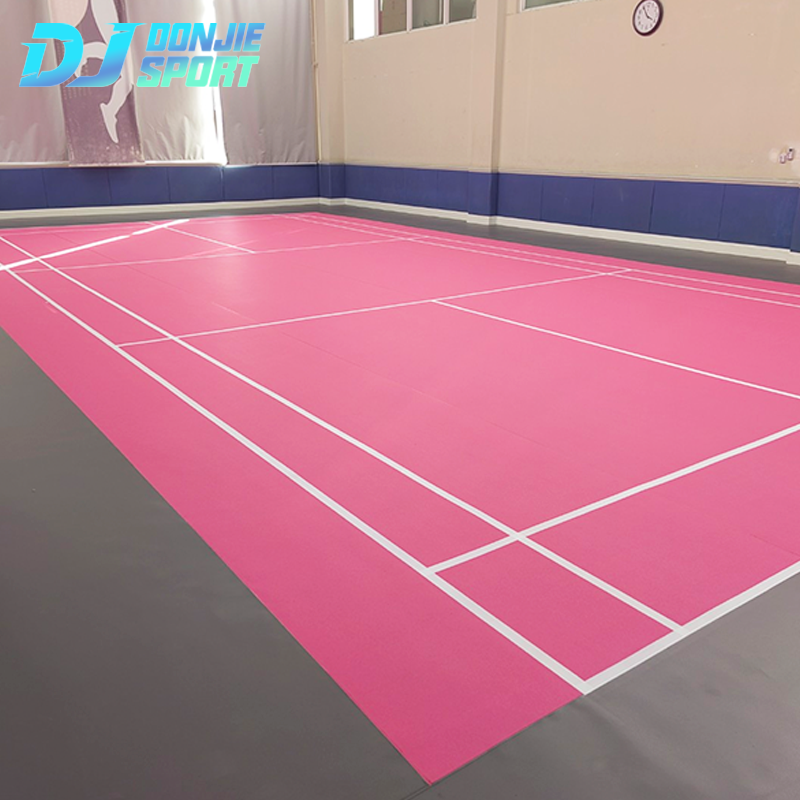
While small installations may seem suitable for DIY approaches, professional installation is recommended for competitive or commercial facilities. Experienced installers understand material behavior, environmental requirements, and precise alignment techniques that maximize Badminton Court Flooring durability and performance.
How Proper Installation Maximizes the Return on Badminton Court Flooring Investment
High-quality Badminton Court Flooring installation reduces long-term maintenance costs and minimizes downtime caused by repairs. A properly installed floor enhances player safety, improves playing consistency, and strengthens the overall value of the sports facility.