Choosing the right badminton court flooring types is essential for both professional players and recreational enthusiasts. The flooring not only influences the speed, bounce, and traction of the game but also directly affects player safety and comfort. A poorly selected surface can lead to injuries, faster wear of shoes, and suboptimal performance, while the right flooring can enhance agility, stability, and endurance on the court.
With numerous options available—from traditional wooden courts to modern synthetic surfaces—understanding the pros and cons of each material becomes critical. In this guide, we explore the most popular badminton court flooring types, examining their benefits, drawbacks, and the best applications for different venues. Whether you are planning to set up a professional hall, a community gym, or a temporary playing area, this detailed breakdown will help you make an informed decision.
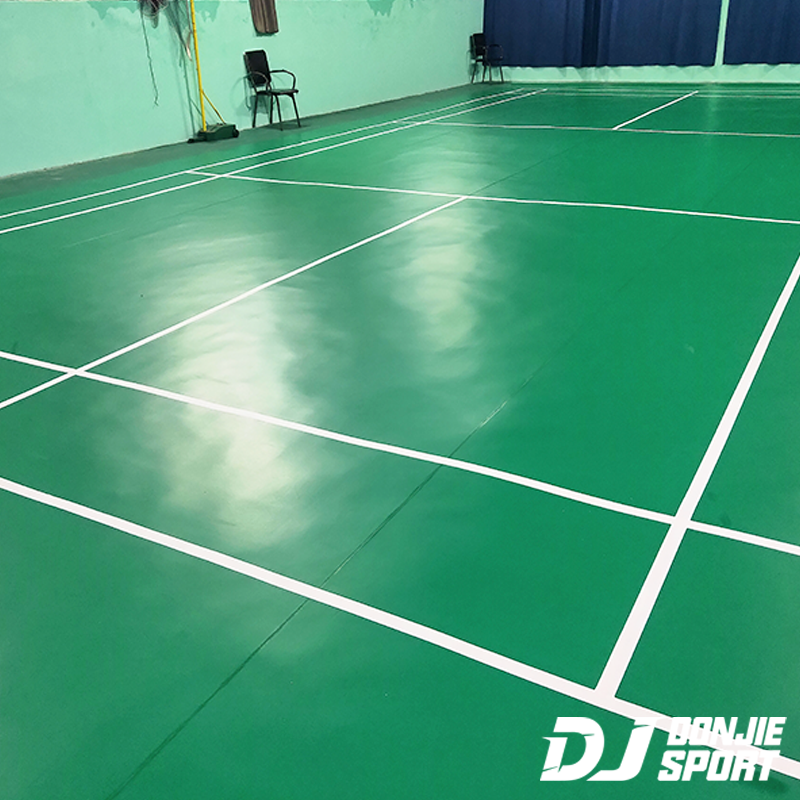
Understanding Badminton Court Flooring Types
Badminton courts are designed with performance, safety, and durability in mind, and the choice of flooring plays a central role. The main badminton court flooring types include wooden flooring, PVC, vinyl, synthetic rubber, and modular mats. Each type has distinct characteristics that affect gameplay, maintenance, and cost. Understanding these differences is the first step in selecting a floor that suits your venue’s requirements.
Wooden flooring offers a classic, professional-grade playing surface with natural shock absorption. PVC and synthetic floors provide durable, low-maintenance options for high-traffic gyms. Vinyl and rubber floors excel in grip and versatility, while modular court mats allow portability and temporary setups without compromising on basic performance. By analyzing the features, advantages, and disadvantages of each material, facility owners and players can choose flooring that maximizes both comfort and efficiency on the court.
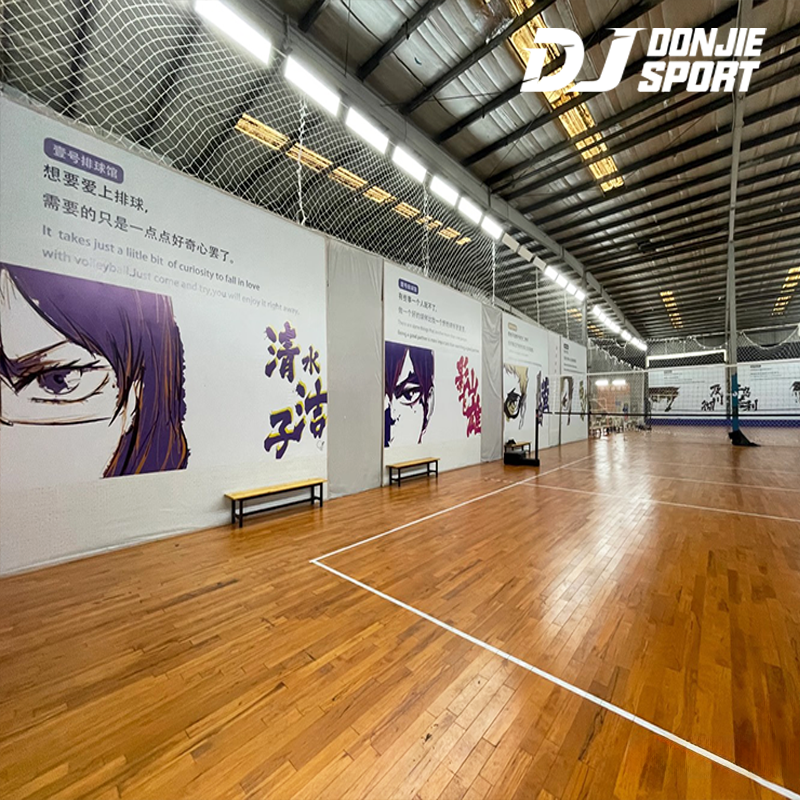
Wooden Flooring for Badminton Courts
Characteristics of Wooden Flooring
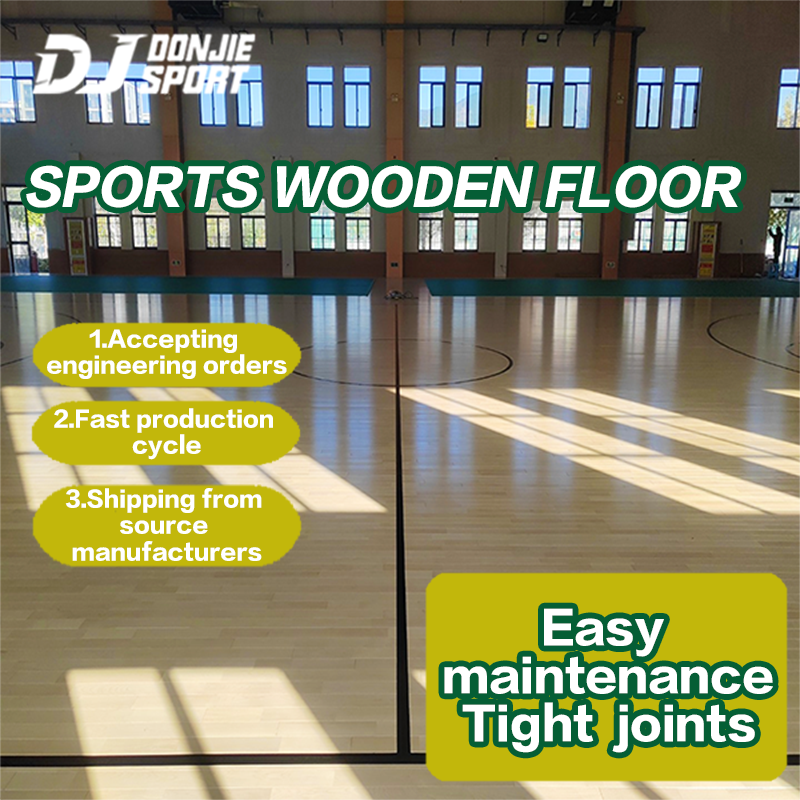
Wooden badminton court flooring is typically made of maple or similar hardwoods. It provides a smooth, consistent surface with excellent shock absorption, reducing stress on players’ joints. This type is widely regarded as the standard for professional tournaments and indoor courts.
Advantages
-
Natural feel and superior bounce for shuttlecock control
-
Excellent shock absorption, which helps prevent injuries
-
Professional-grade aesthetics, enhancing the venue’s prestige
-
Long lifespan when properly maintained
Disadvantages
-
High installation cost compared to synthetic options
-
Requires regular maintenance, including polishing and humidity control
-
Susceptible to moisture, scratches, and warping
-
Not ideal for outdoor use
Best Use Cases
Wooden floors are ideal for professional badminton halls, competition venues, and indoor courts with controlled environments. Facilities that prioritize player performance and long-term investment often choose wooden flooring despite its higher upfront cost.
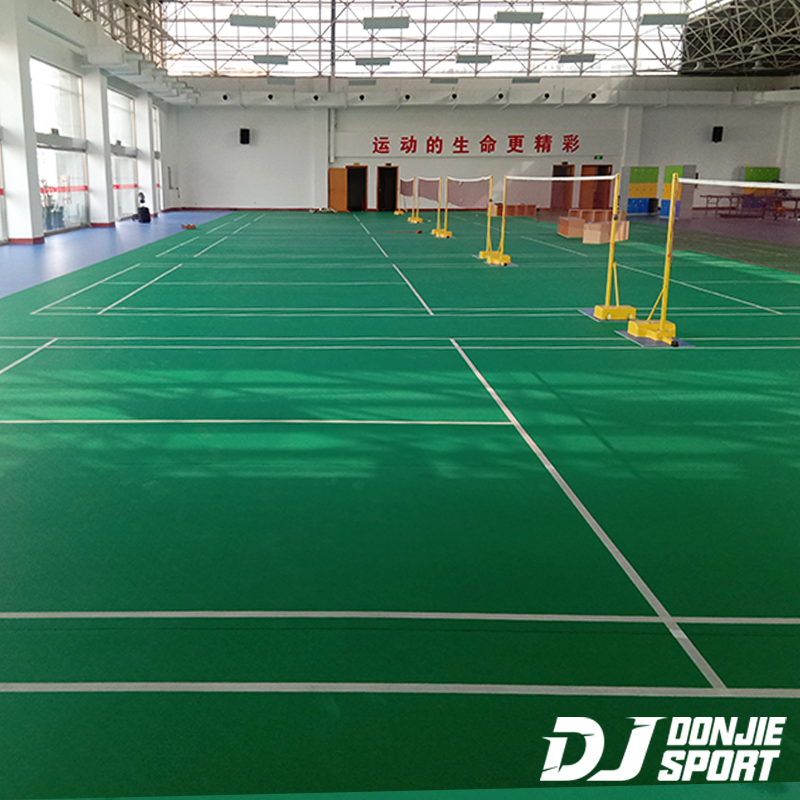
PVC Badminton Court Flooring
Overview of PVC Flooring
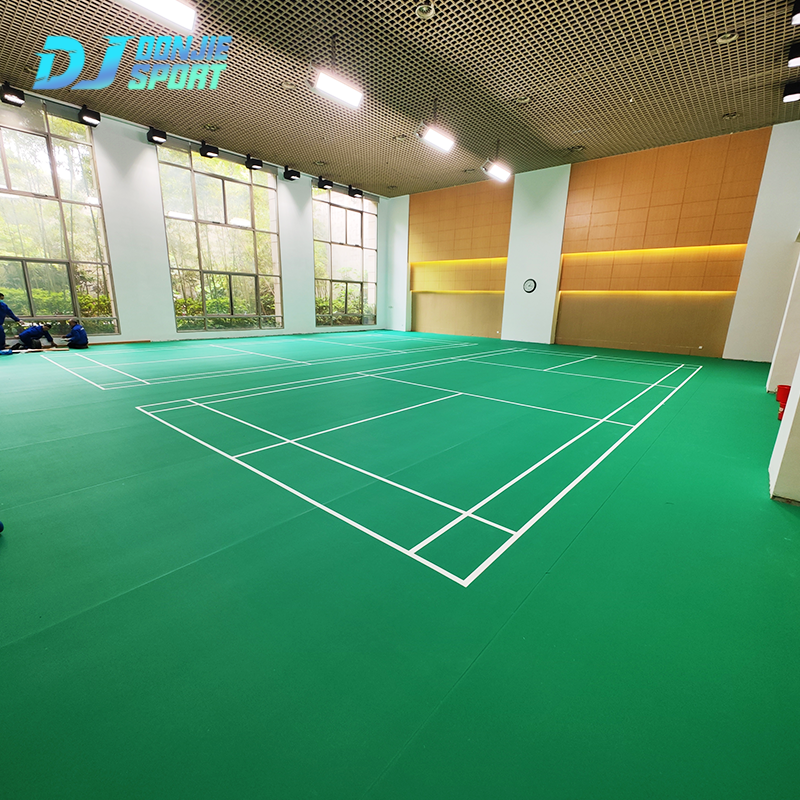
PVC badminton court flooring is a synthetic alternative designed for durability and ease of maintenance. It comes in rolls or tiles and provides a uniform playing surface suitable for both recreational and competitive play.
Advantages
-
Affordable compared to wooden flooring
-
Durable and resistant to scratches, moisture, and wear
-
Easy to install and replace in sections
-
Low maintenance with minimal cleaning requirements
Disadvantages
-
Less natural feel compared to wood, which may slightly affect shuttle bounce
-
Slipperiness can occur if not properly cleaned or maintained
-
Limited professional tournament acceptance in some regions
Ideal Venues
PVC flooring works well in community centers, schools, and gyms where durability and cost-effectiveness are priorities. It’s suitable for high-traffic indoor courts and venues requiring low-maintenance solutions.
Vinyl and Synthetic Rubber Flooring
Characteristics
Vinyl and synthetic rubber floors are known for their versatility, comfort, and grip. They are usually installed as sheets or interlocking tiles and offer a range of textures, colors, and thicknesses.
Advantages
-
Excellent grip for rapid movements and quick turns
-
High shock absorption, reducing stress on knees and ankles
-
Customizable in color and design, enhancing aesthetics
-
Resistant to moisture and wear
Disadvantages
-
Higher upfront cost than PVC flooring
-
Requires professional installation with proper adhesives
-
Over time, certain vinyl surfaces may become less consistent in bounce
Recommended Environments
Vinyl and rubber floors are ideal for indoor courts that host frequent training sessions, fitness centers, and multi-purpose sports halls. They balance performance and comfort while maintaining durability.
Modular Court Mats
Overview
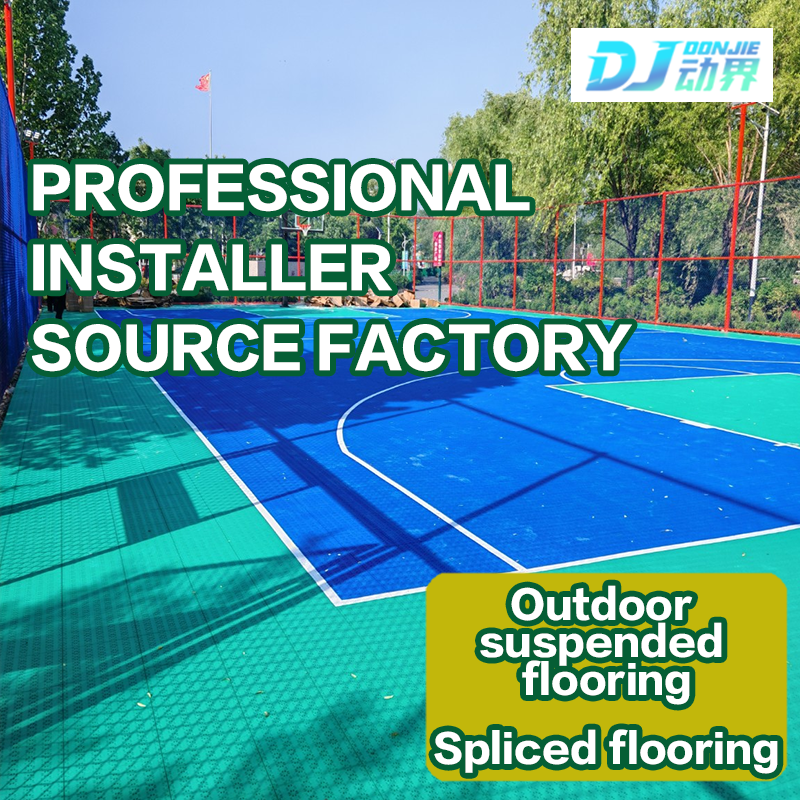
Modular badminton court mats are pre-fabricated tiles designed for easy assembly and portability. These mats allow temporary or flexible setups, making them a popular choice for events, exhibitions, and community venues.
Advantages
-
Highly portable and easy to install or dismantle
-
Damaged sections can be replaced individually without affecting the entire court
-
Suitable for temporary or multi-purpose setups
-
Consistent grip and performance when properly installed
Disadvantages
-
Seams between tiles may slightly affect shuttle bounce
-
Generally less durable than fixed wood or PVC surfaces
-
May require additional underlay to ensure shock absorption
Best Use Cases
Modular mats are perfect for pop-up courts, temporary events, and training areas where flexibility and portability are crucial. They are also ideal for schools and clubs with limited permanent court space.
Comparing Performance and Safety Across Flooring Types
Player safety and performance are significantly influenced by flooring material. Wooden floors offer natural shock absorption, reducing injuries during high-impact movements. PVC and vinyl floors provide good grip and moderate cushioning, while rubber floors excel in comfort and injury prevention. Modular mats prioritize convenience but may slightly compromise professional-level bounce.
Durability is another consideration: wooden floors can last decades with maintenance, while PVC and vinyl floors withstand heavy use with minimal upkeep. Modular mats are ideal for temporary use but may wear faster under constant play. The choice ultimately depends on balancing performance, safety, and the court’s intended usage.
Cost Considerations of Different Badminton Court Flooring Types
Cost varies widely across badminton court flooring types. Wooden floors have the highest initial investment, including installation and ongoing maintenance. PVC flooring is more budget-friendly, with moderate installation costs and minimal maintenance. Vinyl and rubber floors fall in the mid-to-high range, offering durability and comfort. Modular mats are cost-effective for temporary setups but may require periodic replacement.
When evaluating costs, consider not only installation but also longevity, maintenance, and player satisfaction. Investing slightly more upfront in a durable, high-performance surface can result in long-term savings and a better playing experience.
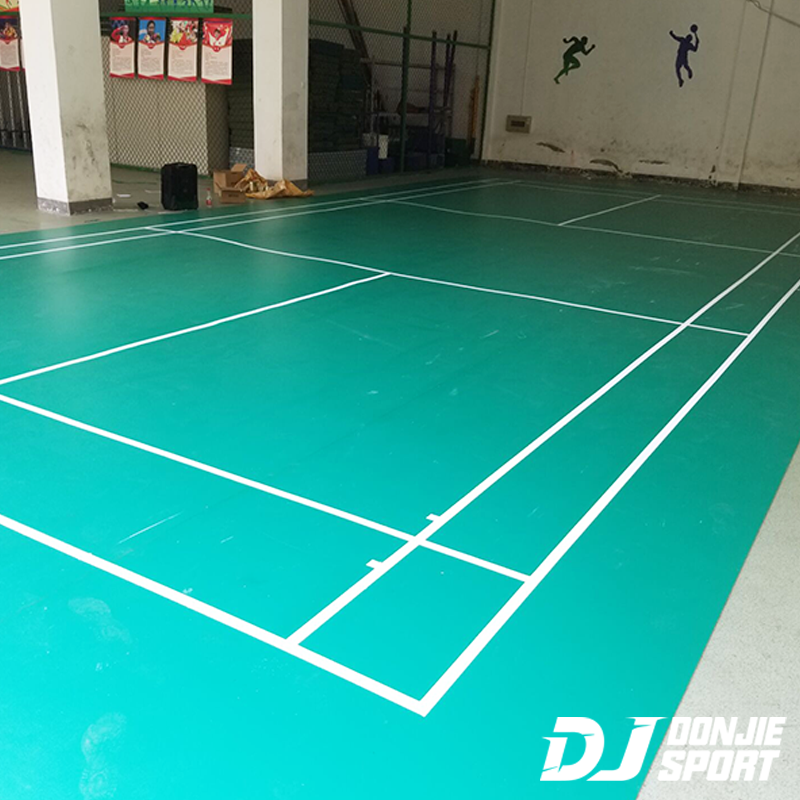
Tips for Choosing the Right Badminton Court Flooring Type
Selecting the best badminton court flooring type depends on several factors:
-
Budget: Determine your upfront investment and ongoing maintenance capability.
-
Usage frequency: High-traffic courts need durable, low-maintenance options.
-
Player level: Professional or competitive players benefit from wood or high-quality vinyl.
-
Indoor vs. outdoor: Wood is mostly indoor, while PVC and modular mats can adapt to multiple environments.
-
Safety and comfort: Consider shock absorption, grip, and injury prevention.
Balancing these factors ensures the flooring aligns with your venue’s objectives, player needs, and long-term goals. Consulting with flooring experts can also help identify the most suitable material for your court.
Conclusion
Understanding the pros and cons of different badminton court flooring types is crucial for creating a safe, durable, and high-performing playing environment. Wooden floors provide professional-grade performance and natural feel, PVC offers affordability and low maintenance, vinyl and rubber enhance comfort and grip, and modular mats bring flexibility and portability. Each option caters to unique venue requirements and player expectations.
By carefully evaluating factors such as budget, usage, and player level, you can select a flooring type that maximizes performance, safety, and longevity. The right choice not only enhances gameplay but also elevates the overall experience for players and spectators alike.