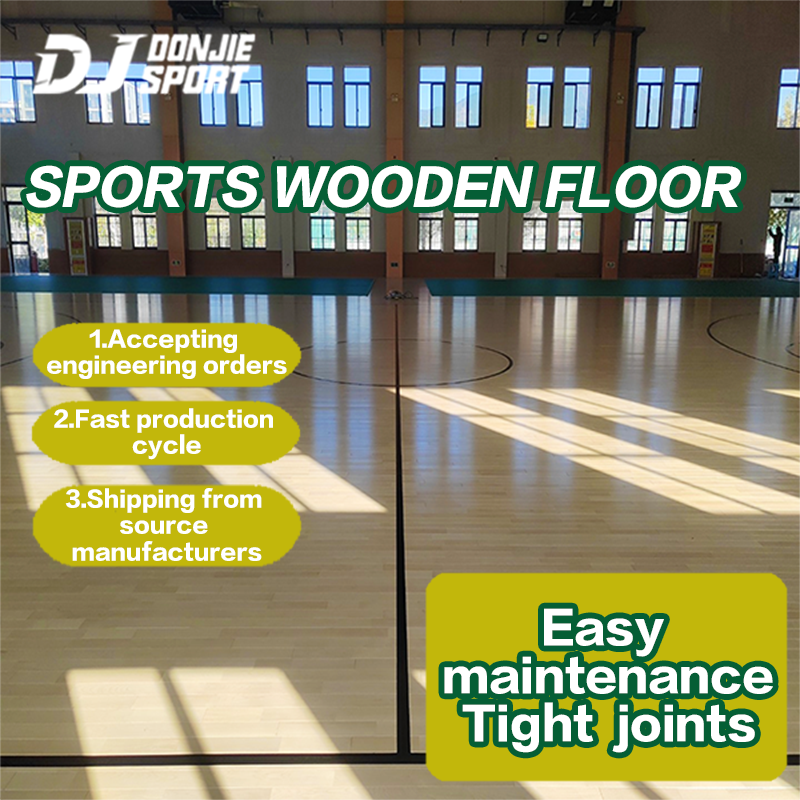
Badminton Court Wooden Flooring has long been recognized as a symbol of quality, performance, and elegance in professional sports facilities. From elite training centers to high-end gymnasiums, wooden flooring delivers a unique combination of visual sophistication and athletic functionality. Choosing the right Badminton Court Wooden Flooring is not only about aesthetics, but also about ensuring safety, durability, and optimal playing conditions.
Balancing style and function is the key challenge for facility owners and designers. A well-designed wooden badminton court should enhance the overall look of the space while meeting the strict technical requirements of the sport.
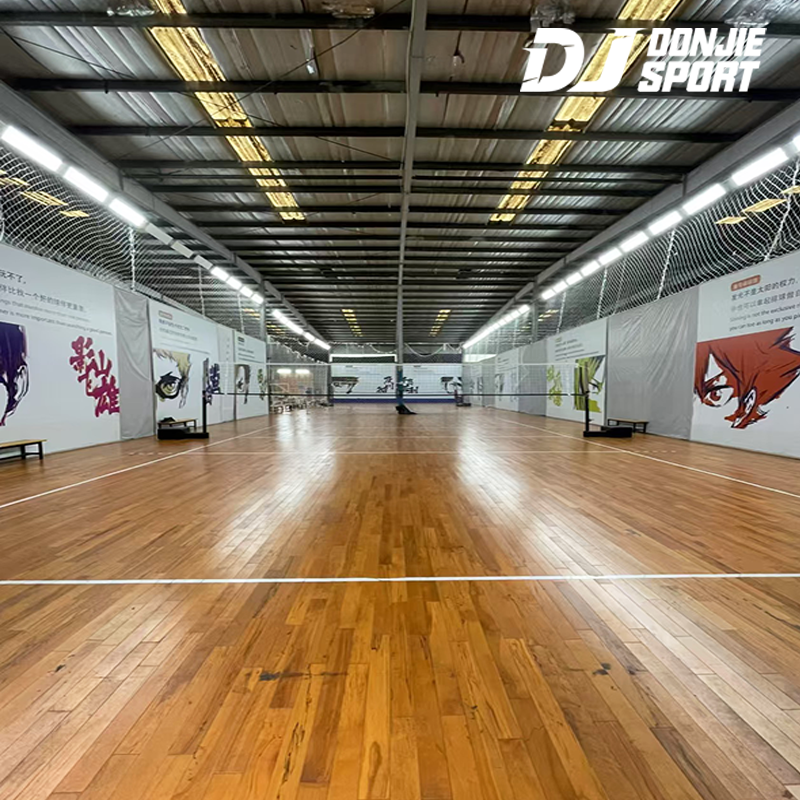
What Makes Badminton Court Wooden Flooring Unique
Badminton Court Wooden Flooring stands apart from synthetic alternatives due to its natural structure and performance characteristics. Wood provides a warm, premium appearance that elevates the visual identity of a sports venue. At the same time, it offers biomechanical benefits that directly affect player comfort and movement.
The natural elasticity of wood helps reduce impact stress on joints, while its surface texture supports controlled footwork. This combination of aesthetics and functionality makes wooden flooring a preferred choice for professional badminton courts.
Key Functional Requirements of Badminton Court Wooden Flooring
Functionality is the foundation of any high-quality Badminton Court Wooden Flooring system. Player safety is a primary concern, and wood flooring excels in shock absorption when paired with a proper subfloor system. This reduces fatigue and minimizes the risk of injuries during fast-paced matches.
Grip and traction are equally important. Badminton demands quick directional changes, and wooden flooring provides consistent friction without being overly abrasive. Additionally, a well-installed wooden surface ensures uniform response across the entire court, supporting predictable movement and stable footing.
Style Considerations in Badminton Court Wooden Flooring
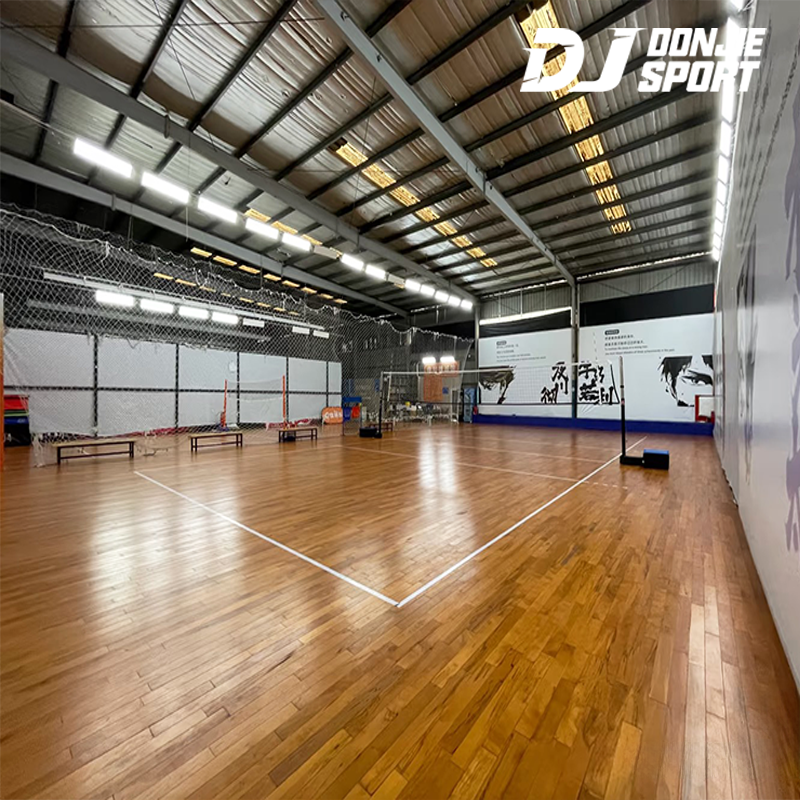
Style plays a significant role in modern sports architecture, and Badminton Court Wooden Flooring offers unmatched design flexibility. Different wood species provide distinct grain patterns and color tones, allowing facilities to align the court’s appearance with their brand identity.
Light-colored woods create a bright, open atmosphere, while darker tones add depth and sophistication. Finishing options such as matte or semi-gloss coatings further influence the overall visual effect without compromising performance.
Performance Standards for Badminton Court Wooden Flooring
To ensure fair and professional play, Badminton Court Wooden Flooring must meet recognized performance standards. These standards focus on shock absorption, vertical deformation, and surface friction. Consistency across the playing area is essential, as uneven performance can affect player confidence and match outcomes.
The subfloor system beneath the wooden surface plays a critical role in achieving these standards. High-quality installations combine wood layers with elastic components to deliver controlled energy return and stable movement.
Types of Wood Used in Badminton Court Wooden Flooring
Different wood types influence both performance and appearance in Badminton Court Wooden Flooring. Maple is widely used due to its hardness, uniform grain, and excellent wear resistance. Beech wood offers a slightly softer feel with strong shock absorption properties.
Engineered wood flooring has gained popularity in modern badminton courts. It provides enhanced dimensional stability and resistance to environmental changes while maintaining the natural look of wood. Compared to solid wood, engineered solutions offer greater consistency and long-term reliability.
Installation Systems for Badminton Court Wooden Flooring
Proper installation is essential to balancing style and function in Badminton Court Wooden Flooring. Floating floor systems are commonly used because they allow controlled movement and effective shock absorption. These systems enhance player comfort and reduce structural stress.
Fixed installation methods are often chosen for elite competition venues where precision and consistency are critical. In both cases, shock pads and underlayment layers significantly influence the floor’s performance and lifespan.
Balancing Durability and Elegance in Badminton Court Wooden Flooring
Durability is a major concern in high-traffic badminton facilities. Badminton Court Wooden Flooring must withstand repeated impact, sliding, and foot traffic without losing its visual appeal. Advanced surface coatings protect against scratches and wear while preserving the natural beauty of the wood.
Selecting the right finish ensures that the floor remains attractive and functional over many years of use. A balance between protective strength and surface feel is essential for long-term success.
Maintenance Strategies for Long-Lasting Badminton Court Wooden Flooring
Consistent maintenance helps preserve both the style and function of Badminton Court Wooden Flooring. Regular cleaning removes dust and debris that can affect traction. Controlling indoor humidity prevents warping and surface damage.
Periodic inspections and refinishing restore the surface and extend the life of the floor. A proactive maintenance plan ensures that the court continues to perform at a high level while maintaining its elegant appearance.
Cost Factors of Badminton Court Wooden Flooring
The cost of Badminton Court Wooden Flooring varies based on material choice, installation complexity, and subfloor systems. While wooden flooring often requires a higher initial investment than synthetic options, its long-term value is significant.
Durability, performance quality, and visual appeal contribute to lower replacement frequency and higher facility prestige. When evaluated over time, wooden flooring offers a strong return on investment.
Common Mistakes When Choosing Badminton Court Wooden Flooring
One common mistake is focusing solely on appearance while ignoring performance requirements. Badminton Court Wooden Flooring must meet technical standards to ensure player safety and comfort. Another mistake is overlooking environmental conditions such as humidity, which can affect wood stability.
Ignoring maintenance needs can also shorten the lifespan of the flooring. A balanced approach is essential when selecting the right solution.
How to Choose the Right Badminton Court Wooden Flooring for Your Facility
Choosing the ideal Badminton Court Wooden Flooring depends on usage intensity, player level, and environmental conditions. Professional training centers may prioritize advanced shock absorption systems, while community facilities may focus on durability and ease of maintenance.
Balancing budget, design goals, and performance expectations ensures that the flooring meets both functional and aesthetic needs.
Achieving the Perfect Balance of Style and Function
Badminton Court Wooden Flooring represents a harmonious blend of elegance and athletic performance. By carefully selecting materials, installation systems, and maintenance strategies, facilities can create courts that look impressive and perform consistently. Achieving the right balance between style and function ensures a superior playing experience and long-term value.