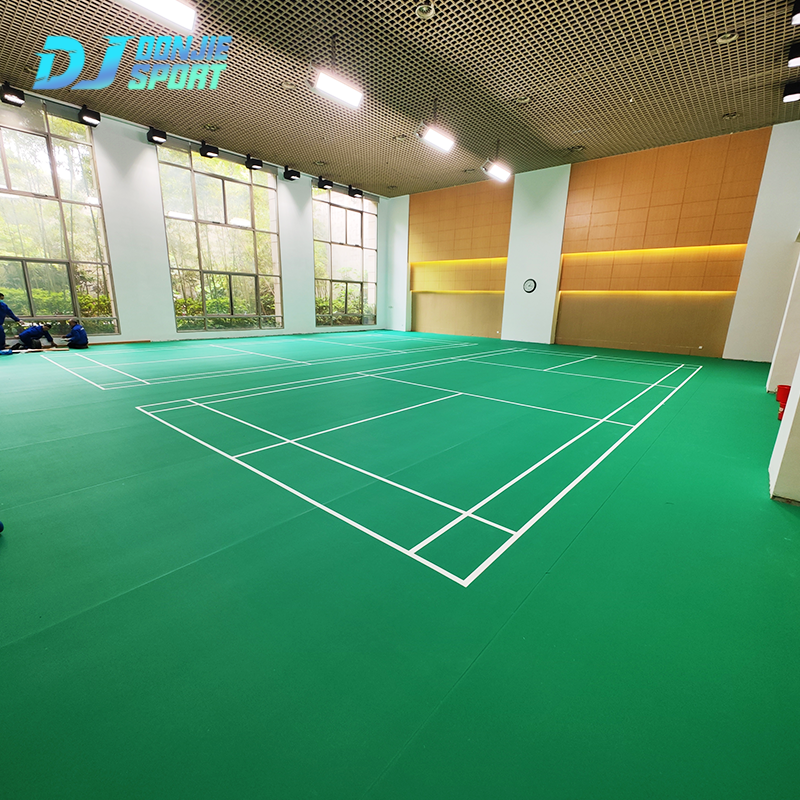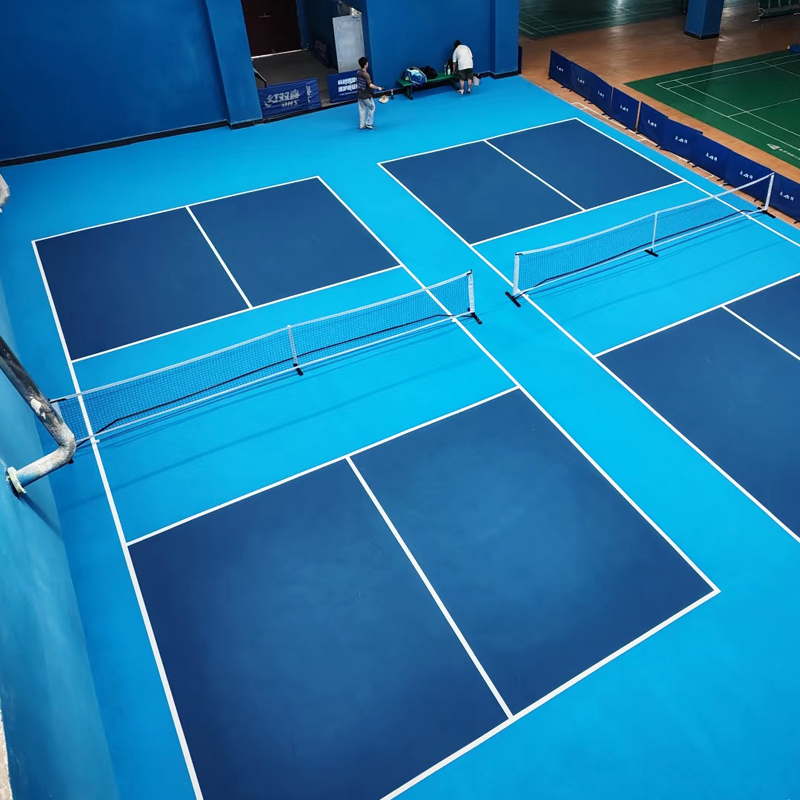
When it comes to indoor pickleball courts, the surface you choose plays a crucial role in the game’s overall quality. A good flooring material can improve player performance, enhance comfort, and reduce the risk of injuries. In contrast, a poor choice can lead to inconsistent ball bounce, discomfort, and even long-term wear and tear on the court. Whether you’re setting up a facility for recreational players or hosting professional tournaments, selecting the right flooring for indoor pickleball is essential. The right surface not only supports the athletes’ safety but also contributes to a superior playing experience. This article compares three popular flooring options—rubber, vinyl, and PVC—to help you choose the best fit for your indoor pickleball court.
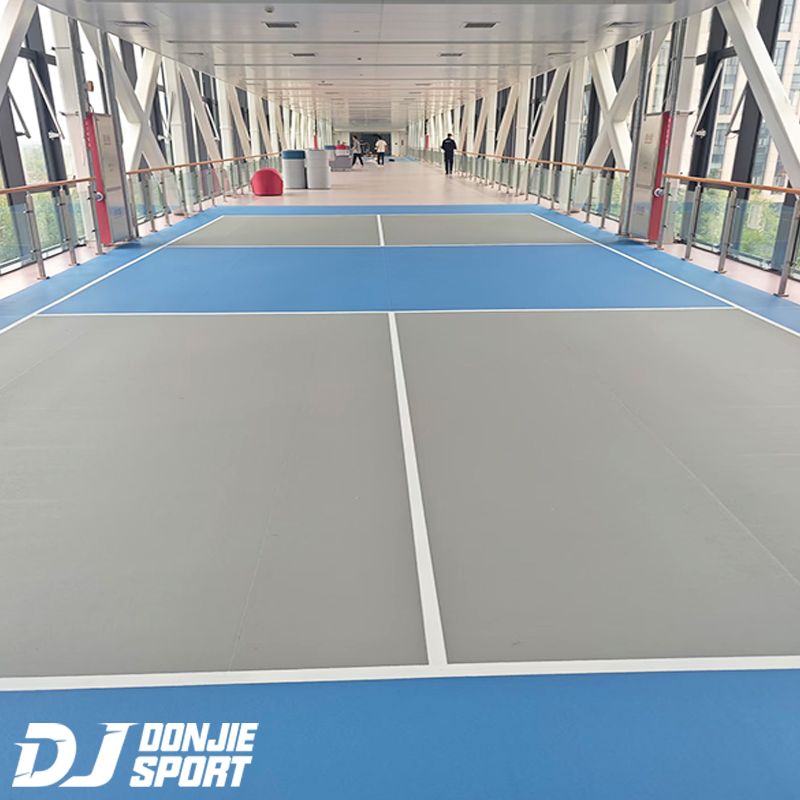
Rubber Flooring for Indoor Pickleball: Comfort and Traction
Rubber flooring is a popular choice for indoor pickleball courts due to its excellent comfort and traction. Known for its shock-absorbing properties, rubber provides a cushioned surface that helps reduce the impact on players’ joints, making it ideal for long hours of play. The non-slip nature of rubber flooring also enhances safety, reducing the risk of slips and falls.
One of the main advantages of rubber flooring is its ability to maintain consistent performance even in high-traffic environments. The material is highly durable, capable of withstanding intense foot traffic, repeated impacts, and even varying indoor climate conditions. Rubber floors offer significant resilience, meaning they maintain their shape and grip over time, even in busy pickleball courts.
However, rubber flooring is not without its downsides. It tends to be heavier and more difficult to install than other options, and it may require professional installation to ensure proper placement. Additionally, rubber floors can absorb moisture, which may lead to mold or mildew growth if not properly maintained in humid environments.
Pros:
-
Shock absorption and joint protection
-
Non-slip surface for better traction
-
Durable and long-lasting
-
Comfortable for extended play sessions
Cons:
-
Can be heavier and harder to install
-
May require professional installation
-
Moisture absorption can be an issue in humid climates
Vinyl Flooring for Indoor Pickleball: Affordable and Low-Maintenance
Vinyl flooring is a cost-effective and low-maintenance option for indoor pickleball courts. Unlike rubber, vinyl is lighter and easier to install, which can make it an attractive option for schools, gyms, or recreational centers that need to set up courts quickly. Vinyl is available in various thicknesses and styles, making it versatile for different needs and budgets.
One of the standout benefits of vinyl flooring is its ease of maintenance. It’s resistant to stains and spills, and regular sweeping or mopping is enough to keep it in good condition. Vinyl also provides a consistent, even surface, ensuring a predictable ball bounce, which is important for the flow of the game.
However, while vinyl is durable, it may not be as long-lasting as rubber or PVC in high-traffic areas. Over time, it can show signs of wear, especially if subjected to heavy use without proper maintenance. Additionally, while it offers a reasonable amount of cushioning, it does not provide the same level of joint protection as rubber flooring.
Pros:
-
Affordable and easy to install
-
Low maintenance and easy to clean
-
Provides a consistent ball bounce
-
Available in various styles and thicknesses
Cons:
-
Less durable than rubber or PVC in high-traffic areas
-
Offers less joint protection compared to rubber flooring
-
May wear down over time with heavy use
PVC Flooring for Indoor Pickleball: High-Performance and Long-Lasting
PVC flooring is known for its exceptional performance and durability, making it a top choice for high-quality indoor pickleball courts. PVC flooring provides a smooth, seamless surface that enhances ball bounce and ensures consistent traction, making it ideal for competitive play. It’s also resistant to heavy foot traffic, and its durability means it will last for many years, even under the demands of an indoor pickleball court.
One of the main advantages of PVC flooring is its resistance to wear and tear. It can handle the high impact of intense pickleball matches without showing signs of degradation. PVC is also highly resistant to moisture, which prevents issues like mold growth and makes it an excellent choice for humid indoor environments. The material is easy to clean, and its non-porous surface helps prevent dirt and debris buildup.
However, the initial installation cost of PVC flooring can be higher than rubber or vinyl, making it a more expensive option for facilities with a tight budget. Additionally, while PVC offers a strong, slip-resistant surface, it can be harder than rubber, providing less cushioning for players’ joints during long matches.
Pros:
-
High durability and resistance to wear
-
Moisture-resistant, ideal for humid environments
-
Provides a consistent ball bounce and excellent traction
-
Easy to clean and maintain
Cons:
-
Higher initial installation cost
-
Less cushioning compared to rubber flooring
-
Harder surface may be less comfortable for long-duration play
Comparing Rubber, Vinyl, and PVC Flooring for Indoor Pickleball
When choosing the best flooring for indoor pickleball, it’s important to understand the key differences between rubber, vinyl, and PVC flooring. Here’s a comparison chart highlighting their features:
| Flooring Type | Comfort | Durability | Maintenance | Installation Ease | Cost |
|---|---|---|---|---|---|
| Rubber | High | Very High | Moderate | Difficult | High |
| Vinyl | Moderate | Moderate | Very Easy | Easy | Low |
| PVC | Low | Very High | Easy | Moderate | High |
Ideal Uses for Each Flooring Type:
-
Rubber: Best for recreational centers where player comfort and safety are priorities. Suitable for courts that will be used less frequently or for extended play sessions.
-
Vinyl: Ideal for budget-conscious facilities that require easy installation and low maintenance. Great for educational institutions or gyms with moderate traffic.
-
PVC: Best for high-performance pickleball courts where durability and moisture resistance are critical. Ideal for professional courts or facilities with heavy foot traffic.
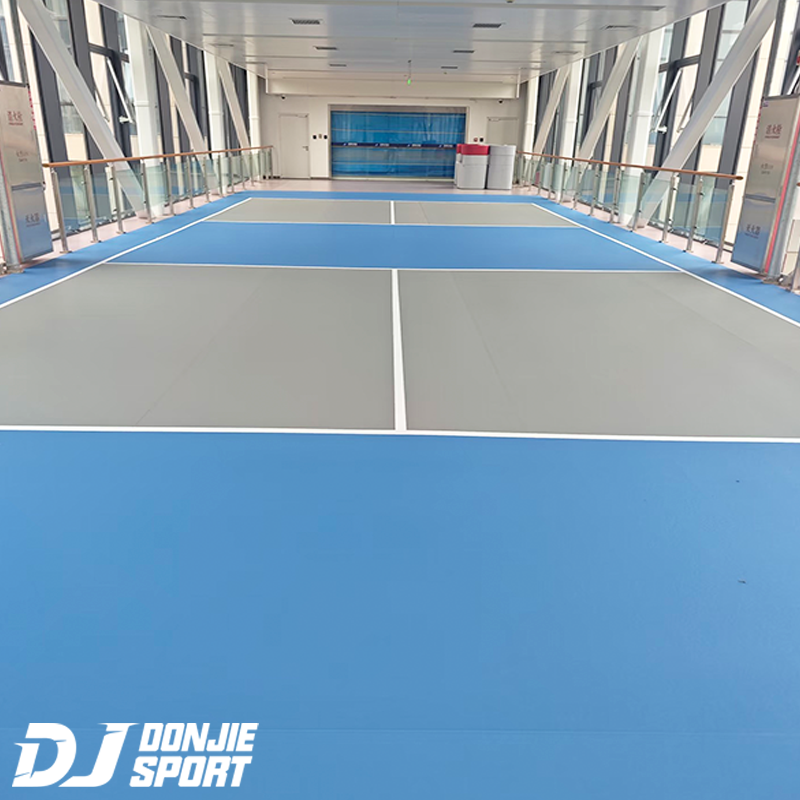
Choosing the Right Flooring for Your Indoor Pickleball Court
Selecting the right flooring for your indoor pickleball court comes down to your priorities: whether it’s player comfort, cost, or durability. Rubber flooring offers excellent comfort and traction but may require more maintenance. Vinyl flooring is an affordable, low-maintenance choice but may not stand up to heavy use as well as rubber or PVC. PVC flooring is the most durable option and offers high performance, but it comes at a higher initial cost.
Consider your facility’s budget, usage frequency, and the specific needs of your players to choose the best flooring for indoor pickleball. By understanding the pros and cons of each material, you can make a well-informed decision that will enhance both player safety and performance on the court.