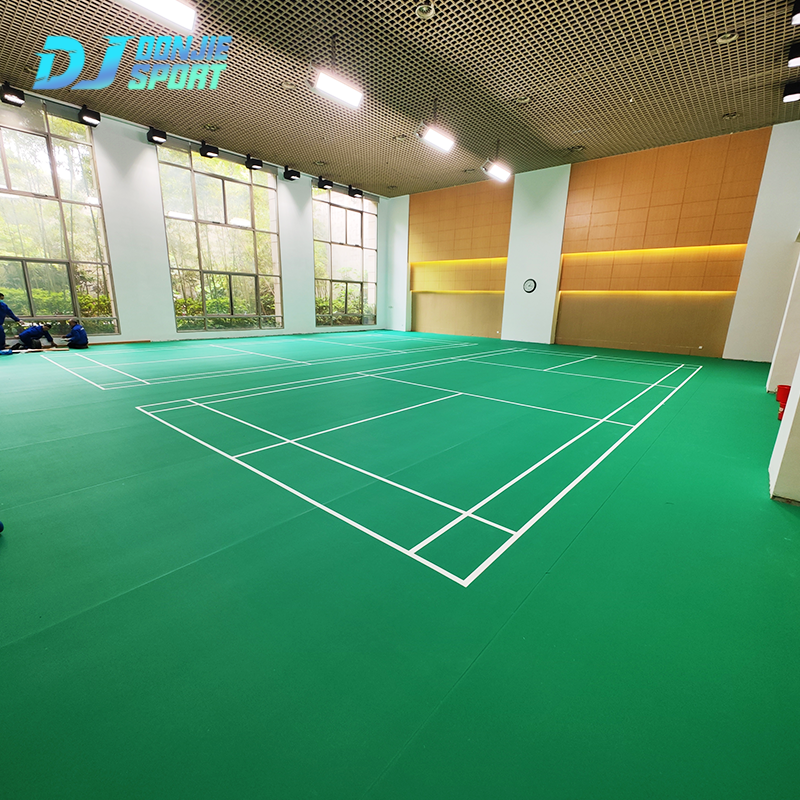
Synthetic Badminton Court Flooring has become the preferred surface for modern indoor badminton facilities due to its consistent performance, safety benefits, and durability. However, even the highest-quality flooring materials can fail to deliver expected results if installation is not handled correctly. Following best practices during installation ensures optimal shock absorption, player comfort, and long-term surface stability.
Proper Badminton Court Flooring installation directly influences athlete performance, injury prevention, and maintenance costs. From subfloor preparation to final inspection, every stage requires precision and planning.
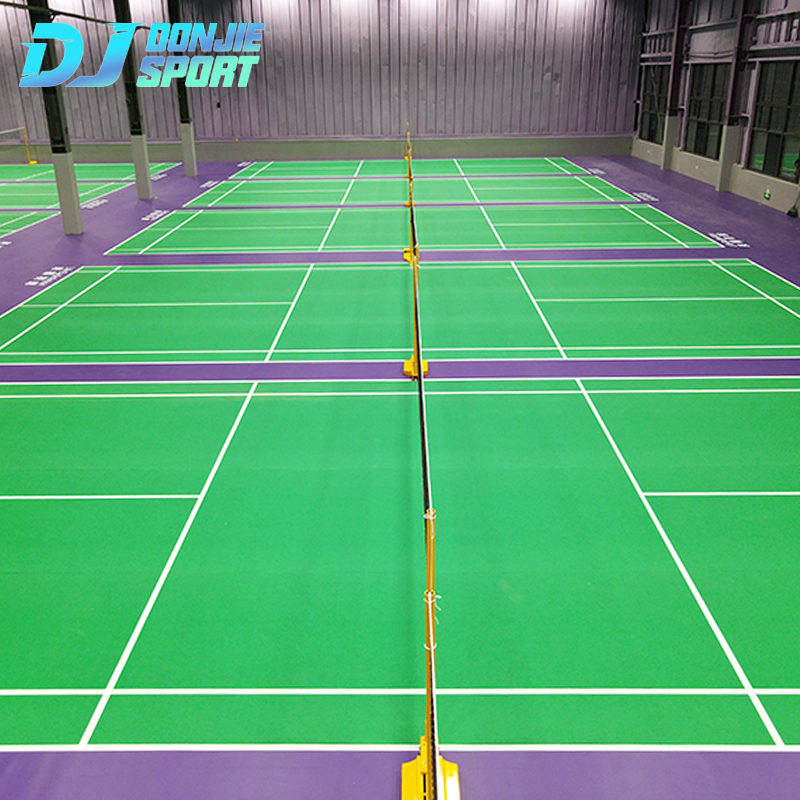
Preparing the Site for Synthetic Badminton Court Flooring
A successful Badminton Court Flooring installation begins with thorough site preparation. The subfloor must be structurally sound, clean, and completely level to support synthetic flooring materials.
Assessing the subfloor condition helps identify cracks, uneven areas, or weak spots that could compromise the flooring. Concrete subfloors should be smooth, dry, and free of contaminants such as oil or dust. Any irregularities should be repaired before proceeding.
Moisture control is a critical factor in Badminton Court Flooring installation. Excess moisture can weaken adhesive bonds and cause flooring deformation over time. Moisture testing and the use of vapor barriers help protect the synthetic surface and extend its lifespan.
Choosing the Right Synthetic Badminton Court Flooring Materials
Not all synthetic surfaces are created equal. Selecting the appropriate Badminton Court Flooring depends on usage frequency, competition level, and facility requirements.
High-quality synthetic Badminton Court Flooring should offer excellent shock absorption, uniform bounce, and reliable slip resistance. Thickness plays a major role in player comfort and joint protection, while surface texture affects foot grip during rapid directional changes.
Professional-grade Badminton Court Flooring is designed to meet international badminton standards, making it suitable for training centers, clubs, and tournament venues.
Pre-Installation Planning for Badminton Court Flooring
Detailed planning minimizes errors and material waste during installation. Accurate measurements ensure that Badminton Court Flooring fits seamlessly within the playing area, including safety zones around the court.
Flooring materials should be acclimatized to the indoor environment for at least 24 hours prior to installation. This allows the synthetic Badminton Court Flooring to adjust to room temperature and humidity, reducing the risk of expansion or contraction after installation.
Preparing the right tools, adhesives, and rolling equipment ensures a smooth and efficient installation process.
Step-by-Step Synthetic Badminton Court Flooring Installation Process
The installation process begins with final subfloor cleaning to remove any remaining debris. Adhesives must be applied evenly and according to manufacturer specifications to ensure strong bonding.
Synthetic Badminton Court Flooring should be laid carefully, maintaining alignment and avoiding air pockets. Seams must be tightly joined and properly welded to create a continuous surface.
Rolling the flooring after placement improves adhesion and prevents future lifting. Attention to detail at this stage is essential for professional-grade results.
Post-Installation Finishing and Quality Checks
Once installation is complete, the Badminton Court Flooring should undergo a comprehensive inspection. Surface smoothness, seam integrity, and line accuracy must be verified.
Testing traction and bounce consistency ensures the flooring meets performance expectations. Adequate curing time allows adhesives to fully set before the court is opened for play.
Maintenance Tips to Protect Newly Installed Badminton Court Flooring
Proper maintenance preserves the performance and appearance of synthetic Badminton Court Flooring. Daily dry cleaning removes dust that can affect traction, while periodic damp cleaning prevents surface buildup.
Protective measures such as controlled footwear policies and equipment pads help minimize surface damage and extend the flooring’s usable life.
Common Installation Mistakes to Avoid
Skipping subfloor preparation is one of the most common mistakes in Badminton Court Flooring projects. Uneven surfaces lead to premature wear and performance issues.
Incorrect adhesive selection or rushed installation timelines can also compromise flooring integrity. Allowing sufficient time for each stage ensures long-lasting results.
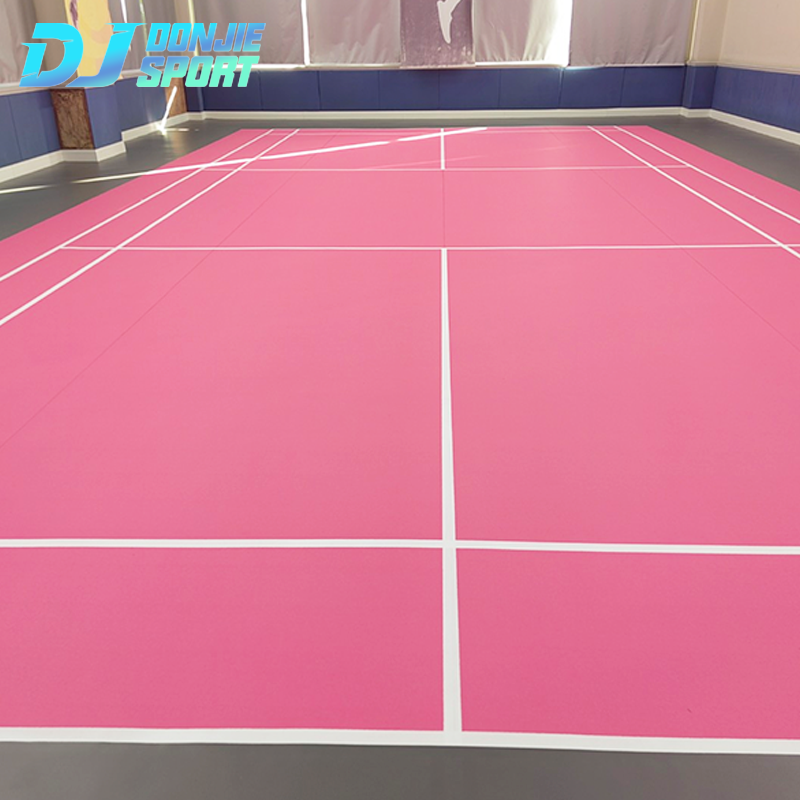
Professional Installation vs DIY Badminton Court Flooring
While DIY installation may appear cost-effective, professional installers bring experience, specialized tools, and technical knowledge. Professional Badminton Court Flooring installation reduces risk, ensures compliance with standards, and often results in lower long-term maintenance costs.
Maximizing Performance Through Proper Badminton Court Flooring Installation
Installing synthetic Badminton Court Flooring requires careful planning, precise execution, and attention to detail. From subfloor preparation to post-installation care, each step plays a vital role in achieving a safe, high-performance playing surface. By following best practices, facility owners can ensure their badminton courts deliver consistent playability, durability, and value for years to come.