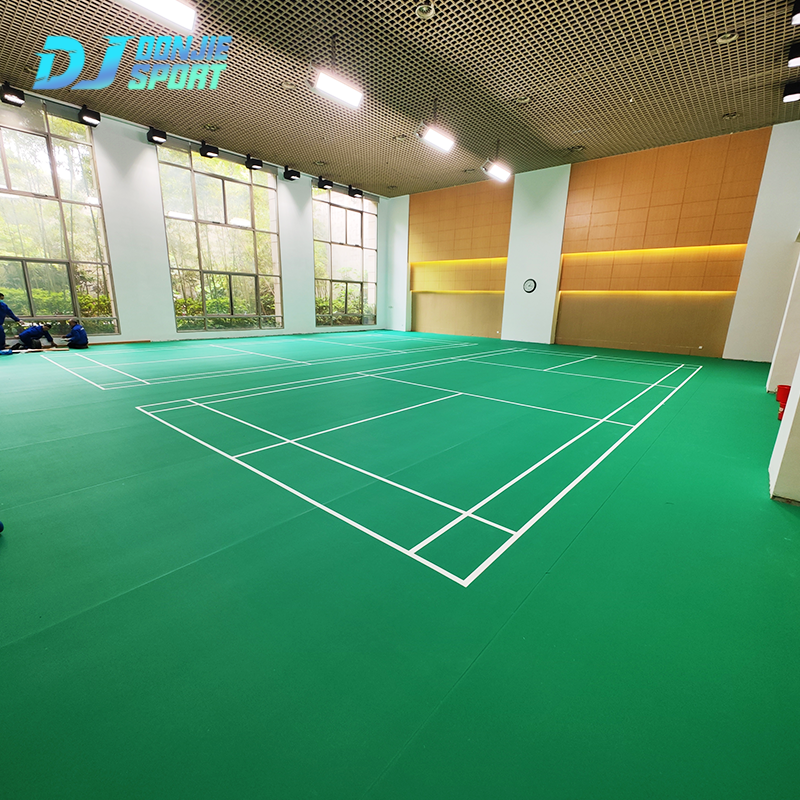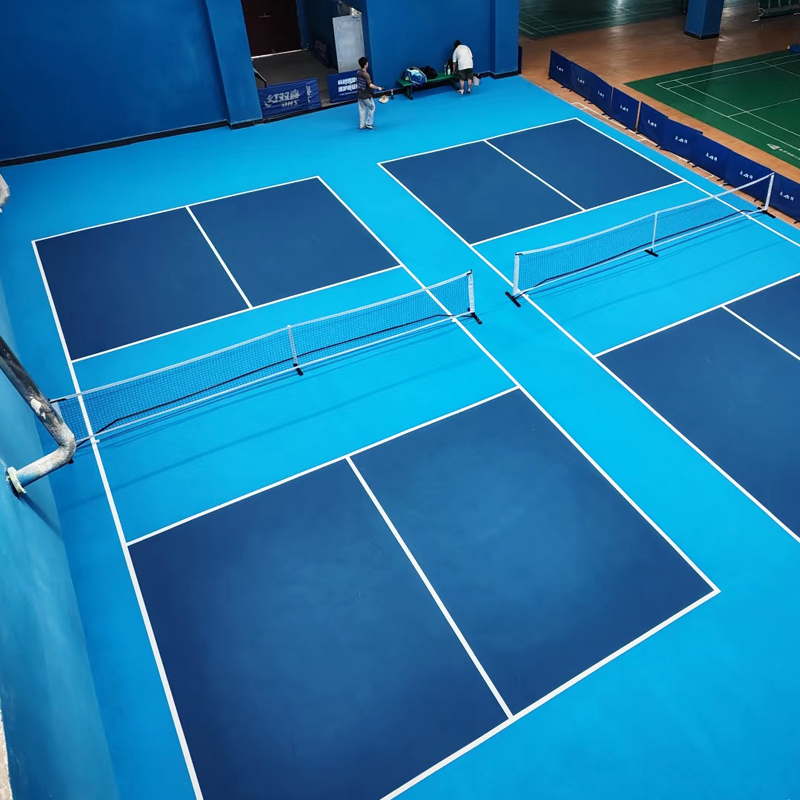
When it comes to creating the perfect badminton court, one of the most crucial elements is the flooring. While many people might not consider flooring a game-changer, the type of surface on which athletes play can significantly affect their performance. Synthetic badminton flooring has gained immense popularity, not only for its superior quality but also for its ability to enhance safety, consistency, and overall performance. Whether you are setting up a local training facility or a professional championship arena, choosing the right badminton flooring is a decision that can influence the game from the first serve to the final point.
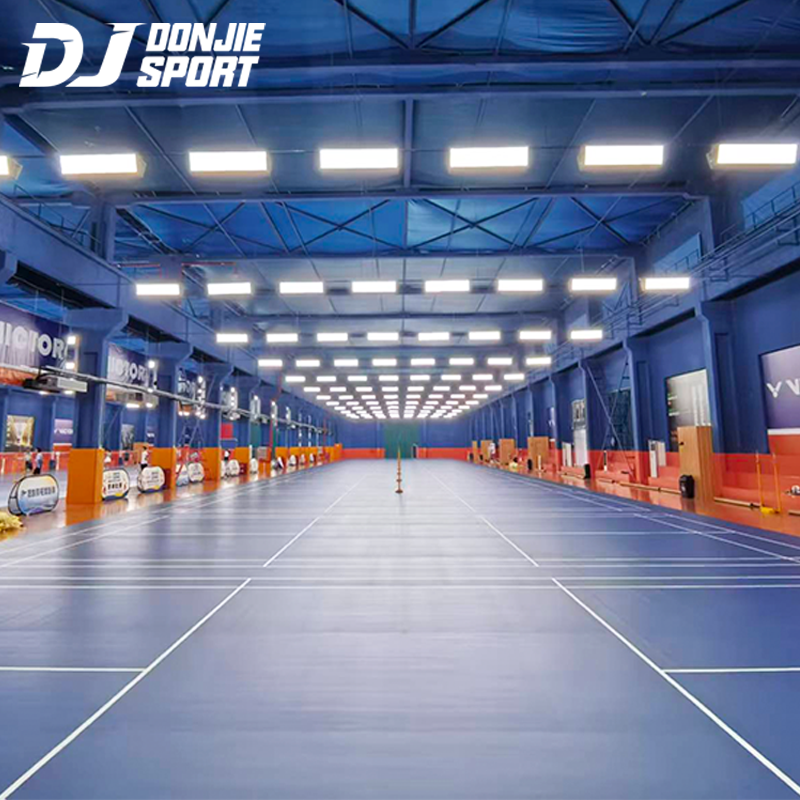
The Science Behind Synthetic Badminton Flooring
To understand why synthetic badminton flooring is considered a game-changer, it’s essential to look at the science behind it. Synthetic badminton flooring is typically made from materials like PVC (Polyvinyl Chloride), PU (Polyurethane), or rubber compounds, which are designed to provide the perfect balance between durability, shock absorption, and friction control.
These materials are specifically engineered to offer high resilience, ensuring that players can move swiftly and safely across the court. Synthetic floors also tend to be non-porous, which helps in maintaining their smoothness and integrity, even under heavy foot traffic. This durability is key, as the floor can withstand the repeated impacts from both recreational players and professional athletes.
What makes synthetic flooring particularly beneficial for badminton is its high shock absorption capacity. This reduces the strain on players’ joints, especially during quick lateral movements that are common in badminton. The flooring also provides just the right amount of grip, allowing players to make fast and precise movements without the risk of slipping.
Why Synthetic Badminton Flooring is a Game-Changer for Courts
The advantages of synthetic badminton flooring extend far beyond just performance. One of the most critical aspects of any sports court is safety. With synthetic flooring, players are less likely to suffer from injuries that can arise from an uneven or too-hard surface. The surface’s consistent texture and shock absorption properties reduce the chances of ankle sprains, knee injuries, and other joint-related issues.
Furthermore, synthetic badminton flooring ensures that the playing surface remains consistent across all parts of the court. Whether you’re playing at one end or the other, players can expect the same level of traction and responsiveness. This is crucial for maintaining the integrity of the game, particularly in competitive settings.
From a performance perspective, synthetic flooring allows players to execute their shots with greater precision. The level of bounce and consistency of the surface provide athletes with the feedback they need to improve their game. Whether they are executing a drop shot or a fast smash, the flooring offers optimal response, enhancing overall playability.
From Local Courts to International Championships
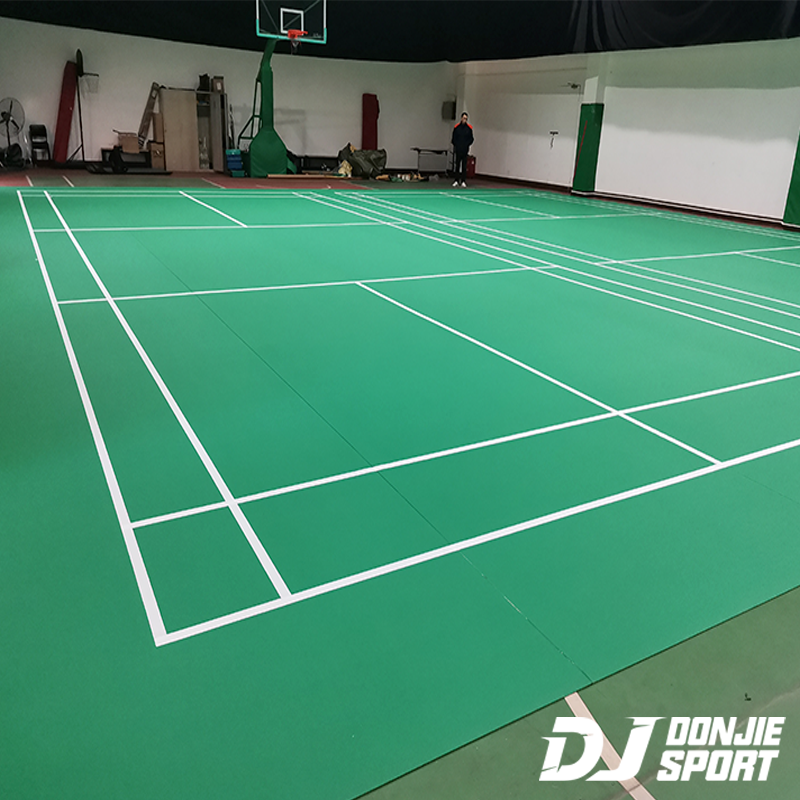
Synthetic badminton flooring is not just a luxury for professional venues—it has become a standard in many local and community courts as well. Whether it’s for recreational use or competitive play, players benefit from the superior qualities of synthetic flooring.
At the highest level, major badminton tournaments and world championships are held on courts equipped with high-quality synthetic flooring. The famous BWF (Badminton World Federation) events, for example, often feature courts designed with synthetic surfaces to ensure that the best players in the world compete on an optimal playing surface. These courts are engineered to meet the rigorous demands of professional play, ensuring that athletes have a surface that supports their every move, from fast footwork to powerful smashes.
Coaches and professional athletes alike highlight the impact of synthetic flooring on their training. Many elite athletes assert that the consistency and responsiveness of synthetic courts are crucial for preparing them for the intensity and precision needed during world-class matches. The flooring allows players to train with a higher level of performance, honing their skills in a safe environment that mimics competition.
Choosing the Right Synthetic Flooring for Your Facility
Choosing the right synthetic flooring for your badminton court is an essential consideration, whether you’re building a professional venue or simply upgrading a local facility. Several factors need to be considered before making the decision, including the court size, player needs, and, of course, your budget.
One of the most important considerations is the type of flooring that matches your facility’s requirements. There are various types of synthetic badminton flooring, each designed to meet specific performance needs. High-end PU (Polyurethane) flooring offers the best shock absorption and is commonly used in professional settings, while PVC flooring provides a cost-effective yet durable option for smaller facilities. Rubberized floors, on the other hand, offer excellent durability and grip, making them ideal for busy recreational courts.
The installation process for synthetic flooring is also an important aspect to consider. Professional-grade synthetic flooring is typically installed by experts who ensure that the surface is perfectly level, the seams are well-bonded, and the court markings are clear. Proper installation helps maximize the longevity of the flooring and guarantees that players can enjoy a consistent playing surface.
Lastly, maintaining the flooring is an essential part of keeping your court in top shape. Synthetic floors are relatively low-maintenance, but periodic cleaning and inspections are necessary to ensure that no damage occurs and that the surface continues to perform at its best.
The Future of Synthetic Badminton Flooring
As with all technologies, synthetic badminton flooring continues to evolve. In recent years, innovations in material science have led to more sustainable and eco-friendly options, allowing facilities to create high-performance courts while reducing their environmental footprint. New materials are also being developed to further enhance traction, shock absorption, and durability, ensuring that synthetic flooring continues to meet the demands of both recreational and professional players.
Looking ahead, we can expect to see even more advanced synthetic flooring systems that integrate smart technologies. These systems could include sensors that track player movement and adjust the surface’s properties for optimal performance, providing real-time data that could help players improve their game.
Conclusion
In conclusion, synthetic badminton flooring has revolutionized the way the game is played. Whether you’re setting up a local court or constructing a championship venue, the quality and type of flooring you choose will significantly impact the performance, safety, and overall experience of players. With its unmatched durability, shock absorption, and consistency, synthetic flooring ensures that players can perform at their best, from local clubs to the international stage.
Investing in high-quality synthetic badminton flooring is an investment in the future of the sport—one that prioritizes both performance and safety. As the technology continues to evolve, synthetic flooring will remain a key element in shaping the next generation of badminton players.