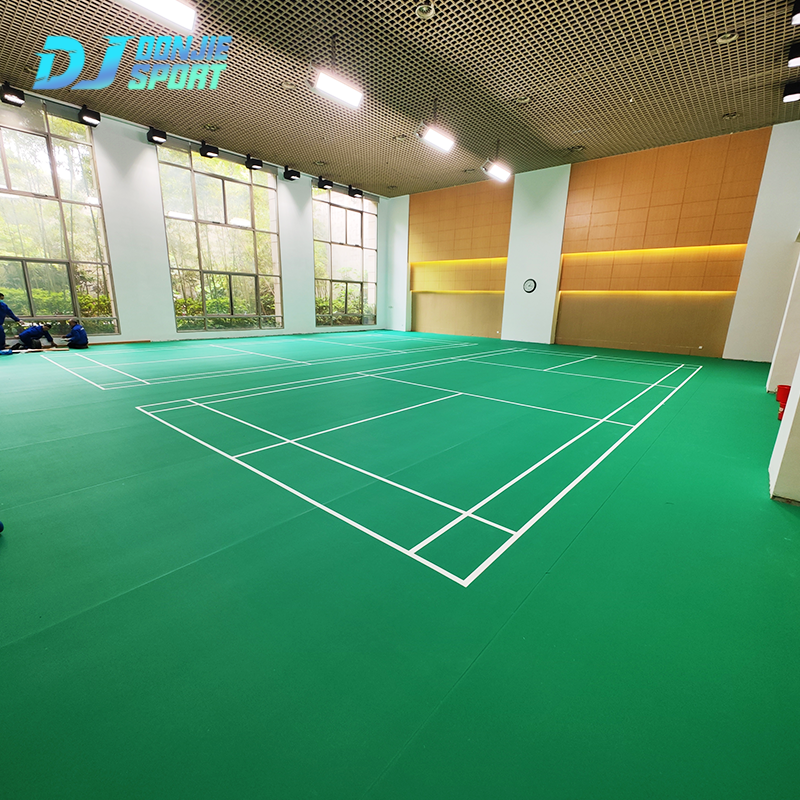
Badminton is a fast-paced, high-intensity sport that demands agility, precision, and comfort from its players. The court surface plays a significant role in enhancing performance, ensuring safety, and offering the comfort needed for long matches. A poorly chosen surface can lead to injuries, fatigue, and inconsistent game experiences, but with the right flooring, players can focus on their game without worrying about their footing. Synthetic flooring has emerged as one of the top choices for badminton courts, offering unique advantages that go beyond traditional wooden or concrete surfaces. This article will explore how synthetic badminton flooring enhances both safety and comfort, making it the ideal choice for modern badminton courts.
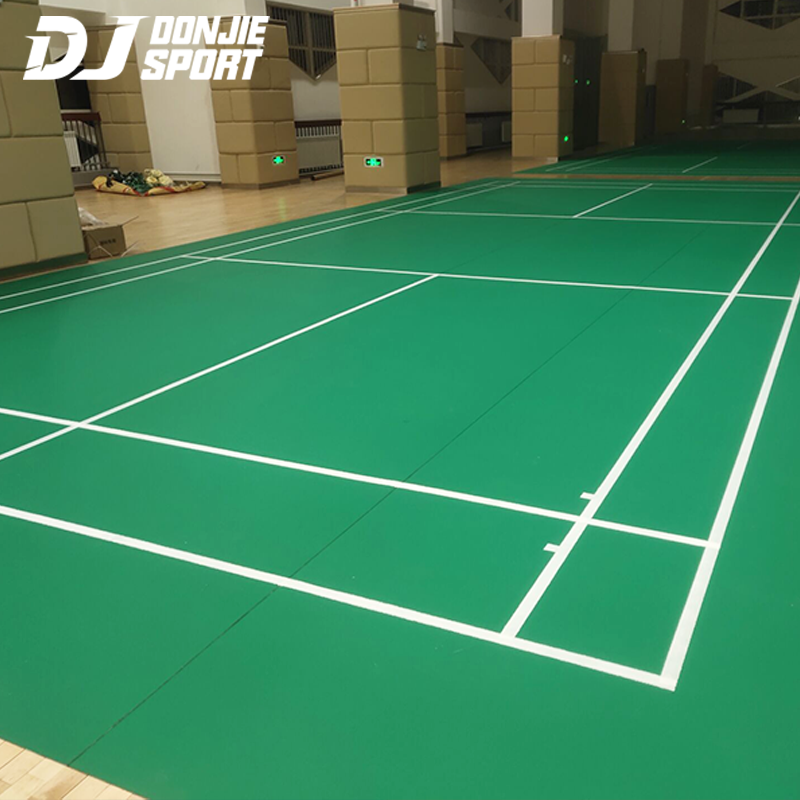
What is Synthetic Flooring for Badminton Courts?
Synthetic flooring refers to man-made materials that are designed specifically for athletic purposes. Unlike traditional wooden or concrete surfaces, synthetic flooring options for badminton courts are crafted from durable polymers such as PVC (Polyvinyl Chloride) or rubber. These materials are engineered to provide consistent performance under various playing conditions, ensuring a safe and comfortable environment for players.
There are different types of synthetic flooring, each offering distinct benefits depending on the needs of the court. PVC flooring is known for its smooth texture, slip-resistant surface, and excellent shock absorption. Rubber flooring, on the other hand, offers superior grip and durability, making it perfect for high-traffic areas. Both options are designed to withstand the rigorous demands of badminton, providing an ideal playing surface that enhances both safety and performance.
Safety Benefits of Synthetic Flooring
Impact Protection
One of the primary advantages of synthetic flooring for badminton courts is its ability to reduce the risk of injury. During a match, players often make sudden stops, sharp pivots, and dives to the floor. A court surface that lacks proper cushioning or shock absorption can increase the likelihood of joint and muscle injuries, particularly to the knees, ankles, and lower back.
Synthetic flooring, however, is specifically designed to provide impact protection. PVC and rubber materials offer exceptional shock absorption, minimizing the force exerted on players’ joints when they make high-impact movements. This cushioning effect helps to prevent injuries caused by repetitive strain and sudden motions, making synthetic flooring a safer choice for both amateur and professional athletes.
Traction and Stability
Slipping on a badminton court can be both embarrassing and dangerous. Traditional wooden floors can sometimes become slippery, especially in humid or wet conditions, which increases the risk of falls. Synthetic flooring, on the other hand, is engineered to provide superior traction.
PVC and rubber floors are equipped with textured surfaces that offer enhanced grip and stability, ensuring that players can make quick lateral movements without fear of losing their footing. Whether players are moving swiftly across the court or making a sudden lunge to intercept a shuttlecock, synthetic flooring provides the traction needed to perform these actions safely and effectively.
Shock Absorption
Badminton involves rapid, high-impact movements that place considerable strain on players’ bodies. The constant jumping, lunging, and quick direction changes can lead to fatigue and overuse injuries if the flooring does not offer sufficient shock absorption.
Synthetic badminton flooring is designed with built-in shock-absorbing properties, ensuring that each step and jump is cushioned, reducing the impact on players’ joints. This cushioning effect not only enhances player comfort but also helps to prevent injuries over time, making it a crucial feature for any badminton court.
Comfort Enhancements with Synthetic Flooring
Consistent Surface Feel
One of the key advantages of synthetic flooring is the consistent texture it offers. Traditional wooden floors can warp or shift with changes in temperature and humidity, leading to uneven surfaces that can disrupt a player’s movements. Synthetic flooring, however, is designed to provide a smooth and even playing surface that remains consistent over time.
This uniformity in surface feel ensures that players can rely on the court’s texture and behavior during every match. It also helps to reduce fatigue caused by uneven footing, making the game more enjoyable and less physically taxing, especially during longer sessions.
Ergonomics for Players
Comfort is a vital aspect of any athletic activity, and synthetic badminton flooring offers a more ergonomic design that enhances player well-being. The cushioning properties of synthetic materials help distribute the pressure evenly across players’ feet, reducing the stress on their legs and feet during movement.
Additionally, synthetic flooring provides an optimal balance between hardness and softness, ensuring that players can enjoy both speed and stability without sacrificing comfort. This combination of comfort and performance helps players maintain focus and agility, which is essential for success in badminton.
Temperature Regulation
Unlike wooden or concrete surfaces, which can become uncomfortably hot or cold depending on the environment, synthetic flooring materials such as PVC and rubber are better at maintaining an optimal temperature. These surfaces do not absorb heat as wood does, ensuring that players don’t feel the effects of extreme weather conditions during a game.
By regulating temperature more effectively, synthetic flooring helps to keep players comfortable, preventing overheating or cold-related discomfort, especially during intense matches or extended training sessions.
Durability and Longevity of Synthetic Flooring
Synthetic badminton flooring is designed to withstand heavy use over long periods. Unlike traditional wooden floors, which can become scratched, dented, or warped over time, synthetic materials are much more durable. These floors are resistant to moisture, wear, and damage from repeated foot traffic, making them ideal for high-use environments such as gyms, sports complexes, and competitive courts.
The materials used in synthetic flooring, such as PVC and rubber, are specifically engineered for longevity. They can endure the wear and tear of continuous use while maintaining their appearance and performance. Furthermore, synthetic flooring is relatively low-maintenance, requiring only occasional cleaning to keep it in top condition, which is a cost-effective option for facility owners in the long term.
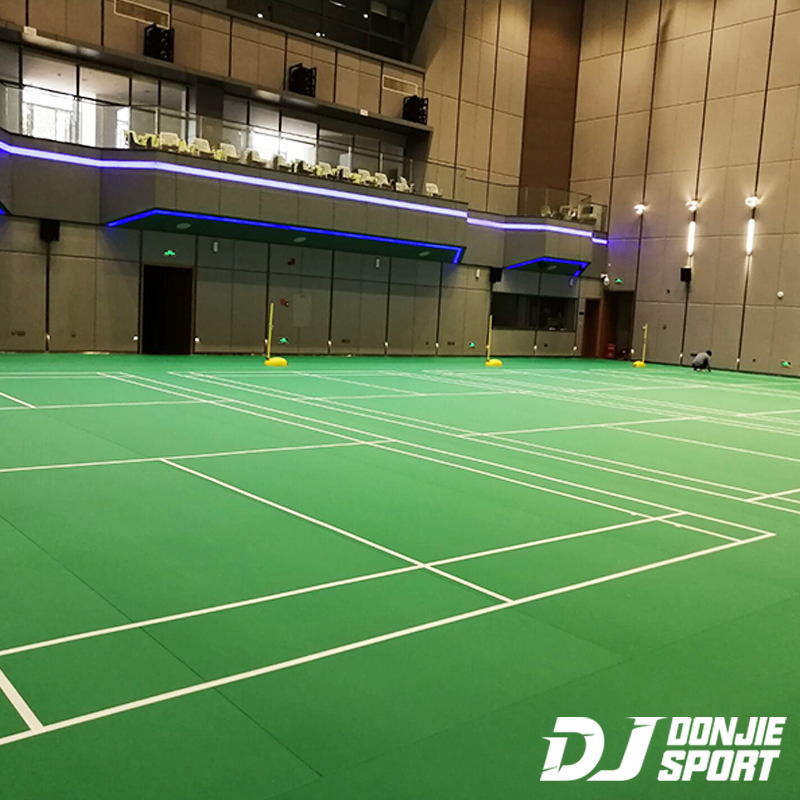
Synthetic Flooring and Player Performance
The surface of a badminton court significantly impacts how players perform. A high-quality, comfortable court flooring can enhance a player’s agility, responsiveness, and overall game performance. Synthetic badminton flooring is designed to maximize performance by providing a surface that is both smooth and resilient.
By offering excellent grip, shock absorption, and a consistent surface, synthetic flooring helps players maintain their speed, balance, and agility throughout the game. These qualities allow players to focus on their technique and strategies without being distracted by discomfort or safety concerns. Ultimately, a well-designed synthetic court surface can contribute to improved player performance, whether in a recreational or professional setting.
Why Synthetic Flooring is the Best Choice for Badminton Courts
In conclusion, synthetic flooring offers numerous advantages that enhance both safety and comfort on badminton courts. From impact protection and superior traction to consistent surface feel and temperature regulation, synthetic flooring provides an ideal playing environment for athletes. Its durability and low-maintenance nature also make it a cost-effective solution for facility owners.
For both recreational players and professional athletes, synthetic flooring ensures a safer, more comfortable court experience that enhances performance and reduces the risk of injury. As badminton continues to grow in popularity, synthetic flooring is set to become the standard for courts worldwide, providing the perfect foundation for the game.