When designing or renovating a commercial pickleball court, one of the most crucial decisions you’ll make is selecting the right flooring. The flooring not only influences the court’s appearance but also has a significant impact on player performance, safety, and overall experience. With the growing popularity of pickleball, choosing the right flooring material has become more important than ever. Whether you’re building a new facility or upgrading an existing one, the quality of your court flooring can make a huge difference.
The right flooring will offer optimal grip, durability, and comfort, allowing players to perform at their best while minimizing the risk of injuries. Additionally, it will be easy to maintain, cost-effective, and visually appealing—essential for attracting players and customers to your facility. In this article, we’ll dive into the various factors to consider when choosing the best flooring for your commercial pickleball court.
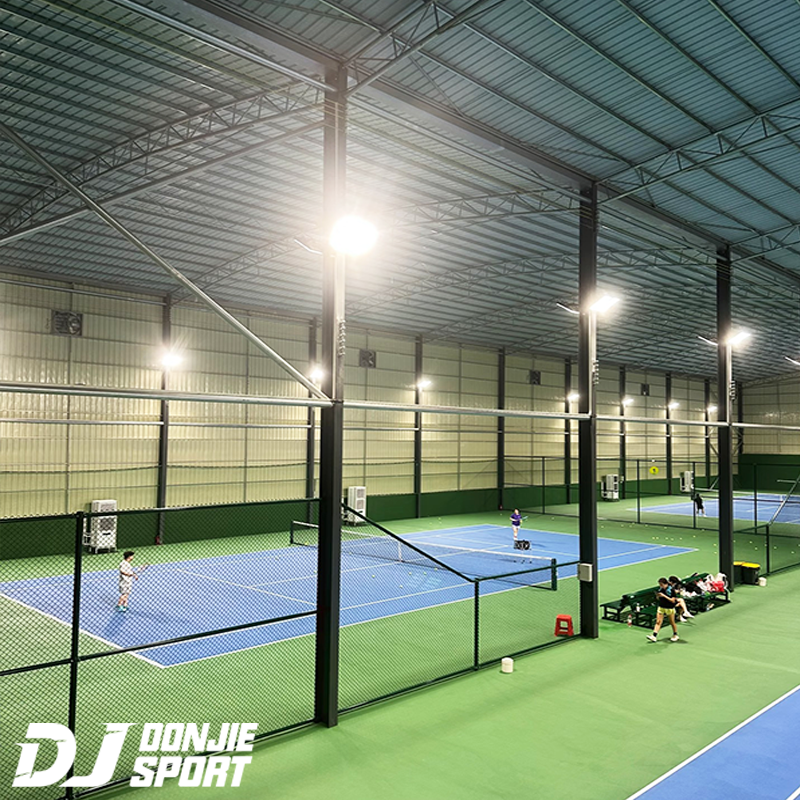
Key Considerations When Choosing Pickleball Flooring
Choosing the right flooring for your commercial pickleball court involves more than just picking a material based on appearance. Several factors must be considered to ensure that the flooring meets both functional and aesthetic needs. Here are the key aspects to keep in mind:
Durability
The durability of the flooring is one of the most critical considerations when selecting pickleball court surfaces. Commercial courts experience high levels of foot traffic, especially in popular facilities. Therefore, you need a material that can withstand constant play, heavy use, and various environmental conditions without losing its integrity. Flooring materials like PVC, rubber, and high-quality wooden floors are designed to handle the wear and tear of active play. They resist abrasions, tearing, and damage from racquets and balls, ensuring that your investment lasts for many years.
Maintenance
In a commercial setting, ease of maintenance is a key factor. You want flooring that’s simple to clean, resists stains, and doesn’t require excessive upkeep. For example, PVC flooring and rubber tiles are often easier to clean and maintain than wood or other porous materials, which may absorb moisture and require more frequent sealing or waxing. Choosing flooring that is both easy to maintain and durable will save you time and money in the long run.
Cost-effectiveness
Cost is always a factor, especially when setting up a commercial facility. The flooring you choose needs to offer the best value for your investment. While high-quality flooring options like wooden floors may have a higher upfront cost, they often have a long lifespan and require less frequent replacement. On the other hand, more affordable options like interlocking tiles or rubber flooring may offer a more budget-friendly choice, but it’s important to weigh cost against durability and long-term performance.
Aesthetic Appeal
The aesthetic aspect of flooring is crucial in commercial settings, where the visual appeal of your court can significantly impact your business. The flooring should complement the overall look and feel of the facility while also offering a professional and polished appearance. Bright colors, logo inlays, and custom designs are possible with materials like PVC flooring or interlocking tiles, making it easier to brand your space. Consider how the flooring will contribute to the overall atmosphere of the court and whether it aligns with the style you want to convey to your players and customers.
Different Types of Pickleball Flooring
When it comes to flooring options for pickleball courts, several materials stand out, each offering unique benefits. Here’s a breakdown of the most popular types:
PVC Flooring
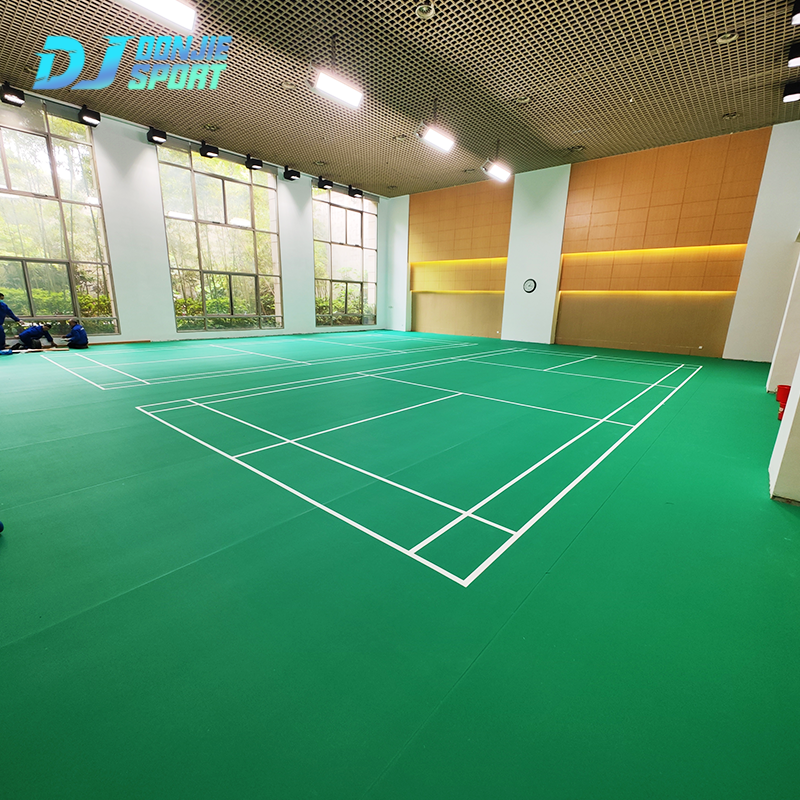
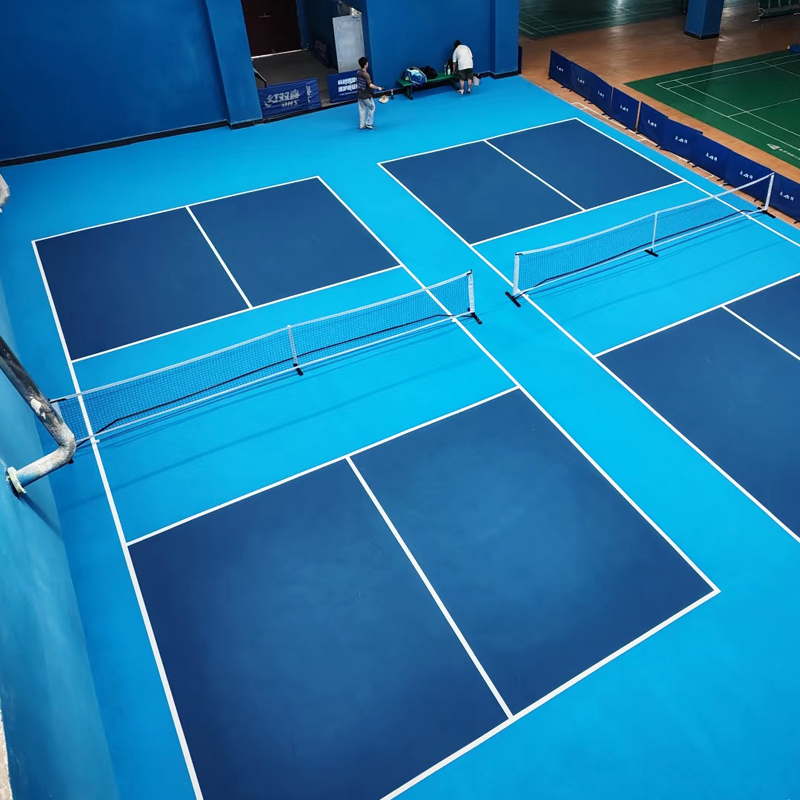
PVC flooring is one of the most popular choices for indoor pickleball courts. Known for its flexibility, shock absorption, and durability, PVC is an excellent option for both recreational and professional courts. The material’s shock-absorbing properties make it ideal for reducing impact on players’ joints, ensuring comfort during long play sessions. Additionally, PVC flooring is low-maintenance and resistant to wear, making it an excellent investment for commercial settings. Available in various colors and designs, PVC flooring also offers customization options, allowing you to create a court that aligns with your facility’s branding.
Rubber Flooring
Rubber flooring is another great choice for pickleball courts, particularly for those focused on comfort and noise reduction. Rubber is naturally slip-resistant and provides excellent grip, ensuring that players have a stable surface to perform on. It also offers superior shock absorption, making it ideal for players who need joint protection. Rubber flooring is durable, easy to install, and low-maintenance, making it a practical option for busy commercial courts. While it’s more commonly used in gyms and fitness centers, it can also be a great solution for pickleball courts.
Wooden Flooring
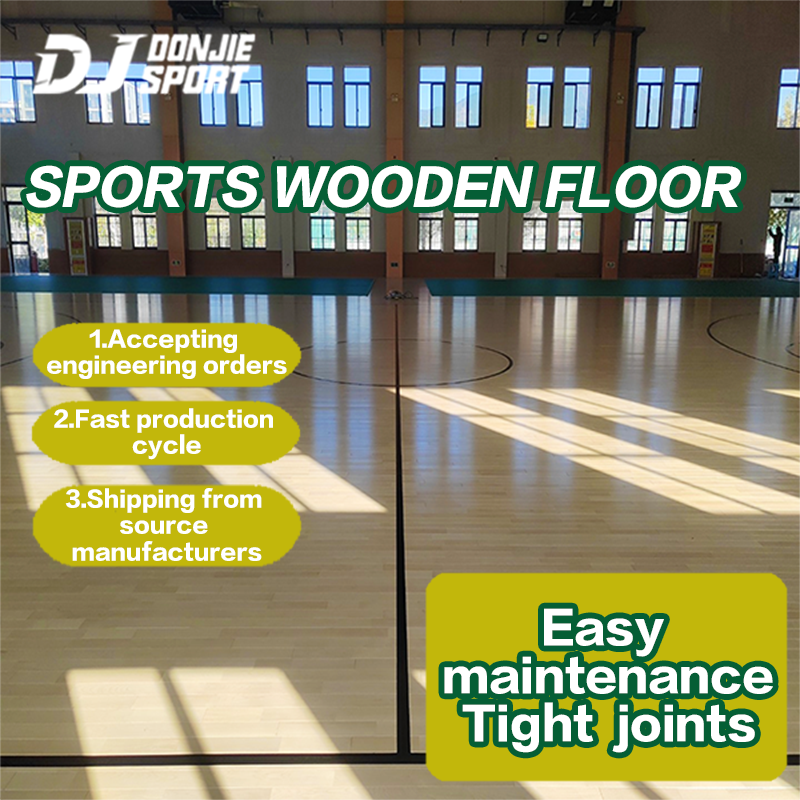
Wooden flooring is the traditional choice for indoor courts and provides a classic, premium feel. Although it requires more maintenance than PVC or rubber, wooden floors can offer exceptional performance, especially when properly installed and cared for. They have natural resilience, allowing for consistent ball bounce and great traction. Wood floors are also aesthetically pleasing and can elevate the visual appeal of your court. However, they are more prone to wear and tear, especially in high-traffic areas, and may need to be refinished over time.
Interlocking Flooring Tiles
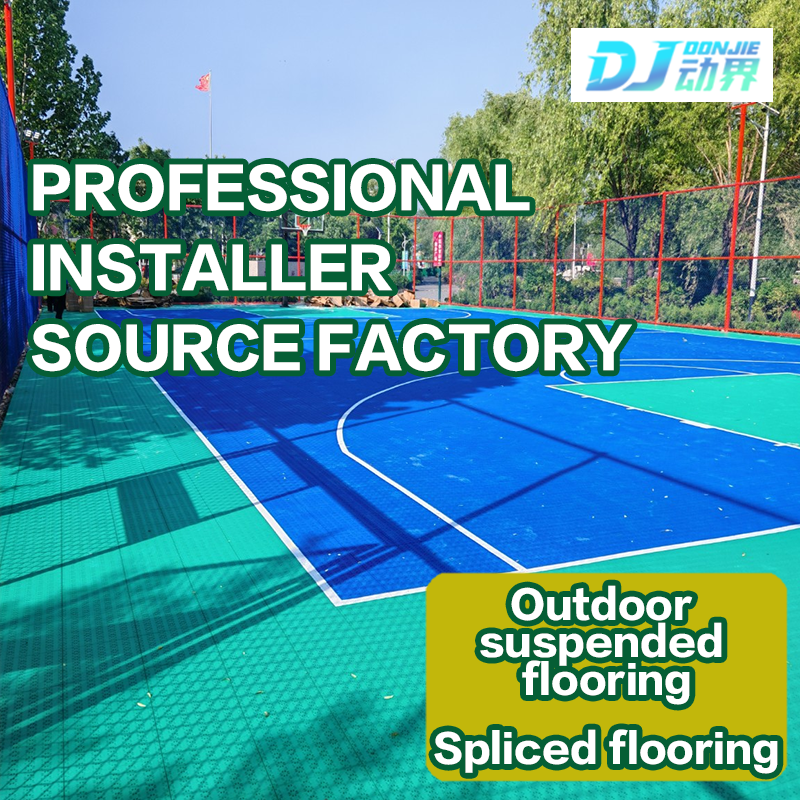
Interlocking flooring tiles are a versatile and popular option for commercial pickleball courts. They are easy to install and can be customized to fit various court sizes and shapes. These tiles are often made from durable PVC or rubber and feature interlocking edges, making them a practical option for courts that need to be assembled or disassembled. Interlocking tiles are also portable, allowing for flexibility in different court setups. They provide excellent traction, comfort, and shock absorption, but they may require periodic adjustments to maintain a flat and even surface.
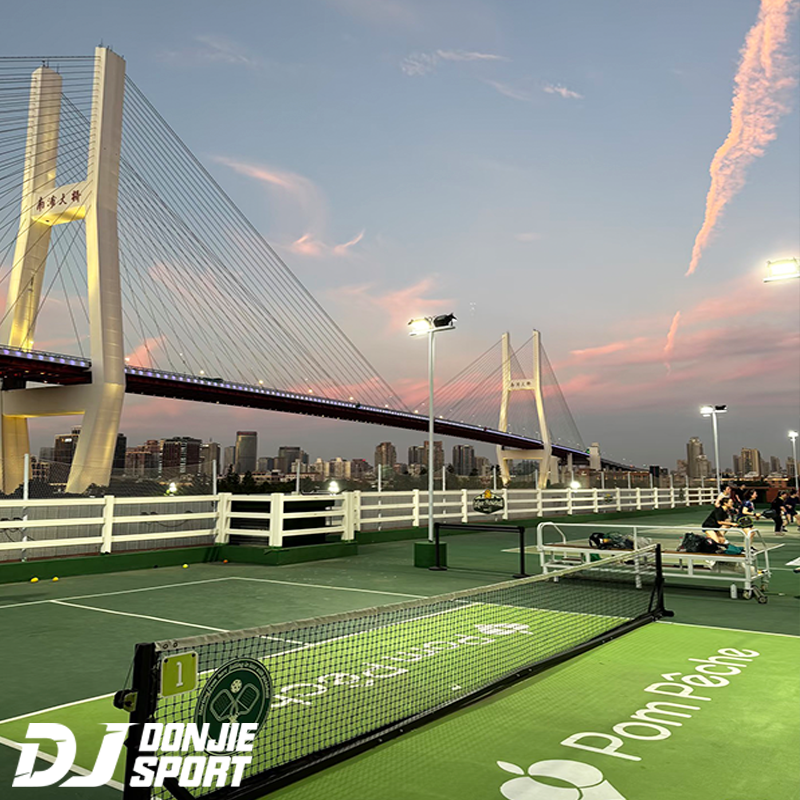
Factors That Affect Flooring Performance
Once you’ve narrowed down your flooring options, it’s essential to evaluate how each material performs in a real-world pickleball setting. Here are some factors that directly impact flooring performance:
Grip and Traction
The grip of your pickleball court flooring affects both player performance and safety. Flooring with insufficient grip can cause players to slip, resulting in injury or hindered gameplay. Look for flooring materials that offer the right balance of traction without being too sticky, as excessive grip can also hinder movement. Rubber and PVC flooring options are typically the best choices for achieving this balance.
Shock Absorption
Proper shock absorption is essential for protecting players’ joints, especially during intense games. Flooring that provides cushioning reduces the risk of strain and injury. Materials like PVC and rubber are known for their superior shock absorption qualities, making them ideal for players who spend long hours on the court.
Ball Bounce Consistency
A consistent ball bounce is critical for ensuring that the game is fair and predictable. Flooring affects how the ball interacts with the surface, so it’s essential to choose a material that ensures consistent bounce behavior. Wooden floors tend to provide the most predictable bounce, but materials like PVC are also designed to deliver consistent performance.
Slip Resistance
Safety is a top priority in any commercial facility. Slip-resistant flooring prevents accidents and ensures that players have secure footing, even during fast-paced matches. Rubber and PVC are particularly effective in offering slip resistance while maintaining comfort and performance.
Environmental Considerations
The environment in which your pickleball court is located will play a major role in your flooring decision. Here are some considerations based on your court’s location:
Indoor vs. Outdoor Flooring
Indoor pickleball courts require flooring that can withstand constant use while also offering good grip and bounce consistency. For outdoor courts, however, the flooring needs to be more resistant to weather changes, UV rays, and moisture. Specialized outdoor flooring materials like rubber and interlocking tiles are often used to ensure durability and comfort under outdoor conditions.
Climate Resistance
Different flooring materials respond differently to temperature fluctuations, humidity, and direct sunlight. PVC and rubber flooring are excellent options for withstanding various climates and temperature changes, ensuring that your court remains in top condition year-round.
Eco-Friendly Options
As sustainability becomes more of a priority, consider eco-friendly flooring options. Many modern flooring solutions, including PVC and rubber, are now made from recycled materials, offering a sustainable option without compromising on quality. These materials can provide the same level of durability and performance while reducing the environmental impact of your court.
Installation and Maintenance
Choosing the best flooring for your pickleball court also requires careful consideration of the installation and long-term maintenance processes:
Professional Installation vs. DIY
While DIY installation of interlocking tiles may seem appealing, professional installation is often the best option for commercial pickleball courts. Professionals ensure that the flooring is installed properly, reducing the risk of gaps, uneven surfaces, or other issues that could affect gameplay. Additionally, professional installation helps to extend the lifespan of your flooring.
Long-term Maintenance Tips
Maintaining your flooring is essential to ensure it lasts for years. Regular cleaning, timely repairs, and proper upkeep are essential for maintaining the performance and appearance of your court. Rubber and PVC flooring typically require less maintenance than wood, but all types of flooring benefit from regular care.
Flooring Lifespan
Different flooring types come with varying lifespans. Rubber and PVC flooring generally last longer than wood, but the longevity of your court surface will depend on the material, usage frequency, and care you provide. Proper maintenance can extend the lifespan of any flooring, ensuring you get the most value from your investment.
Conclusion
Choosing the best flooring for your commercial pickleball court involves balancing several factors, from durability and maintenance to performance and aesthetics. Whether you choose PVC, rubber, or wooden flooring, it’s important to select a material that suits your facility’s needs, budget, and environmental conditions. Consider factors like shock absorption, traction, and climate resistance to ensure that your court provides a safe, enjoyable playing experience for all players.
By carefully selecting the right flooring, you’ll create a court that not only performs well but also enhances the overall appeal of your facility. Be sure to consult with professionals and invest in high-quality flooring that can stand the test of time and keep your players happy.