Whether planning a backyard pickleball court or a large-scale sports infrastructure project, one key element can make or break your court—the flooring. The right pickleball court flooring affects gameplay, safety, comfort, and player experience. That’s why choosing the right Pickleball court flooring and understanding the materials, installation process, and layout standards is crucial. From ball bounce and traction to resistance against weather conditions and injury risks, your pickleball court flooring guide plays a major role in long-term performance and maintenance.
What Is Pickleball?
Pickleball is a paddle sport that combines elements of tennis, badminton, and table tennis. It is played on a smaller court, making it ideal for urban spaces, schools, and residential projects. The sport is suitable for all age groups, which makes pickleball courts a long-term investment.
Choose a Location for Pickleball Court Flooring Installation
Selecting the right location is the first step in the pickleball court flooring construction process. The site should offer stable ground conditions, minimal slope, and proper drainage. Outdoor pickleball court flooring requires sun exposure analysis and wind protection, while indoor installations demand sufficient ceiling height and controlled environmental conditions. A carefully chosen location protects the flooring from premature wear and structural stress.
Pickleball Court Dimensions
Understanding Pickleball court dimensions is the first step to planning the construction of your pickleball court.
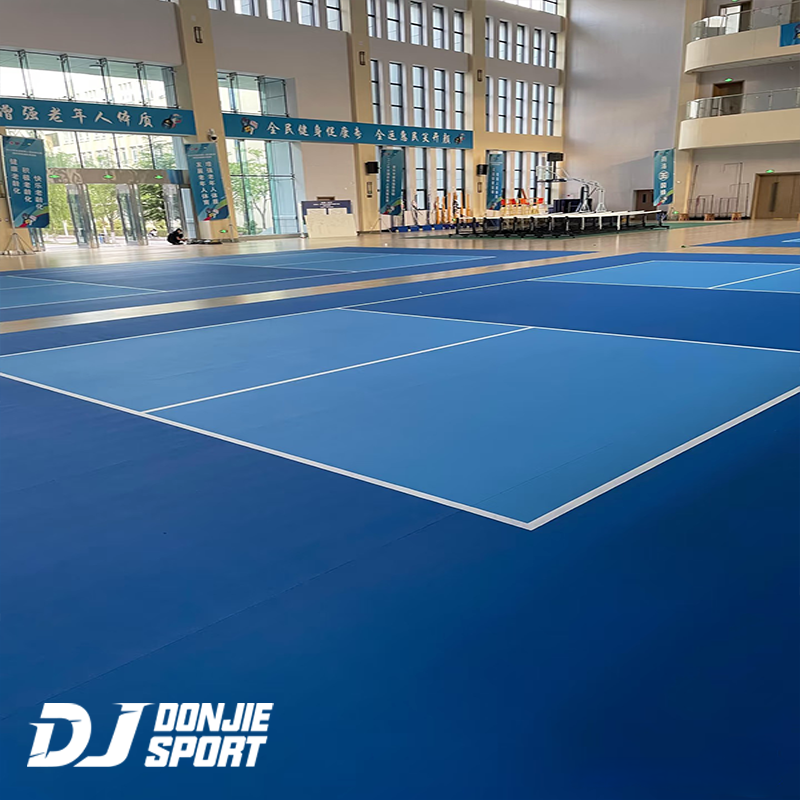
A standard full-size pickleball court is 20 feet by 44 feet for both singles and doubles. In addition to this, you’ll want to add additional space on each side of the court to create a comfortable playing space. If you’re planning on converting a tennis court, then 30 feet by 60 feet is standard, while 34 feet by 64 feet is ideal for new construction.
Design the Court Layout
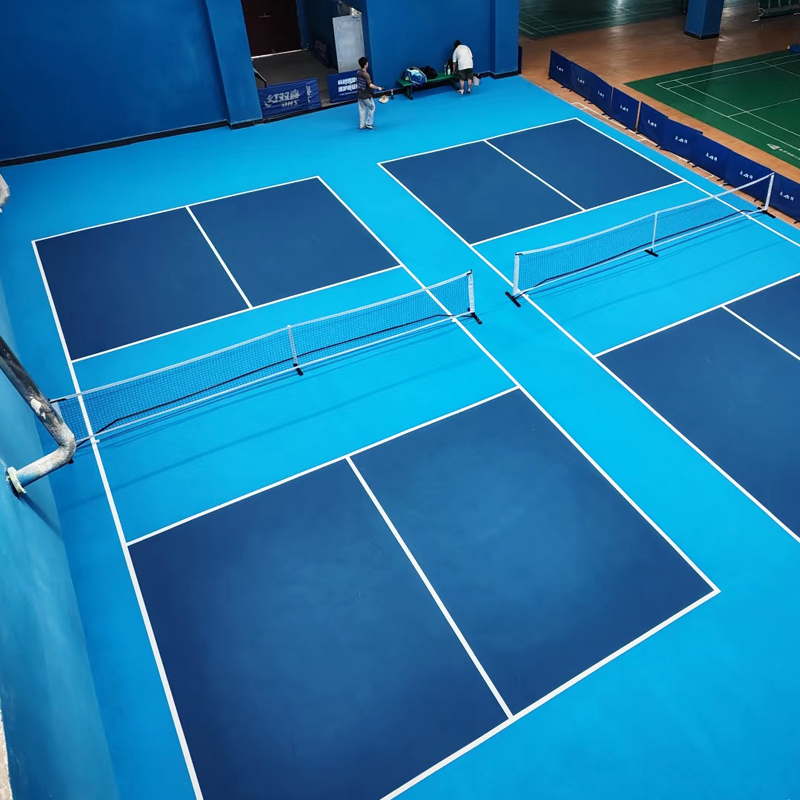
The next step is considering the pickleball court setup. This refers to the lines marking the service areas and the kitchens — the baselines, sidelines, non-volley lines and centerlines. These lines on the court should be 2 inches wide and white. At the center of the court is the pickleball net, which should be 22 feet wide.
As you design the court’s layout, don’t forget the required permits before you start construction. Local and state regulations will determine the specific types and number of permits you need to build the court.
Design the Court Layout with Pickleball Court Flooring Standards
Designing the layout involves aligning pickleball court flooring with official court dimensions and player movement patterns. Proper orientation reduces glare and enhances visibility. Adequate spacing around the court allows players to move freely without risking injury or damaging the flooring. A precise layout also ensures accurate line marking and optimal use of the flooring surface.
Choose a Surface That Supports Long-Term Pickleball Court Flooring Performance
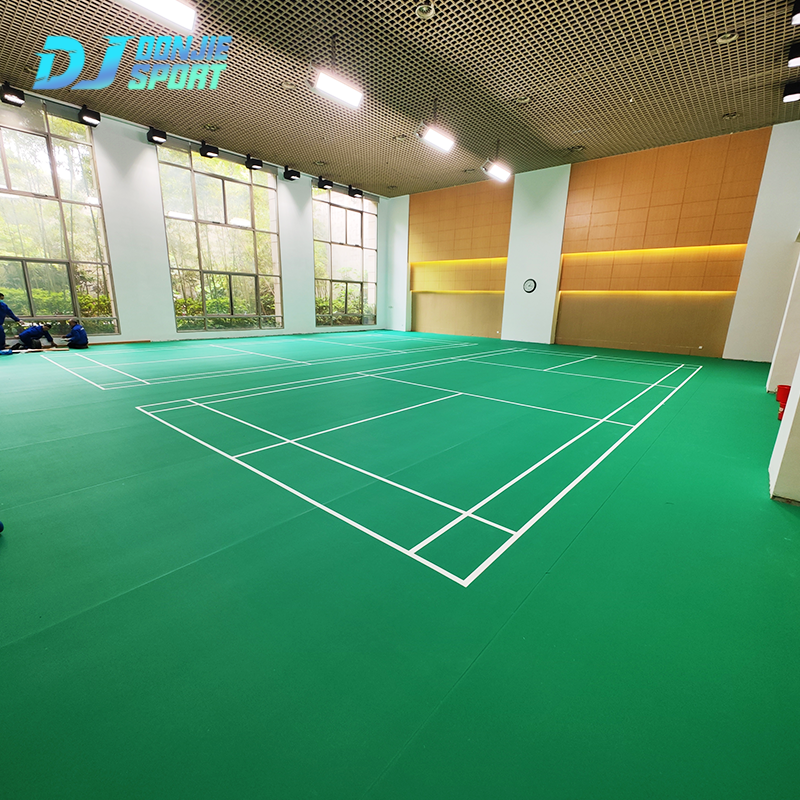
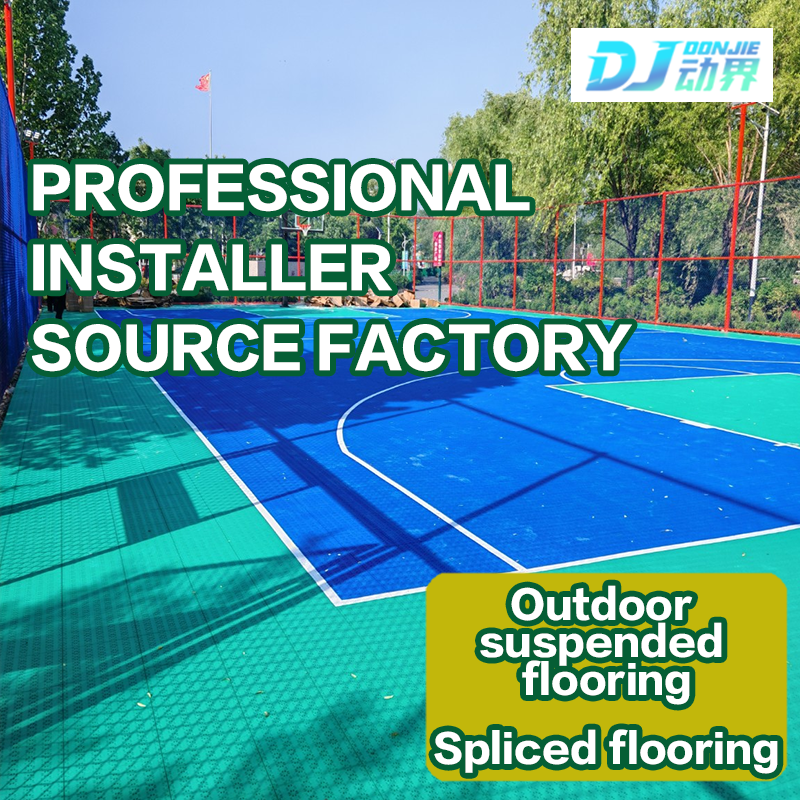
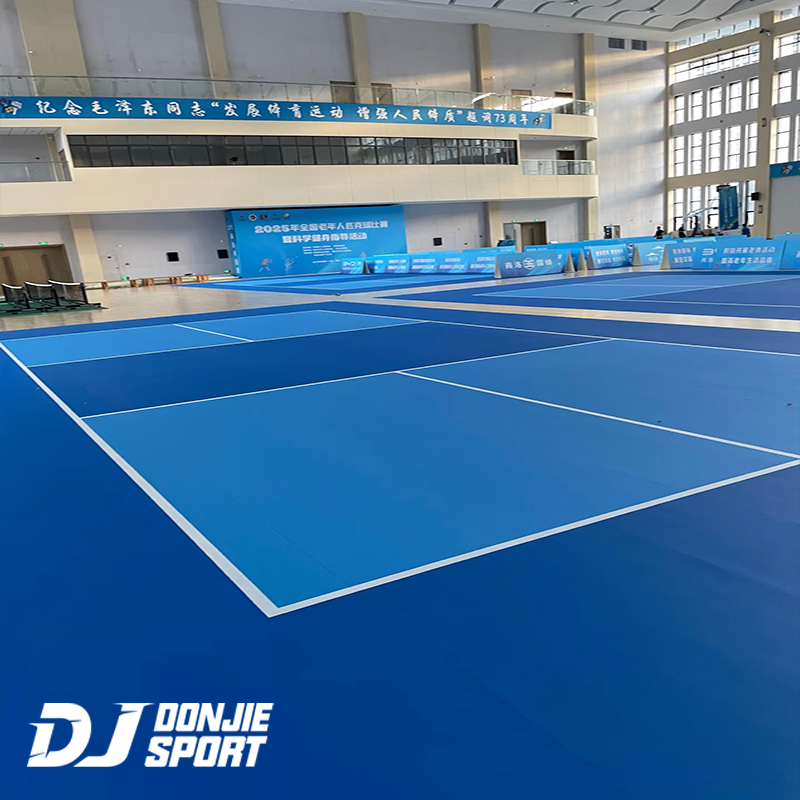
Surface selection is the core of pickleball court flooring construction. A solid concrete base provides structural stability and supports surface coatings or modular systems. Acrylic pickleball court flooring offers excellent traction and weather resistance, making it suitable for outdoor courts. PVC and modular pickleball court flooring systems provide shock absorption and quick installation, often preferred for indoor facilities. Choosing the right surface improves comfort, reduces joint strain, and extends flooring lifespan.
Add Fencing to Protect Pickleball Court Flooring and Enhance Safety
Fencing helps protect pickleball court flooring by keeping players and equipment within designated areas. Properly installed fencing prevents accidental damage from surrounding activities and improves safety. Fence height and material selection should complement the court design while allowing easy access for maintenance and gameplay.
Consider a Roof for Indoor or Covered Pickleball Court Flooring Projects
A roof significantly enhances pickleball court flooring durability by protecting the surface from rain, UV exposure, and debris. Covered courts allow year-round play and reduce maintenance demands. Roofing systems must support ventilation and moisture control to prevent condensation that could compromise flooring performance.
Install Lights Without Compromising Pickleball Court Flooring Performance
Lighting installation should be planned alongside pickleball court flooring construction. Proper light placement ensures even illumination without glare or shadows. Poles and fixtures must be positioned to avoid surface damage and allow safe player movement. Energy-efficient lighting solutions enhance visibility while supporting sustainable facility operations.
Buy a Pickleball Net System Compatible with Pickleball Court Flooring
Choosing the right net system is essential for preserving pickleball court flooring integrity. Permanent net systems should be anchored carefully to avoid surface cracking or wear. Portable systems offer flexibility and reduce flooring impact. Regardless of type, the net must meet regulation height standards and align precisely with the court layout.
Set Up the Court and Finalize Pickleball Court Flooring Details
Final setup includes applying accurate court lines, inspecting surface quality, and testing traction and ball response. Proper line marking ensures compliance with gameplay standards without compromising the flooring material. A final inspection confirms that the pickleball court flooring is ready for consistent use and long-term performance.
Common Construction Mistakes to Avoid with Pickleball Court Flooring
Skipping surface preparation, ignoring drainage requirements, or using incompatible materials can shorten pickleball court flooring lifespan. Inadequate planning often leads to cracks, uneven surfaces, and safety hazards. Avoiding these mistakes ensures a reliable and professional-grade court.
Long-Term Maintenance Tips for Pickleball Court Flooring After Construction
Routine cleaning, surface inspections, and timely repairs help maintain pickleball court flooring quality. Preventative maintenance reduces repair costs and preserves player experience. Proper care extends the life of the flooring and protects the initial construction investment.
Quality Control and Testing After Pickleball Court Flooring Installation
Before opening the court for play, quality control testing is essential. Pickleball Court Flooring should be tested for ball bounce consistency, traction levels, and shock absorption.
Safety inspections confirm that the surface meets performance expectations and reduces stress on players’ joints. Any issues identified during testing should be corrected immediately to ensure the Pickleball Court Flooring construction process delivers a reliable final result.
Building a Reliable Pickleball Court Flooring System from Start to Finish
A successful pickleball court construction project depends on thoughtful planning and precise execution of pickleball court flooring at every stage. From location selection to final setup, each decision influences performance, safety, and durability. Investing in the right flooring system ensures a court that meets modern standards and supports long-term play.