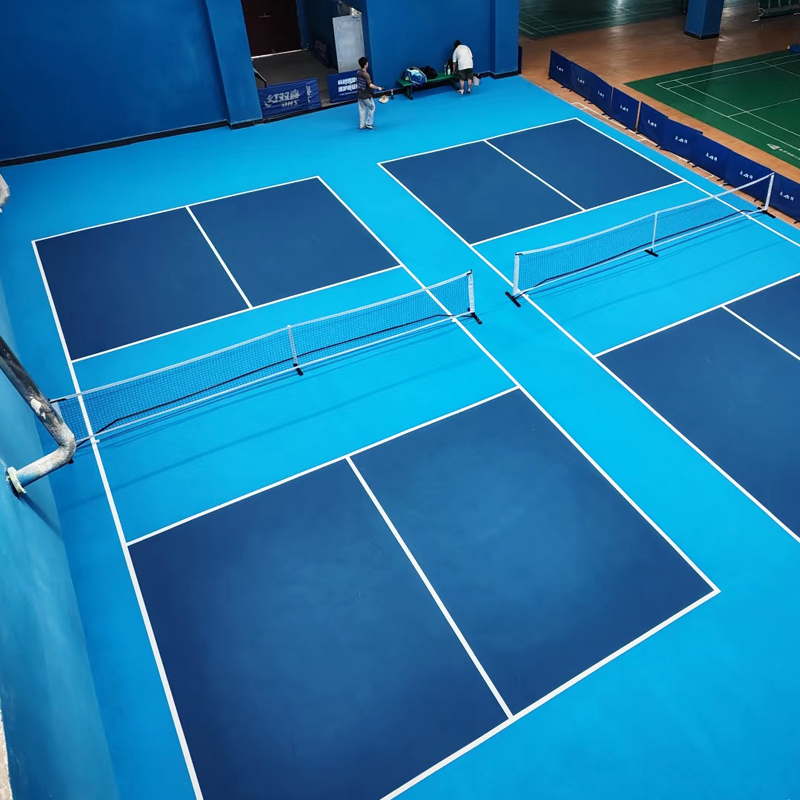
When setting up a pickleball court, the flooring you choose plays a crucial role in the overall game experience. Not only does it affect the performance of the game, but it also influences player safety, comfort, and the longevity of the court. Whether you’re creating a recreational space for community play or building a high-performance facility for professional tournaments, the right flooring is essential.
Pickleball court flooring comes in several material options, each offering distinct advantages depending on your needs. Understanding how different surfaces impact court performance will help you make an informed decision that ensures an optimal playing environment for players of all levels.
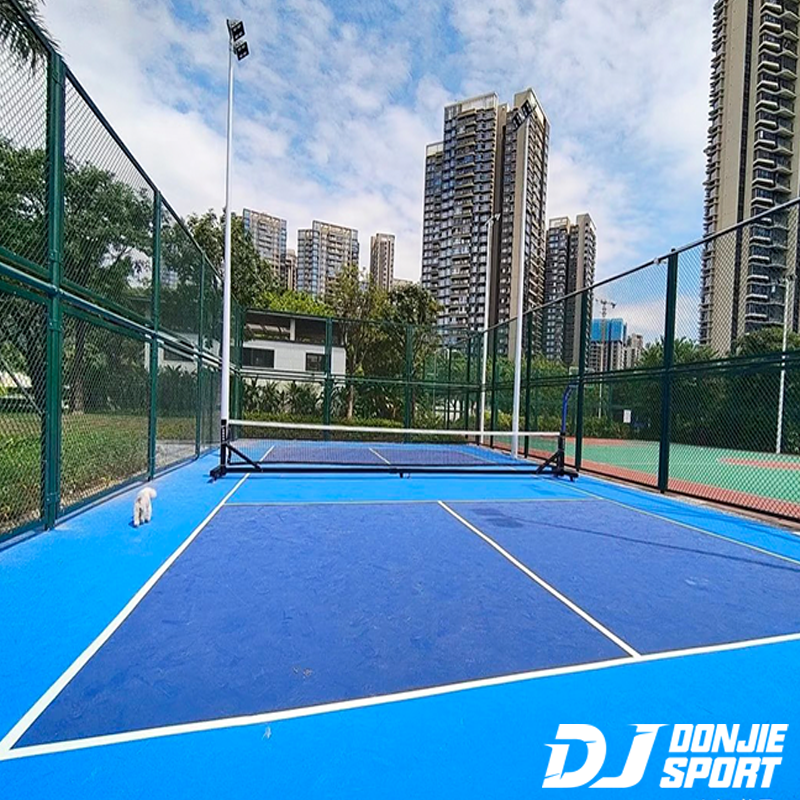
The Role of Flooring in Pickleball Court Performance
Flooring is one of the most important factors influencing the overall performance of a pickleball court. The surface directly affects the speed of the game, how the ball bounces, and how players move during play. A good flooring choice ensures that the ball bounces consistently and predictably, which is vital for a fair and competitive game.
A surface that is too hard or uneven can lead to irregular ball bounces, making the game unpredictable. On the other hand, a floor that is too soft may reduce the speed of the game and cause more fatigue to players over time. Furthermore, player safety and comfort are heavily influenced by the type of flooring used, particularly in reducing the risk of injury during fast-paced gameplay.
In addition to these performance factors, flooring can also impact the longevity of the court. A durable surface will withstand constant foot traffic and exposure to the elements without losing its quality over time.
PVC Flooring: Durability and Consistency
PVC flooring is one of the most popular materials for indoor and outdoor pickleball courts. Known for its durability, this material offers exceptional resistance to wear and tear, making it ideal for high-traffic courts.
One of the biggest advantages of PVC flooring is its ability to maintain consistent ball bounce and speed. It offers a smooth surface that helps with precision and control during gameplay. Additionally, PVC is resistant to moisture, which is particularly beneficial for outdoor courts exposed to weather conditions. Its low-maintenance requirements and long lifespan make it a cost-effective choice for facility owners.
The cushioning effect of PVC also helps reduce the strain on players’ joints, offering a more comfortable playing experience. Whether you’re installing the flooring indoors or outdoors, PVC flooring ensures consistent performance in all environments.
Rubber Flooring: Shock Absorption and Comfort
Rubber flooring is another material frequently chosen for pickleball courts, especially when player comfort and injury prevention are a priority. Rubber provides excellent shock absorption, which helps reduce the risk of joint injuries during intense play. It also provides a softer surface compared to harder options like concrete or acrylic, making it an excellent choice for recreational facilities or courts used by players of all ages.
While rubber flooring can offer superior comfort, it does have some downsides. It may affect ball bounce more than harder surfaces, slowing down the game. Additionally, it may require more maintenance, as rubber floors can be susceptible to dirt and debris getting trapped in the grooves.
Despite these drawbacks, rubber flooring remains a great option for courts where player safety and comfort are prioritized over high-speed gameplay.
Acrylic Flooring: Hardness and Performance
Acrylic flooring is often the material of choice for professional indoor pickleball courts. Its smooth, hard surface promotes a fast-paced game with a consistent and predictable ball bounce. This makes acrylic flooring ideal for competitive play, where precision and speed are essential.
Acrylic floors are designed to withstand heavy foot traffic and resist fading, making them suitable for high-use courts. The surface provides a slick finish that minimizes friction, allowing players to move quickly across the court. However, the hardness of the material can be tough on joints, which may make it less comfortable for recreational players or those with injuries.
Another consideration for acrylic flooring is its maintenance. Although the surface is durable, it requires regular cleaning to maintain its smooth finish and ensure a consistent playing experience. It can also be more expensive to install compared to other options, but its performance benefits often justify the investment.
Artificial Grass Flooring: A Soft Alternative
For those seeking a more natural look and feel, artificial grass flooring is an excellent choice for outdoor pickleball courts. Unlike hard surfaces, artificial grass offers a softer, more cushioned playing surface that can help reduce player fatigue and the risk of injury. It mimics the feel of traditional grass courts but with the added benefits of durability and low maintenance.
While artificial grass provides comfort and a realistic playing experience, it does have some limitations. The ball bounce can be slightly unpredictable, and the surface may wear down faster than harder options, especially if not maintained properly. However, for players looking for a unique and comfortable experience, artificial grass flooring remains a solid choice.
Concrete and Asphalt: Cost-Effective Options
Concrete and asphalt are common choices for budget-conscious pickleball court builders. Both materials are widely available and relatively inexpensive compared to other options. While they may not offer the high-end performance of acrylic or PVC, they still provide a stable and durable surface for casual play.
Concrete surfaces, in particular, can offer a consistent ball bounce, but they are quite hard, which can lead to player discomfort and higher injury risks. Asphalt surfaces, on the other hand, are softer but may require more maintenance over time. Both surfaces can be customized with coatings to improve their performance and aesthetics, but they are not ideal for high-level or professional play due to their lack of cushioning and unpredictable bounce.
How to Choose the Best Flooring for Your Pickleball Court
When deciding on the best flooring material for your pickleball court, there are several factors to consider. First and foremost is the intended use of the court. For high-performance, professional-level play, materials like acrylic or PVC may be the best options, offering consistent ball bounce and high durability.
For recreational courts or facilities focused on player comfort, rubber or artificial grass may be more suitable, as these materials offer softer surfaces and better shock absorption. Budget is also a significant factor, as some materials like concrete and asphalt are more affordable but may not provide the same level of performance or comfort.
In the end, the best flooring choice will depend on your specific needs, whether it’s durability, comfort, performance, or a combination of these factors.
Conclusion
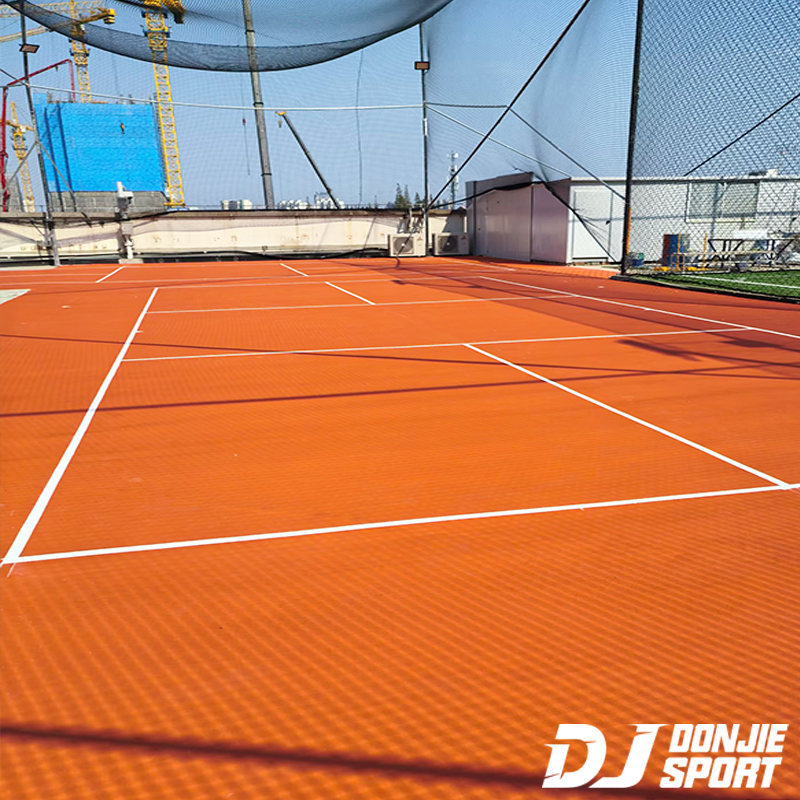
In conclusion, selecting the right flooring material for your pickleball court is essential for ensuring an optimal playing experience. Different materials like PVC, rubber, acrylic, artificial grass, and concrete each offer unique advantages and drawbacks that can impact the performance of the game, player safety, and court longevity. By carefully considering the type of play, player needs, and budget, you can choose the flooring that best fits your court and creates a top-notch playing environment.