Pickleball is rapidly becoming one of the most popular sports worldwide, and with this surge in popularity comes an increased demand for specialized courts. Whether you’re setting up a court in a community center, fitness club, or even outdoors, one of the most crucial decisions you’ll make is selecting the right flooring. The right flooring can enhance the players’ experience, increase the durability of the court, and minimize maintenance costs in the long run.
In this article, we’ll explore the key factors you need to consider when choosing your pickleball court flooring and review the various options available. By the end, you’ll have a clear understanding of what material best suits your venue’s needs.
The Key Factors to Consider When Choosing Pickleball Court Flooring
When it comes to selecting the best flooring for your pickleball court, several factors should guide your decision. Each court has different requirements based on its location, budget, and intended use. Below are the key factors to consider:
-
Durability: Pickleball courts are high-traffic areas, and flooring needs to withstand constant use without degrading quickly. Materials that are durable and resistant to wear will ensure your investment lasts for years.
-
Safety: Safety is paramount for any sporting activity. Flooring that provides adequate traction and cushioning can prevent injuries, especially during fast-paced play. The right surface can reduce the risk of slips and falls.
-
Comfort: A comfortable court enhances players’ performance. Surfaces that offer the right balance of cushioning can help minimize strain on the body, especially for players engaging in long games or tournaments.
-
Maintenance: Regular maintenance of your flooring is inevitable, but certain materials require more upkeep than others. Choosing a low-maintenance flooring material can save both time and money in the long term.
-
Aesthetic Appeal: While functionality is the top priority, the look of your court matters too. Flooring options come in various colors and styles, allowing you to create a visually appealing environment that matches your venue’s design.
Common Pickleball Court Flooring Options
Now, let’s dive into the various flooring options available for pickleball courts and examine their unique features:
PVC Flooring
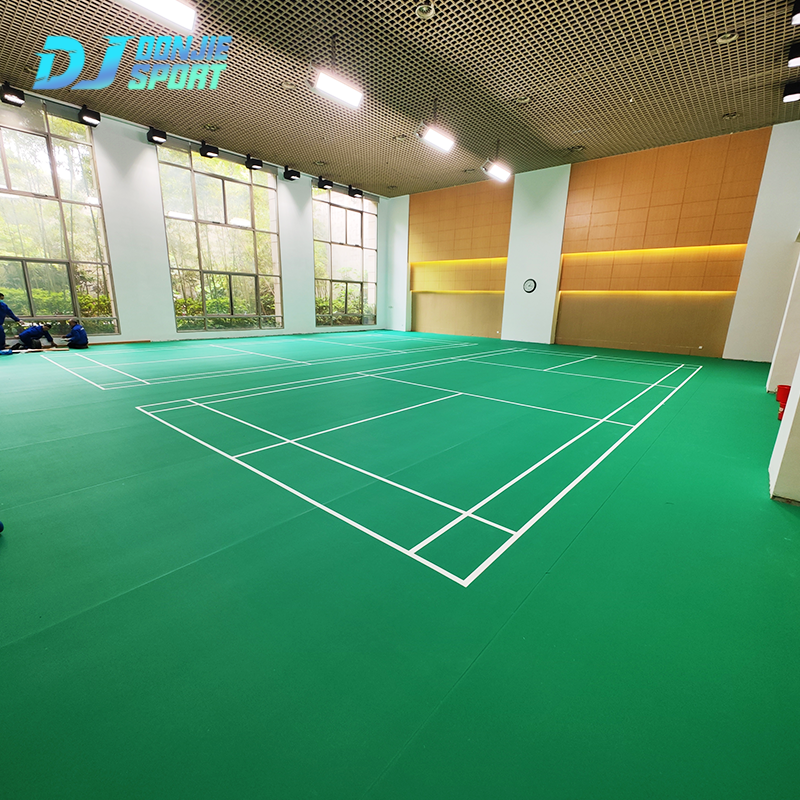
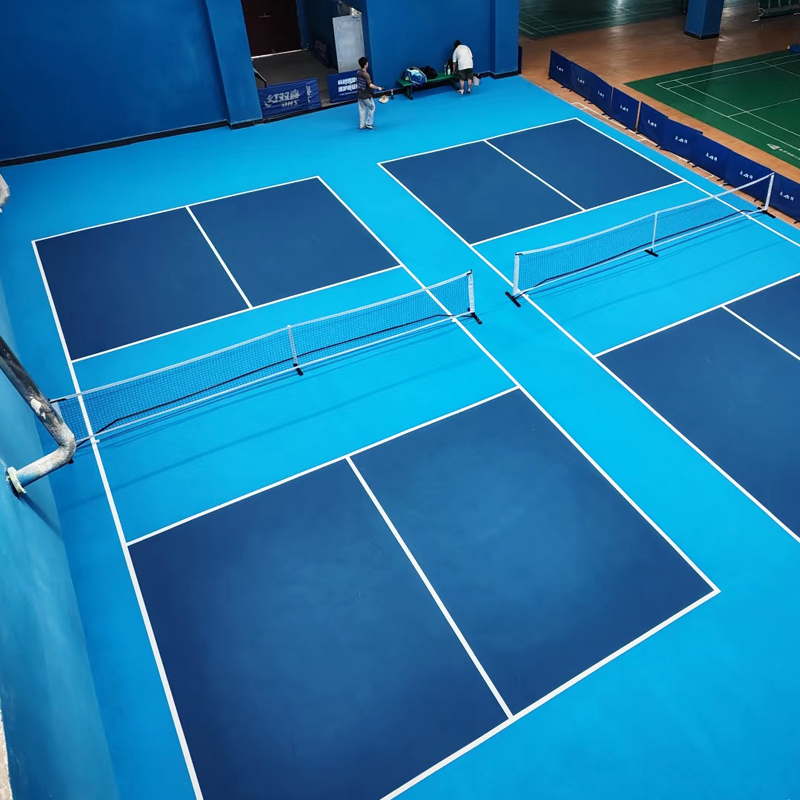
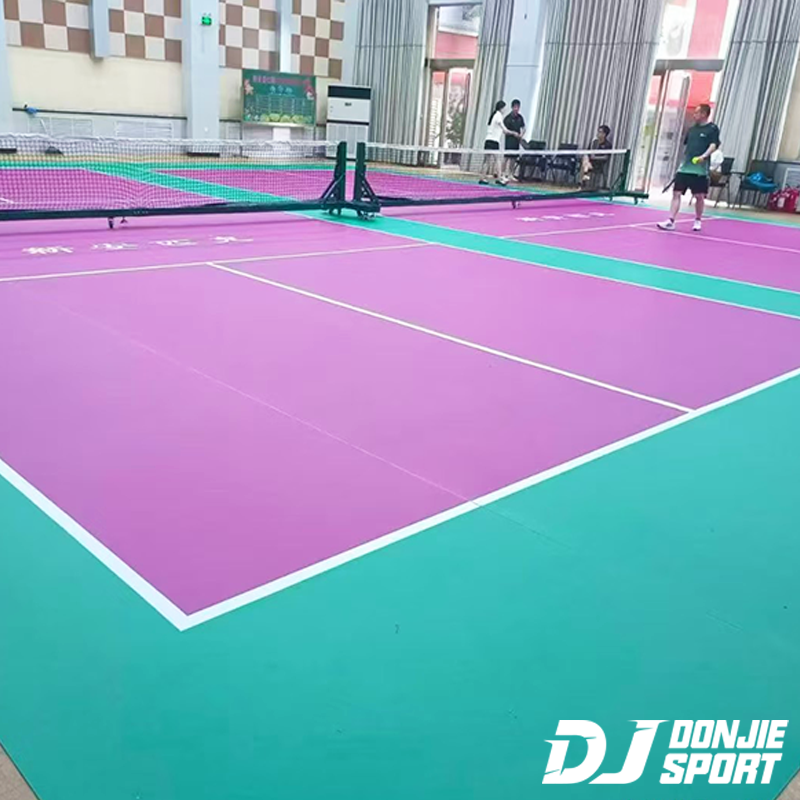
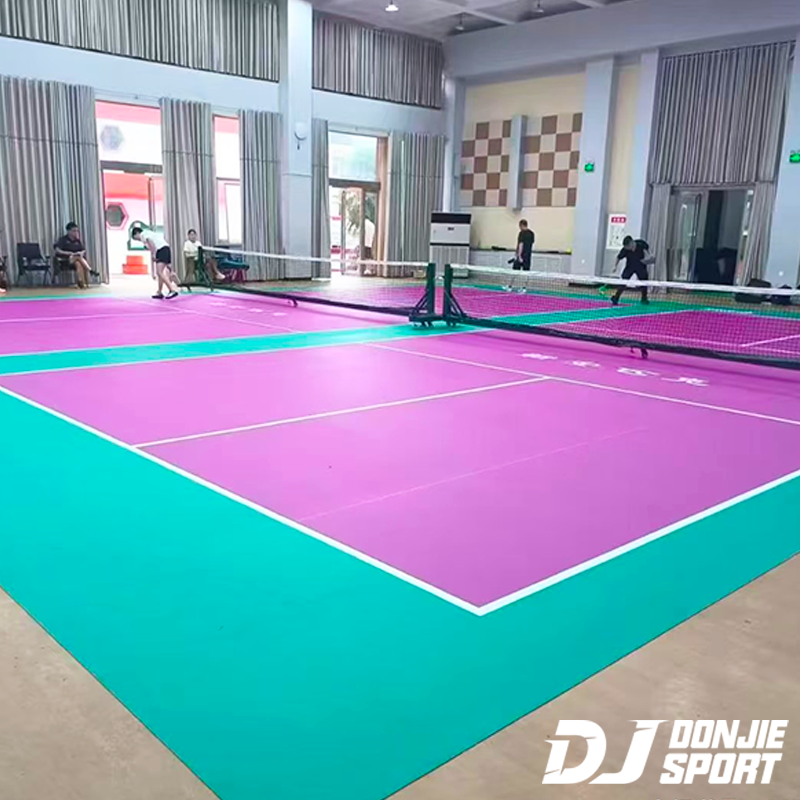
PVC flooring is a popular choice for indoor pickleball courts due to its durability, ease of installation, and low maintenance. It’s highly resistant to wear and tear, making it perfect for high-traffic areas. The smooth surface offers excellent traction, reducing the risk of slips.
Rubber Flooring
Rubber flooring is an excellent choice for those looking for a softer surface. It provides shock absorption and reduces the impact on joints during play. This flooring is typically more expensive than other options but is worth the investment if comfort is a top priority.
Wooden Flooring
Wooden floors are often seen in more traditional or upscale indoor pickleball courts. They offer a classic aesthetic appeal and are known for their high-performance characteristics. However, wooden floors are also more susceptible to damage from humidity and require regular maintenance to keep them in top condition.
Interlocking Flooring Tiles
Interlocking tiles are an affordable and flexible flooring option. They are easy to install and replace if needed. These tiles can be used both indoors and outdoors, and they offer a solid grip for players. However, the tiles may shift under heavy use, which could affect court performance.
Outdoor Flooring
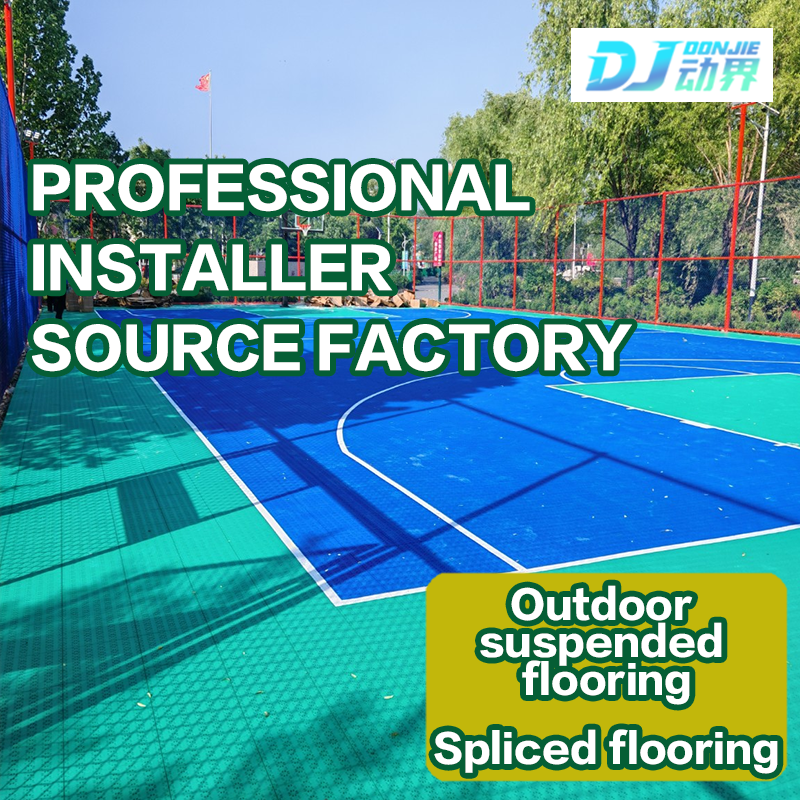
For outdoor pickleball courts, specialized outdoor flooring is necessary to withstand weather elements. These flooring materials are designed to resist UV rays, moisture, and temperature fluctuations. Though expensive, they provide a long-lasting solution for outdoor venues.
Pros and Cons of Different Flooring Materials
Each flooring material comes with its own set of benefits and drawbacks, and it’s important to weigh these when making your choice:
-
PVC Flooring:
-
Pros: Durable, easy to clean, ideal for high-traffic indoor courts.
-
Cons: Limited aesthetic customization, can be slippery if not maintained.
-
-
Rubber Flooring:
-
Pros: Great for shock absorption, comfortable for players, non-slip.
-
Cons: High cost, requires proper maintenance to avoid wear.
-
-
Wooden Flooring:
-
Pros: Aesthetic appeal, traditional choice for indoor courts.
-
Cons: Expensive, susceptible to moisture, requires frequent maintenance.
-
-
Interlocking Flooring Tiles:
-
Pros: Quick to install, cost-effective, versatile for different environments.
-
Cons: Tiles can shift during heavy play, may require re-alignment.
-
-
Outdoor Flooring:
-
Pros: Weather-resistant, durable, designed for harsh conditions.
-
Cons: Expensive, complex installation process.
-
How to Choose the Right Flooring for Your Venue
When selecting the right flooring for your pickleball court, consider the following aspects:
-
Assess the type of venue: Is your court indoor or outdoor? The flooring material will vary based on this factor. Outdoor courts require more robust materials designed to handle weather conditions.
-
Budget considerations: Flooring materials come in a wide range of prices. Determine your budget before making a choice. It’s essential to balance quality and cost to get the best value for your investment.
-
Space constraints and layout planning: Consider the size and layout of your venue. Certain materials may be better suited for specific court sizes or designs.
-
Safety and comfort priorities: Choose a surface that prioritizes player safety and comfort. Flooring with proper cushioning and traction can make a significant difference in the player’s overall experience.
The Best Flooring for Your Pickleball Court
Selecting the right flooring for your pickleball court is essential for both player performance and the longevity of the venue. Whether you opt for durable PVC, comfortable rubber, or a more aesthetic wooden floor, ensure that your choice meets the specific needs of your facility. By considering factors like durability, safety, comfort, and maintenance, you’ll be able to create an ideal environment for players.