When it comes to designing an outdoor basketball court, one of the most critical decisions you’ll make is choosing the right flooring. The type of flooring you select directly affects not only the aesthetic appeal and performance of the court but, more importantly, the safety of the players. Outdoor basketball courts are subject to various environmental factors like rain, sun exposure, and temperature fluctuations, all of which can impact the performance of the flooring over time. Proper flooring plays a vital role in reducing injuries by providing the necessary support, cushioning, and traction that players need for safe and efficient movement. In this article, we’ll explore why player safety should be the top priority when selecting outdoor basketball court flooring and how the right choice can enhance both safety and performance.
Impact of Flooring on Player Performance and Injury Prevention
Outdoor basketball flooring is more than just a surface to play on—it directly affects how players interact with the court and influences their overall performance. When choosing the right flooring, it’s important to consider its impact on the player’s ability to move quickly, pivot, and stop without risk. The wrong surface can lead to injuries, ranging from sprained ankles to more serious joint issues due to improper shock absorption.
The right outdoor basketball flooring should offer a balance between cushioning and firmness, allowing for optimal traction while still providing enough support to reduce the impact of sudden movements. Surfaces that are too hard can increase the risk of joint stress and muscle fatigue, while surfaces that are too soft might compromise stability. Properly engineered flooring provides the right amount of bounce and support, enabling athletes to play at their best without worrying about their safety.
Types of Outdoor Basketball Flooring Materials
Choosing the appropriate material for outdoor basketball court flooring is essential for ensuring player safety and court longevity. Several flooring materials are commonly used in outdoor courts, each with its unique advantages and drawbacks.
-
Rubber Flooring: Rubber is a popular choice due to its shock-absorbing qualities. It provides excellent cushioning, which reduces the risk of impact-related injuries. It also offers good slip resistance, ensuring that players can move freely without the risk of slipping. However, rubber flooring can be expensive, and over time, exposure to the elements can cause it to degrade if not properly maintained.
-
Acrylic Flooring: Acrylic courts are durable, weather-resistant, and easy to maintain. Acrylic surfaces are often used in high-end outdoor courts and are known for their smooth, fast-playing surface. While they offer good traction, they tend to be harder compared to rubber, which might not provide the same level of joint protection. However, acrylic courts are still a solid choice for competitive environments where speed and performance are prioritized.
-
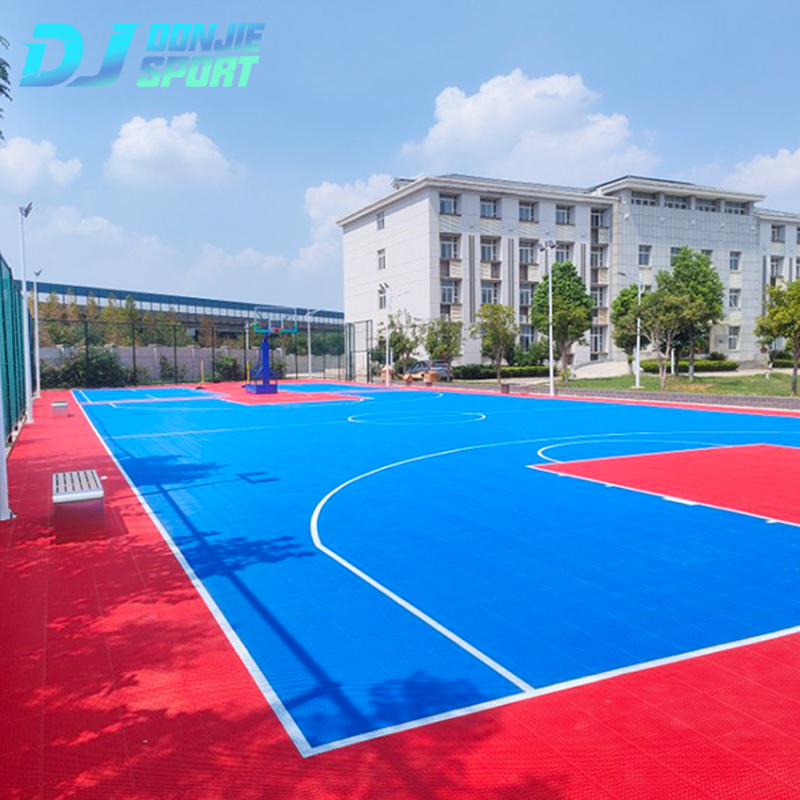
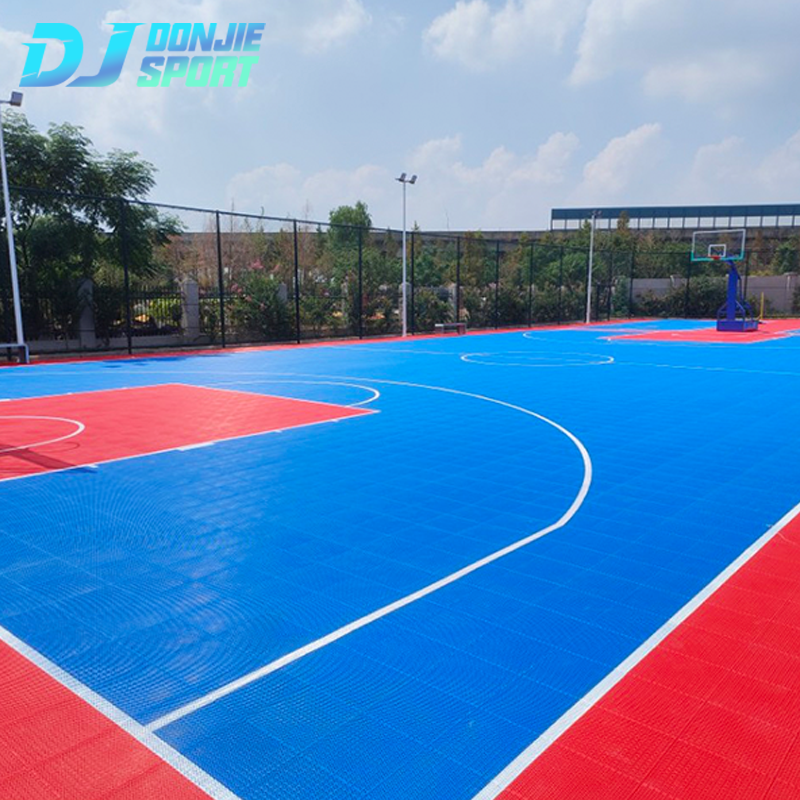
Interlocking Tiles: Interlocking tiles are an increasingly popular option for outdoor basketball courts. Made from materials like PVC or polypropylene, these tiles are known for their durability and ease of installation. Interlocking tiles are designed to withstand extreme weather conditions and offer excellent traction, making them a safer choice for outdoor courts. The downside is that the joints between tiles can sometimes create uneven surfaces, which may affect player stability during intense gameplay.
-
Synthetic Turf: Synthetic turf is another option for outdoor basketball courts, especially for multi-purpose courts. It provides a softer, more forgiving surface compared to traditional hard courts, reducing the risk of joint injuries. However, synthetic turf can become slippery when wet, so it may require additional maintenance to ensure optimal traction.
Shock Absorption and Cushioning: Why It Matters
When players make sudden stops or jump to make a shot, the impact on their joints can be significant. Floors that provide proper shock absorption help minimize this impact, reducing the likelihood of injury. Floors with insufficient cushioning can lead to chronic issues such as joint pain, stress fractures, and long-term damage to knees, ankles, and hips.
Rubber and interlocking tile flooring are often praised for their superior shock-absorbing qualities. These materials help dissipate the energy generated during play, preventing players from experiencing excessive stress on their bodies. The cushioning effect also promotes comfort, allowing players to focus on the game without worrying about potential injuries.
Slip Resistance: Preventing Accidents
One of the most critical safety features of outdoor basketball court flooring is its slip resistance. The surface must provide adequate traction to prevent players from slipping, especially during high-speed moves or when the court is wet from rain or humidity. Slips and falls can lead to serious injuries, including sprains, fractures, or concussions.
The texture and pattern of the flooring are essential in creating a surface that offers excellent grip. Many outdoor basketball court flooring materials, such as rubber or textured acrylic, are designed with built-in slip resistance. These materials ensure players can make fast cuts, sudden pivots, and jumps without the fear of losing their footing.
Durability and Weather Resistance for Long-Term Safety
Outdoor basketball courts are exposed to the elements year-round, from rain and snow to intense UV rays from the sun. This constant exposure can cause significant wear and tear on the flooring, potentially compromising player safety. Flooring materials like rubber, acrylic, and interlocking tiles are designed to withstand these environmental challenges, offering long-term durability and maintaining their performance over time.
Weather-resistant materials ensure that the flooring won’t crack, fade, or degrade after extended exposure to the sun or rain. This is especially important for maintaining a safe playing surface, as worn-out flooring can become uneven, leading to tripping hazards. Selecting a material with high durability ensures that your court remains safe for players, even after years of use.
Easy Maintenance for Long-Term Player Protection
Maintaining your outdoor basketball flooring is essential for preserving its safety features. Regular cleaning and proper care can prevent the build-up of debris, algae, and other substances that can create slippery or uneven surfaces. Some materials, like interlocking tiles and rubber flooring, are easier to clean and repair than others.
By investing in flooring that is both durable and easy to maintain, you can ensure long-term player safety. A well-maintained court will continue to provide proper traction, cushioning, and shock absorption, all of which are essential for player performance and injury prevention.
Making an Informed Choice for Player Safety
Choosing the right outdoor basketball flooring is crucial for player safety. It affects everything from shock absorption and joint protection to slip resistance and overall court durability. Whether you choose rubber, acrylic, interlocking tiles, or synthetic turf, it’s important to prioritize materials that enhance player safety, improve performance, and withstand the elements.
By carefully considering these factors, court owners can ensure their players enjoy a safer, more enjoyable experience. Always opt for flooring that provides adequate cushioning, traction, and long-term durability to maximize safety and performance.