When it comes to building an outdoor basketball court, one of the most important decisions you’ll need to make is selecting the right flooring material. The flooring you choose will affect not only the performance of the players but also the durability of the court, the level of maintenance required, and the overall cost. Outdoor basketball court flooring must endure the elements, frequent foot traffic, and the intense movements of players, so it’s crucial to choose a material that can stand up to these challenges.
In this guide, we’ll dive into the pros and cons of various outdoor basketball court flooring materials. Whether you’re constructing a new facility or upgrading an existing one, understanding the benefits and drawbacks of each option will help you make an informed decision. Let’s explore the best outdoor basketball court flooring choices and how they can impact your court’s longevity and performance.
The Importance of Outdoor Basketball Court Flooring
Choosing the right flooring for an outdoor basketball court is more than just a matter of aesthetics; it’s about ensuring a safe and functional playing surface that enhances player performance and stands up to the demands of outdoor conditions. The floor plays a crucial role in both the safety and comfort of players. It also affects the overall performance of the game by providing traction, shock absorption, and stability.
Various factors come into play when selecting the right material for your basketball court. These include budget, durability, ease of maintenance, and player safety. Additionally, the type of climate in which the court is located can influence the material choice. A flooring option that works well in one climate may not be the best in another, as weather conditions such as rain, snow, and extreme temperatures can take a toll on some materials over time.
Common Outdoor Basketball Court Flooring Materials
1. Asphalt
Overview: Asphalt is one of the most commonly used materials for outdoor basketball courts, especially for budget-conscious projects. It’s a flexible, smooth surface that can be installed quickly and easily, making it an ideal option for those looking for a low-cost solution.
Pros:
-
Cost-effective: Asphalt is inexpensive compared to other flooring materials, making it an attractive choice for schools, communities, and recreational centers.
-
Widely available: Asphalt is readily available and easy to source, especially for large-scale projects.
-
Easy installation: It is a relatively quick and simple installation process.
Cons:
-
Prone to cracking: Over time, asphalt can crack due to weather changes or the weight of heavy use, especially in areas with extreme temperature fluctuations.
-
Rough surface: Asphalt surfaces can be hard on players’ joints, leading to discomfort over time. The roughness of the material can also make playing less enjoyable.
-
Maintenance required: Regular maintenance such as filling cracks and resealing may be necessary to keep the court in playable condition.
2. Concrete
Overview: Concrete is another popular choice for outdoor basketball courts. It is a strong, long-lasting material that provides a stable playing surface. Concrete courts are often used for public and recreational courts due to their durability and low long-term maintenance.
Pros:
-
Long-lasting: Concrete is extremely durable and can withstand the elements and heavy usage for many years.
-
Stable: Provides a stable, flat surface that ensures smooth play.
-
Durable: Less prone to damage from UV rays or weather compared to asphalt.
Cons:
-
Hard surface: Concrete is a much harder surface than other materials, which can cause injuries to players, particularly from impact or falls.
-
Slippery in wet conditions: Concrete can become slippery when wet, which could increase the risk of accidents during rainy weather.
-
Requires sealing: Concrete surfaces need to be sealed to prevent water absorption and cracking, adding to maintenance costs.
3. Rubber Tiles
Overview: Rubber tiles are a newer option for outdoor basketball courts, offering a cushioned surface that provides shock absorption and reduces injury risk. This flooring material is often used in multi-sport courts because it is versatile and resilient.
Pros:
-
Shock absorbent: Rubber tiles help reduce the impact on players’ joints, making them a safer option for intensive sports like basketball.
-
Durable: Resistant to wear, fading, and weathering, rubber tiles are an excellent choice for outdoor environments.
-
Safer for players: Provides a softer landing, reducing the risk of injury.
Cons:
-
Higher initial cost: Rubber tiles typically cost more to install than asphalt or concrete, which might be a drawback for budget-conscious projects.
-
Fading under UV exposure: Prolonged exposure to sunlight can cause rubber to fade and degrade, affecting the appearance of the court.
-
Installation complexity: Installation may require more expertise or professional help compared to more straightforward materials like asphalt or concrete.
4. Synthetic Sports Flooring (e.g., PP Tiles)
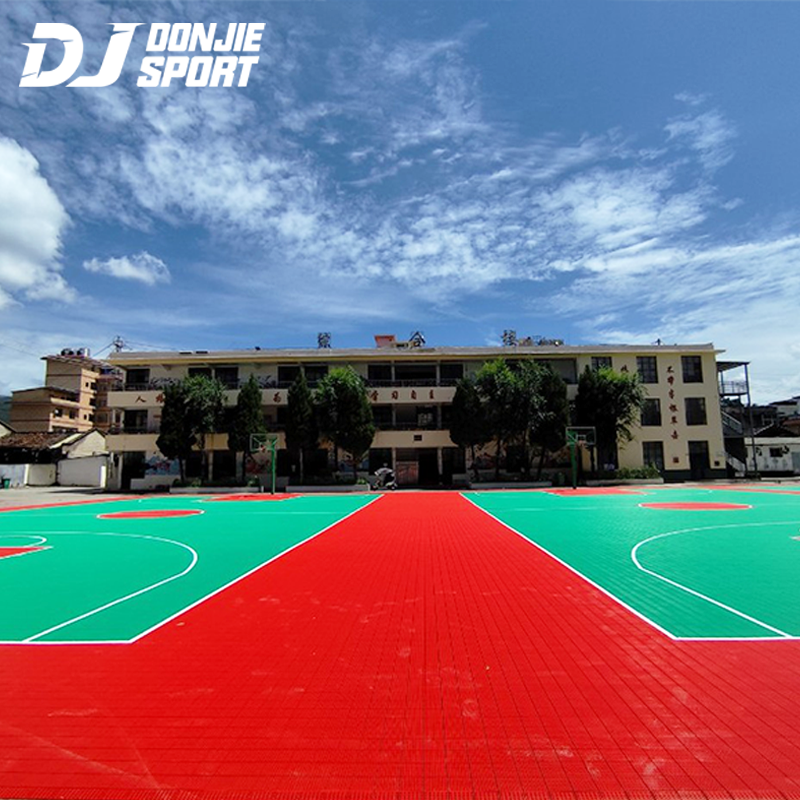
Overview: Synthetic flooring options, such as polypropylene (PP) interlocking tiles, have become a popular choice for outdoor courts in recent years. These tiles offer a durable, weather-resistant surface that’s both practical and visually appealing.
Pros:
-
Excellent grip: Synthetic flooring provides a non-slip surface, offering superior traction for players.
-
Weather-resistant: Resistant to fading, cracking, and weather damage, synthetic flooring is perfect for outdoor courts exposed to the elements.
-
Easy to maintain: Requires less maintenance compared to asphalt and concrete, as it is less prone to cracking and weather damage.
Cons:
-
Higher initial cost: While synthetic flooring is more durable, it is typically more expensive than options like asphalt and concrete.
-
Installation complexity: Installation can be more complex, and while the tiles are interlocking, they may require a professional installer for optimal results.
Factors to Consider When Choosing Outdoor Basketball Court Flooring
1. Durability and Maintenance
Durability is a key factor when selecting outdoor basketball court flooring, especially considering the extreme weather conditions that outdoor courts endure. Materials like asphalt and concrete are durable but may require more frequent maintenance to address cracks or other damage. On the other hand, synthetic sports flooring and rubber tiles generally offer greater long-term durability with minimal upkeep. If you’re building a court in an area that experiences harsh weather or high traffic, investing in a more durable flooring option like synthetic tiles or rubber may provide more value over time.
Maintenance requirements should also be considered. While asphalt and concrete require regular sealing and crack repairs, rubber tiles and synthetic floors need less maintenance, making them a more convenient choice for long-term use.
2. Safety and Player Comfort
Player safety is paramount when choosing flooring. Hard surfaces like concrete and asphalt can lead to injuries from falls or excessive impact. While concrete is stable and durable, it lacks the shock absorption necessary to protect athletes from joint strain over time. Rubber tiles and synthetic sports flooring, however, offer a cushioned surface that helps reduce the impact on players’ joints, making them safer choices for outdoor basketball courts.
Additionally, the grip of the floor plays a significant role in preventing accidents. Concrete can become slippery when wet, while synthetic floors and rubber tiles typically offer better traction, even in rainy or humid conditions.
3. Budget and Cost
When selecting the right flooring material for your outdoor basketball court, the budget will always be a determining factor. Asphalt and concrete are the most affordable options, making them ideal for those working with a limited budget. However, they come with trade-offs in terms of safety, comfort, and maintenance.
Rubber tiles and synthetic flooring come at a higher initial cost but can save money in the long run due to their durability and minimal maintenance needs. If your facility has a larger budget or if you anticipate frequent use of the court, investing in higher-end flooring materials can prove to be more cost-effective in the long term, as they require less maintenance and last longer.
4. Aesthetic and Customization Options
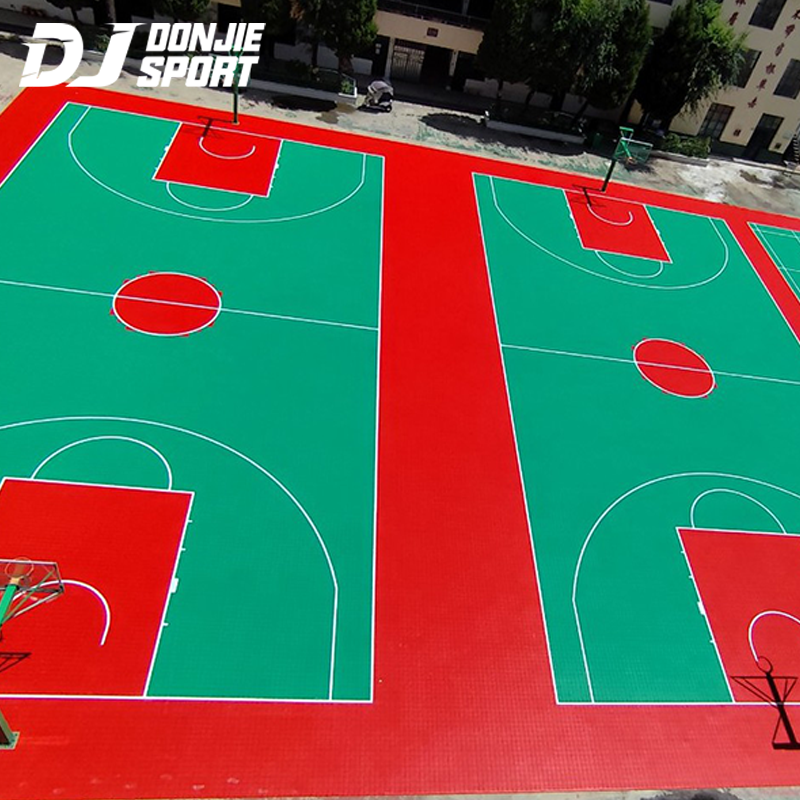
Flooring can dramatically impact the visual appeal of your outdoor basketball court. Concrete and asphalt courts can be painted with lines and designs, but the aesthetic options are somewhat limited compared to rubber tiles or synthetic flooring. Synthetic sports flooring, particularly interlocking tiles, often comes in a variety of colors and patterns, allowing for greater customization and a more vibrant look for your court.
Rubber tiles are available in different colors and can be arranged in various designs, making them another aesthetically pleasing option. If you want a unique or branded look for your court, investing in customizable flooring options like synthetic or rubber tiles can be a great way to make the space more visually appealing.
Conclusion
Choosing the right flooring material for your outdoor basketball court requires careful consideration of various factors, including durability, safety, maintenance, budget, and aesthetics. Asphalt and concrete remain popular due to their affordability and ease of installation, but they come with limitations in terms of player comfort and long-term maintenance. For those seeking a safer, more durable solution, rubber tiles and synthetic sports flooring offer superior performance and longevity.
Ultimately, the best flooring for your court will depend on your specific needs, the climate in which the court is located, and the resources available for both installation and upkeep. By weighing the pros and cons of each material, you can select the option that offers the perfect balance of cost, safety, performance, and aesthetics.