Choosing the right outdoor basketball flooring is crucial not just for the appearance of your court, but for the safety, comfort, and overall playing experience. The flooring you select can make a significant difference in how long your court lasts, how well players perform, and how much maintenance it requires. Whether you’re building a court at home or for a public facility, there are options that can fit every budget, each with its own set of pros and cons. In this guide, we’ll explore the top outdoor basketball flooring options to help you make an informed decision that balances both cost and performance.

Understanding the Importance of Outdoor Basketball Flooring
Before we dive into the specific flooring options, it’s essential to understand why choosing the right outdoor basketball flooring matters. The flooring you choose will directly impact:
-
Durability: How well the material holds up to the elements, such as UV rays, rain, and temperature fluctuations.
-
Weather Resistance: Some materials are better suited for extreme weather conditions, including freezing temperatures and intense heat.
-
Player Safety: Flooring with proper shock absorption can help reduce injuries from falls, especially during intense gameplay.
-
Maintenance: Some floors are easier to clean and maintain than others, saving you money and time in the long run.
These factors should be considered carefully when selecting the right flooring for your outdoor basketball court.
Budget-Friendly Outdoor Basketball Flooring Options
If you’re working with a limited budget, there are still several solid options available that provide a good balance between cost and durability.
Option 1: Asphalt Flooring
-
Cost: Low to Moderate
-
Pros: Asphalt is one of the most affordable options available for outdoor basketball courts. It’s durable, easy to install, and is commonly used for various sports courts. Asphalt can withstand heavy use and is a popular choice for public parks and recreational centers.
-
Cons: Asphalt’s hard surface can be tough on players’ joints. Without proper sealing, it can crack over time due to weather changes, leading to costly repairs.
-
Best For: Basic home courts, public parks, or facilities where cost is a primary concern.
Option 2: Concrete Flooring
-
Cost: Moderate
-
Pros: Concrete is another durable and low-cost option for outdoor basketball courts. It’s extremely strong, low maintenance, and can last for many years if sealed correctly.
-
Cons: Concrete provides a very hard surface, which can lead to joint discomfort for players. It also requires a smooth, level installation to avoid cracks and other issues.
-
Best For: Affordable, long-lasting courts where safety is less of a priority.
Mid-Range Outdoor Basketball Flooring Options
If you have a little more flexibility in your budget, several mid-range flooring options offer additional benefits like comfort and better performance.
Option 1: Rubber Flooring
-
Cost: Moderate to High
-
Pros: Rubber flooring offers excellent shock absorption, making it easier on players’ joints and providing a more comfortable playing surface. It’s also slip-resistant, which is important for player safety during wet conditions. Rubber flooring is durable and requires minimal maintenance.
-
Cons: The cost is higher than asphalt or concrete, and installation can be more complicated. Some rubber options can also fade over time with prolonged exposure to sunlight.
-
Best For: Schools, community centers, and recreational areas where player safety and comfort are a priority.
Option 2: Polyurethane Flooring
-
Cost: Moderate
-
Pros: Polyurethane is a versatile material that can provide a smooth, cushioned surface for basketball courts. It is resistant to weather damage and provides good grip for players. This flooring is also relatively low-maintenance and can withstand heavy use.
-
Cons: Polyurethane flooring can be expensive and often requires professional installation. It may also need periodic maintenance to keep it in top condition.
-
Best For: Multi-purpose outdoor courts that are used for different activities, including basketball, volleyball, and tennis.
High-End Outdoor Basketball Flooring Options
For those with a higher budget who prioritize performance and aesthetics, high-end flooring options offer superior quality, durability, and ease of maintenance.
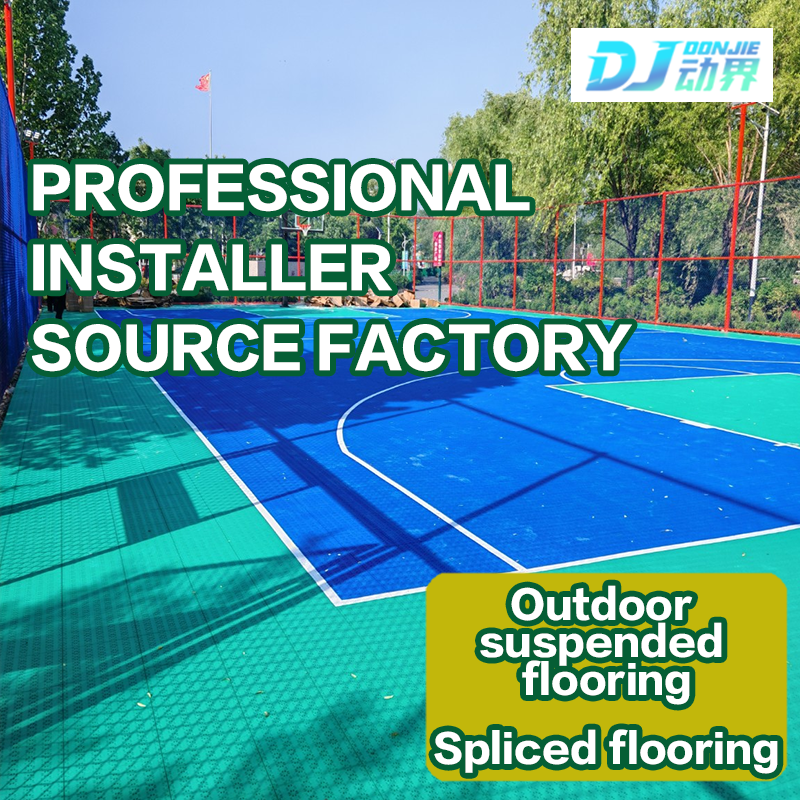
Option 1: Interlocking Modular Tiles
-
Cost: High
-
Pros: Interlocking tiles are a popular choice for high-end outdoor courts because they are incredibly easy to install and replace. You can quickly repair damaged tiles, and the tiles are available in a variety of colors and designs, allowing for a customized look. They also provide excellent grip and shock absorption for athletes.
-
Cons: Interlocking modular tiles come with a higher price tag compared to asphalt or rubber flooring. The initial investment is significant, but the ease of installation and customization may justify the cost.
-
Best For: High-end residential and professional outdoor basketball courts where both performance and aesthetics are important.
Option 2: Sports Turf Flooring
-
Cost: High
-
Pros: Sports turf flooring mimics the feel of grass but is designed for outdoor sports. It provides a soft playing surface that’s ideal for reducing injury risks and is perfect for multi-purpose courts. Sports turf flooring is also highly durable and looks great in any setting.
-
Cons: Turf requires regular maintenance to stay in good condition, such as cleaning and occasional brushing. It also tends to be expensive due to installation and upkeep costs.
-
Best For: Premium basketball courts and multi-purpose sports arenas where aesthetics and player comfort are prioritized.

How to Choose the Right Flooring for Your Budget and Needs
Selecting the right outdoor basketball flooring depends on several factors:
-
Usage Frequency: If the court will be used frequently, you may want to invest in a more durable and comfortable flooring option.
-
Location and Weather Conditions: Consider your region’s climate. If you live in an area with extreme weather, choose flooring that can withstand temperature fluctuations, such as rubber or polyurethane.
-
Maintenance: Think about how much time and money you want to spend maintaining the court. Modular tiles and rubber flooring typically require less maintenance compared to concrete or asphalt.
-
Performance: If you’re looking for a surface that offers superior grip and shock absorption, higher-end options like modular tiles or sports turf are excellent choices.
Conclusion
Whether you’re building a basketball court on a budget or seeking a high-end solution, there’s an outdoor flooring option for every need. From budget-friendly asphalt and concrete to mid-range rubber and polyurethane flooring, and premium options like interlocking tiles and sports turf, each choice offers its own unique advantages. Consider your specific needs—such as how often the court will be used, the climate in your area, and the importance of player comfort and safety—before making your decision.