
Choosing the right flooring for your volleyball court is more than just a matter of aesthetics—it’s essential for player performance, safety, and maintenance. When it comes to creating an ideal playing environment, two of the most popular options are volleyball floor tiles and traditional flooring. Both types of flooring offer unique advantages, but the best choice for your court depends on several factors, including the level of play, budget, and maintenance preferences.
In this article, we will explore the key differences between volleyball floor tiles and traditional flooring, highlighting their respective benefits and drawbacks to help you make an informed decision.

What Are Volleyball Floor Tiles?
Volleyball floor tiles are an innovative and modern solution for indoor volleyball courts. These tiles are typically made from durable, high-performance materials like rubber, vinyl, or synthetic compounds designed to withstand the physical demands of the sport. They come in various forms, such as interlocking, snap-together tiles, making them easy to install and replace.
The flexibility of these tiles allows for customized court designs, with different colors and layouts to match the aesthetic or branding requirements of the facility. Additionally, volleyball floor tiles are available in materials that offer shock absorption, which can significantly reduce the risk of injury for players. With their modular design, these tiles can be quickly and easily replaced if damaged, making them a convenient option for busy courts that require frequent upkeep.
What is Traditional Flooring for Volleyball Courts?
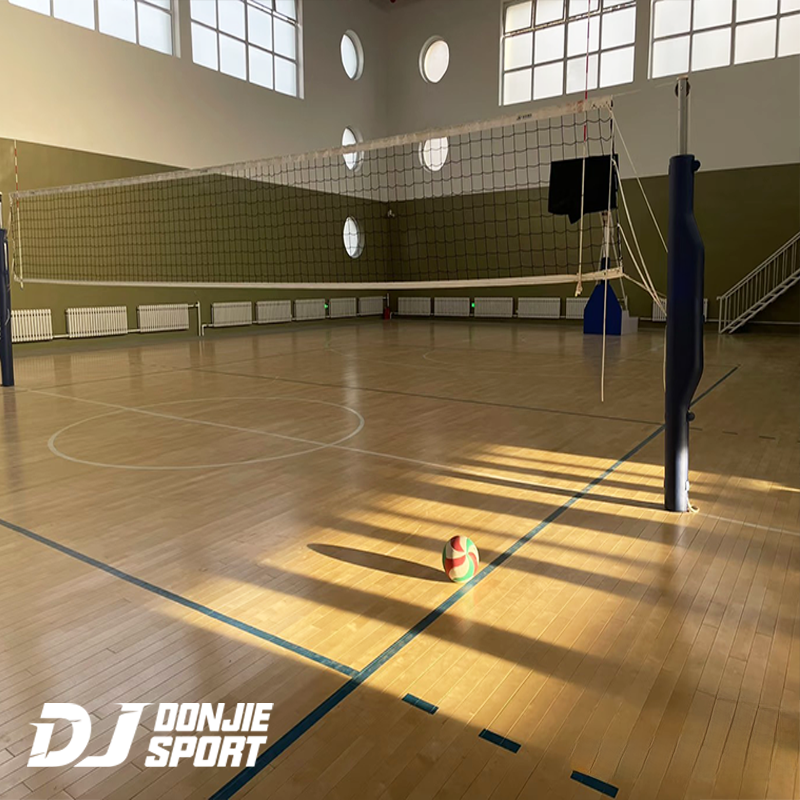
Traditional volleyball court flooring typically refers to wood or synthetic floors, which are often used in professional and school-level volleyball arenas. The most common traditional material is maple hardwood, known for its durability and excellent performance in providing consistent bounce and traction. These floors are often finished with layers of varnish or polyurethane for smoothness and protection.
Traditional volleyball flooring also includes synthetic sports floors made from materials such as PVC or rubber. These synthetic options are designed to mimic the feel of wood while offering greater durability and easier maintenance. Regardless of the material, traditional flooring tends to provide a more premium, professional look and feel, especially in high-competition environments.
Benefits of Volleyball Floor Tiles
Easy Installation and Maintenance
One of the standout features of volleyball floor tiles is their ease of installation. Unlike traditional flooring, which requires professional installation and often a longer setup time, volleyball floor tiles can be laid down in a matter of hours, depending on the court’s size. Their interlocking design eliminates the need for adhesives or nails, making installation straightforward and fast.
Maintenance is another area where floor tiles shine. They are easy to clean, requiring only regular sweeping and occasional mopping. If a tile becomes damaged, it can be easily replaced without the need to replace the entire floor, reducing long-term maintenance costs.
Durability and Resistance to Wear and Tear
Volleyball floor tiles are engineered to handle the stresses of intense sports activity. Their durable materials resist scratches, dents, and other damage caused by heavy use. They are also less prone to warping due to moisture or temperature fluctuations, which can affect traditional wooden floors.
Shock Absorption for Injury Prevention
Player safety is a top priority in sports, and volleyball floor tiles offer superior shock absorption. The cushioned surface reduces the impact on joints and muscles, decreasing the risk of injuries such as sprains or strains. This is especially beneficial for recreational players or younger athletes who may not have the same conditioning as professionals.
Cost-Effectiveness
In terms of initial cost, volleyball floor tiles are generally more affordable than traditional hardwood flooring. Not only is the upfront investment lower, but the long-term savings are substantial due to their lower maintenance requirements and easy replacement process.
Advantages of Traditional Volleyball Flooring
Aesthetic Appeal and Professional Look
Traditional flooring, particularly hardwood, offers a timeless aesthetic that many sports organizations prefer for its professional appearance. The rich, natural wood grain provides an elegant backdrop that enhances the visual appeal of the court, making it a popular choice for professional volleyball arenas.
Long-Term Value
While traditional flooring typically has a higher initial investment, it tends to last longer if properly maintained. High-quality hardwood floors can last decades with proper care, offering exceptional long-term value for facilities that host frequent high-level games.
Superior Performance for Elite Play
Traditional floors are often preferred in professional settings due to their consistent performance. Hardwood floors, in particular, provide a high level of bounce, which is crucial for competitive play. Players benefit from the predictable surface, which can improve performance during critical game moments.
Durability in High-Traffic Environments
Hardwood floors, particularly when finished with durable sealants, are designed to withstand the high foot traffic common in competitive sports venues. They can endure years of use in busy settings, making them a good choice for well-established arenas and facilities.
Maintenance: Floor Tiles vs Traditional Flooring
Maintaining volleyball floor tiles is relatively easy. Regular cleaning—sweeping or mopping—is typically all that’s required to keep the tiles in good condition. If a tile becomes damaged, it can be replaced individually, saving time and money in the long run. Additionally, because tiles do not require sanding, refinishing, or re-coating, the maintenance cost is much lower than traditional flooring.
On the other hand, traditional flooring—especially hardwood—requires more frequent maintenance. It needs periodic sanding, refinishing, and resealing to maintain its smooth surface and protect against wear. This can be both time-consuming and expensive, especially if the court sees heavy use. Additionally, if the floor becomes damaged, it often requires more extensive repairs than replacing a single tile.
Performance Comparison: Which Flooring Option Is Best for Volleyball?
The performance of volleyball floor tiles is largely influenced by the materials used. Modern volleyball tiles often have excellent shock absorption properties, improving player comfort and reducing the likelihood of injury. They are designed to provide a balance between traction and cushioning, making them suitable for all levels of play.
Traditional flooring, especially hardwood, is known for providing a superior playing surface with consistent bounce and traction. For elite-level volleyball players, the performance of traditional flooring is hard to match. However, for recreational or lower-level play, volleyball floor tiles may offer sufficient performance while also providing the added benefits of comfort and injury prevention.
Installation Process: Volleyball Floor Tiles vs Traditional Flooring
The installation of volleyball floor tiles is straightforward and usually doesn’t require professional help, making it ideal for DIY projects. Interlocking tiles can be installed in a short amount of time, and the court can be used almost immediately after installation.
Traditional flooring, especially hardwood, requires a more complex installation process. The floor must be laid down in panels, sanded, and sealed, a process that typically takes longer and requires professional expertise. This can lead to higher installation costs, especially in large spaces.
Cost Comparison
The upfront cost of volleyball floor tiles is generally much lower than traditional flooring. While the initial investment for traditional hardwood flooring may exceed the cost of floor tiles, the long-term costs of maintenance and repairs can add up significantly.
Floor tiles, while not as durable as hardwood in the long term, require much less maintenance, reducing long-term expenses. For facilities on a budget or those looking to minimize maintenance costs, volleyball floor tiles can be a more cost-effective option.
Which Flooring Is Right for Your Volleyball Court?
Choosing between volleyball floor tiles and traditional flooring depends on several factors, including your budget, the level of play, and how often the court is used. If you’re looking for a more affordable and low-maintenance solution, volleyball floor tiles may be the better choice. However, if you’re looking for a long-term investment that offers superior performance and aesthetics, traditional flooring may be the right fit for your facility.
Recommendations:
-
Schools and Recreational Centers: Volleyball floor tiles are a great option due to their ease of installation, lower cost, and injury prevention features.
-
Professional Venues: Traditional hardwood flooring is ideal for its superior performance and aesthetic appeal, making it suitable for high-level competitions.
Conclusion
In conclusion, both volleyball floor tiles and traditional flooring have their own unique benefits and drawbacks. Volleyball floor tiles offer an easy-to-install, cost-effective, and low-maintenance solution with excellent shock absorption, making them a great option for recreational and multi-use courts. Traditional flooring, on the other hand, provides a premium, long-lasting solution with superior performance for competitive play. Ultimately, the best flooring choice for your court depends on your specific needs, budget, and the level of play you intend to accommodate.



