Choosing the right badminton court flooring is essential for both recreational players and professional athletes. The type of surface directly affects player performance, comfort, and injury prevention. Two of the most popular options for indoor badminton courts are PVC flooring and wooden flooring. Each type offers unique advantages and drawbacks, and understanding these differences can help facility owners, coaches, and players make informed decisions. This article explores the key differences between PVC and wooden badminton court flooring, highlighting their benefits, limitations, and ideal applications.
Understanding Badminton Court Flooring
Badminton court flooring is more than just a surface for play; it is a critical factor in ensuring safety, optimal performance, and durability of the facility. The ideal flooring provides adequate shock absorption to reduce stress on players’ joints, offers consistent grip to prevent slipping, and maintains even bounce for accurate gameplay. When selecting badminton court flooring, several factors should be considered, including durability, maintenance requirements, cost, player comfort, and the intended usage of the court. Choosing the wrong type of flooring can lead to increased injuries, faster wear and tear, and higher long-term costs.
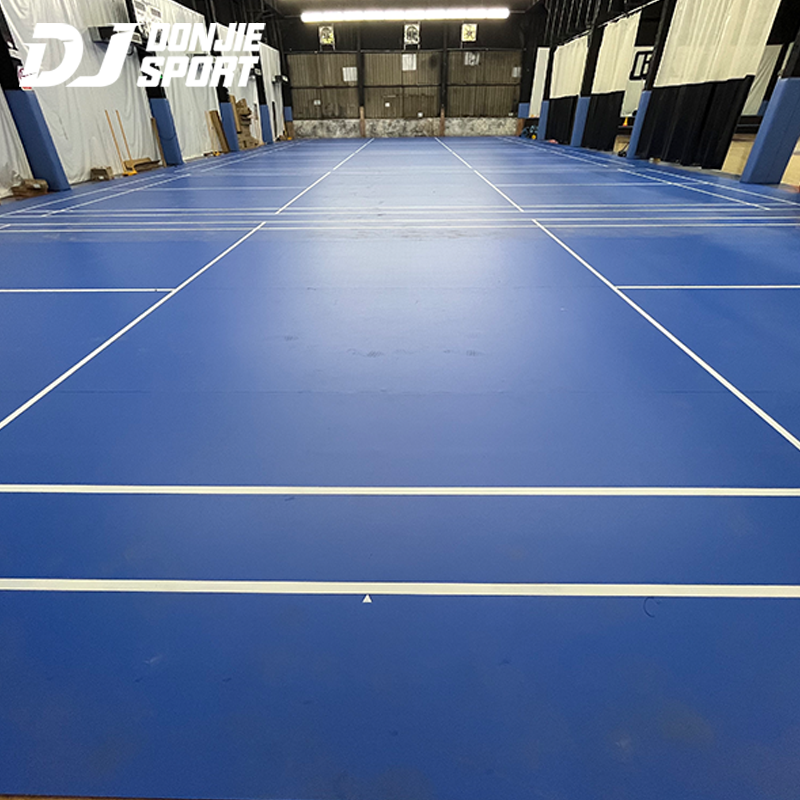
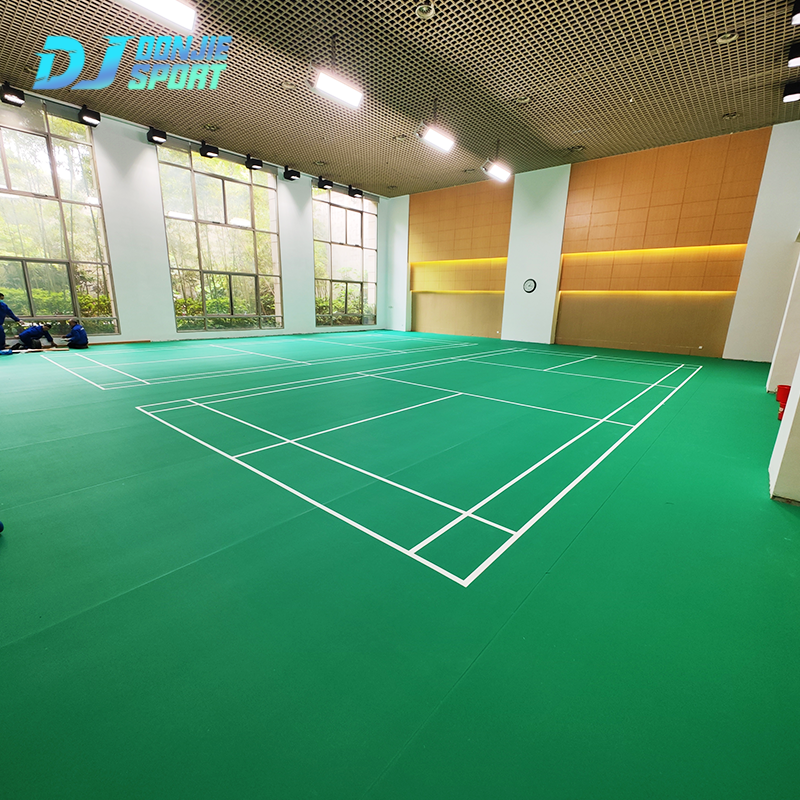
PVC Badminton Court Flooring
PVC flooring, or polyvinyl chloride flooring, is a synthetic surface commonly used in modern indoor sports facilities. It is composed of multiple layers, including a wear-resistant top layer, cushioning core, and backing for stability.
Benefits of PVC Flooring
PVC badminton court flooring offers several advantages. Its built-in shock absorption reduces strain on knees and ankles, making it ideal for frequent or intensive use. Installation is typically faster and less disruptive than wooden floors, and the material is easier to clean and maintain. Additionally, PVC flooring is generally more affordable than high-quality wooden surfaces, offering a cost-effective solution for gyms, community centers, and multi-purpose courts.
Drawbacks of PVC Flooring
Despite its benefits, PVC flooring has limitations. Its appearance may be less appealing compared to natural wood, and it can sometimes become slippery if moisture accumulates. Some PVC surfaces may also be sensitive to extreme heat, causing minor warping over time. For facilities aiming for a professional, prestigious look, PVC may not provide the same visual impact as wooden flooring.
Ideal Use Cases for PVC Flooring
PVC flooring is well-suited for indoor courts in schools, recreational clubs, and multi-purpose facilities. It is particularly advantageous where budget constraints exist, or where easy maintenance is a priority. Its durability and cushioning also make it a safe choice for youth and amateur players.
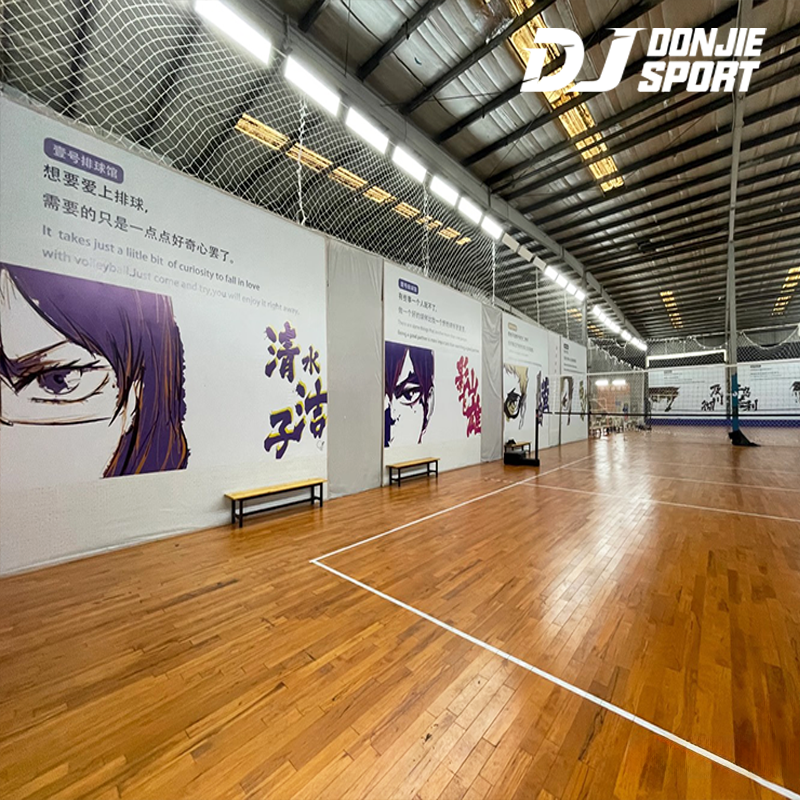
Wooden Badminton Court Flooring
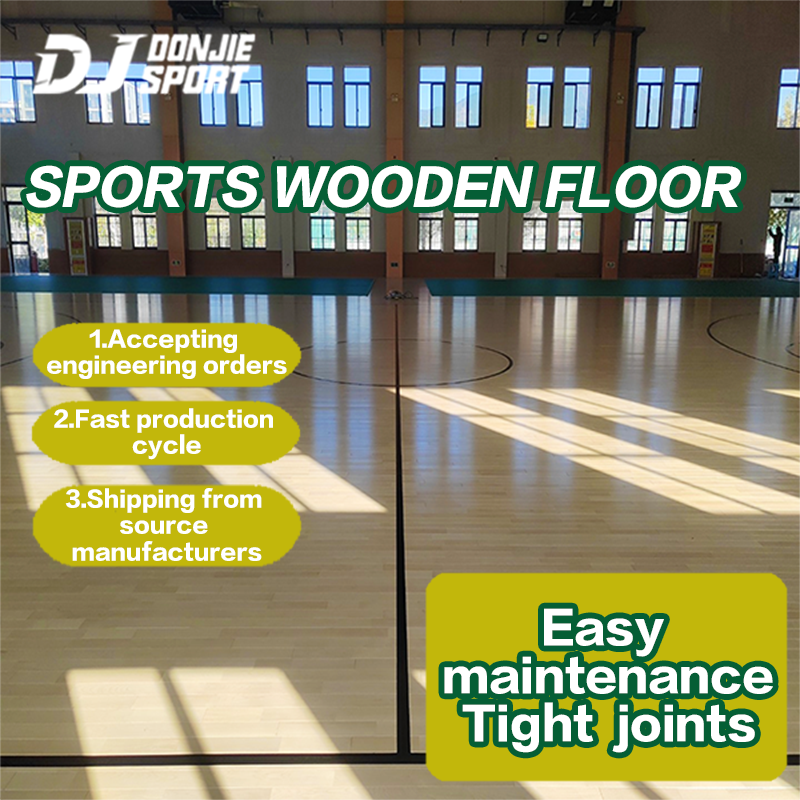
Wooden flooring has long been considered the standard for professional badminton courts. Typically made from hardwoods such as maple or engineered wood, wooden floors offer excellent performance characteristics and aesthetic appeal.
Benefits of Wooden Flooring
The main advantage of wooden badminton court flooring is its superior bounce, which provides consistent shuttlecock performance and enhances gameplay accuracy. The natural surface also delivers better traction, reducing the risk of slips and falls. Wooden courts are visually appealing and convey a professional atmosphere, which is why they are preferred in competitive settings. With proper care, wooden flooring can last for decades, maintaining its quality and performance over time.
Drawbacks of Wooden Flooring
Wooden floors come with a higher upfront cost and require more maintenance than PVC surfaces. They are sensitive to humidity and temperature changes, which can cause warping or gaps if not properly controlled. Regular polishing, cleaning, and occasional refinishing are necessary to preserve the floor’s integrity and appearance.
Ideal Use Cases for Wooden Flooring
Wooden badminton court flooring is ideal for professional-level competitions, sports clubs seeking prestige, and facilities where long-term performance is a priority. Dedicated indoor courts with controlled environmental conditions benefit the most from wooden surfaces.
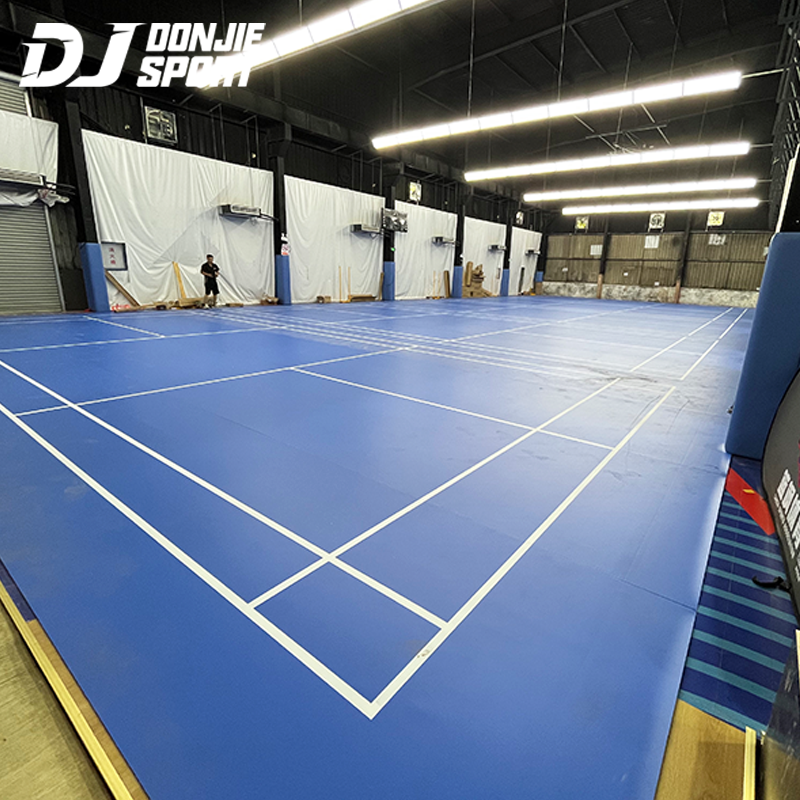
Direct Comparison: PVC vs Wooden Badminton Court Flooring
When deciding between PVC and wooden flooring, several factors should be compared:
-
Durability and Lifespan: Wooden flooring generally lasts longer with proper maintenance, while PVC is highly durable but may wear faster under heavy use.
-
Cost: PVC flooring has a lower initial investment and minimal maintenance cost, whereas wooden flooring requires higher upfront costs and ongoing upkeep.
-
Player Comfort and Injury Prevention: PVC offers better cushioning for joints, making it suitable for casual or high-frequency play. Wooden floors provide consistent bounce but may feel firmer underfoot.
-
Performance: Wooden flooring is preferred in professional competitions due to superior bounce and responsiveness. PVC can offer adequate performance but may slightly alter shuttlecock speed.
-
Maintenance: PVC flooring is low-maintenance and easy to clean. Wooden flooring demands routine care, including polishing, humidity control, and occasional refinishing.
Choosing the Right Badminton Court Flooring for Your Needs
Selecting the best badminton court flooring depends on your facility type, budget, and performance goals. For recreational clubs, schools, or multi-purpose courts, PVC flooring offers a practical, cost-effective solution with safety and comfort in mind. For professional competitions, sports academies, or high-profile facilities, wooden flooring provides unmatched performance, aesthetics, and longevity. Environmental considerations, such as indoor versus outdoor use and climate conditions, also influence the choice. Ultimately, understanding the differences between PVC and wooden surfaces ensures a flooring solution that meets both practical and performance needs.
Conclusion
Choosing the right badminton court flooring is crucial for maximizing player safety, performance, and the lifespan of your facility. PVC flooring is a versatile, cost-effective option with excellent shock absorption and low maintenance, while wooden flooring provides superior bounce, aesthetic appeal, and professional-grade performance. Evaluating your specific needs, budget, and environment will help determine the best surface for your badminton court. By understanding the differences and benefits of PVC and wooden flooring, facility owners can make an informed decision that enhances gameplay and protects player health for years to come.