In 2026, the choice of sports flooring has evolved from a mere practical decision to a strategic investment in athlete performance, safety, and facility sustainability. As indoor sports facilities—from community gymnasiums to professional training centers—seek solutions that balance functionality and long-term value, one option has emerged as a clear leader: PVC sports floor. The once-overlooked material has undergone significant advancements in formulation and design, addressing the unique demands of diverse sports while outperforming traditional alternatives like wood or rubber in key areas.
Today’s athletes and facility users demand surfaces that enhance their performance while keeping them safe, and PVC sports floor delivers on both fronts. Whether it’s a high-intensity basketball court, a precision-focused badminton court, or a multi-purpose indoor arena hosting everything from volleyball to dance classes, PVC sports floor adapts to the space’s needs without compromising on quality. This adaptability, combined with evolving eco-friendly practices and cost-efficiency, has positioned PVC sports floor as the ultimate choice for anyone investing in athletic spaces in 2026.
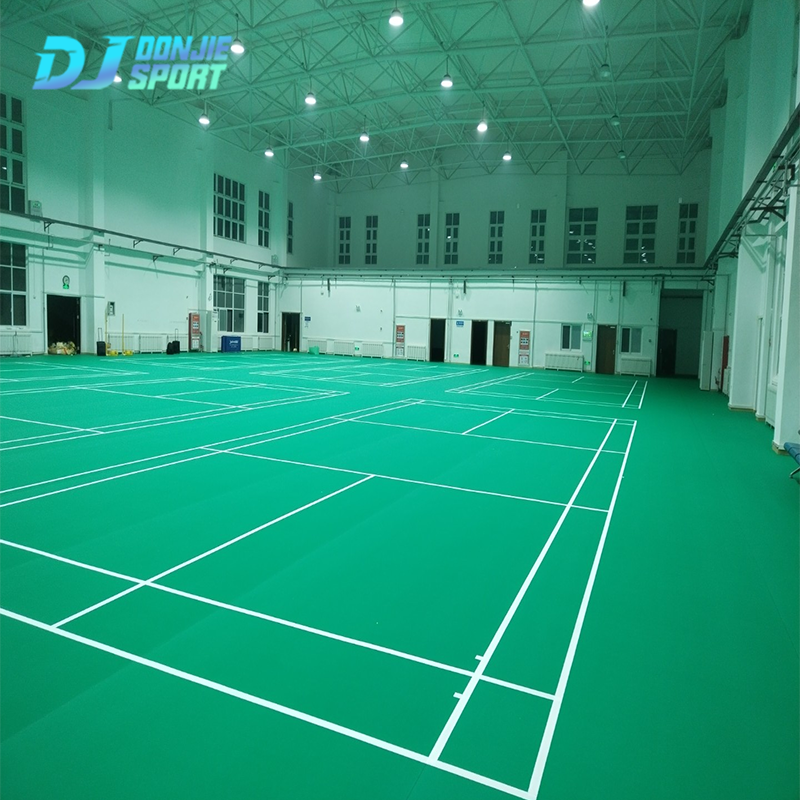
The Science Behind PVC Sports Floor: How It Delivers Superior Performance
At the core of PVC sports floor’s dominance in 2026 is its meticulously engineered structure, designed to optimize athletic performance through layered functionality. Unlike single-material flooring options, high-quality PVC sports floor features a multi-layer composition that works in harmony to deliver consistent results.
The topmost layer is a high-density wear-resistant vinyl layer, built to withstand the abrasion of constant foot traffic, equipment movement, and intense gameplay—critical for busy indoor Gymnasium (indoor gymnasiums) that host daily training sessions and competitions.
Beneath that, a compression-resistant layer maintains structural integrity even under repeated impact, while a fiber-reinforced foam core provides the essential balance of cushioning and support. The bottom layer, often an anti-slip backing, ensures the floor stays securely in place, preventing shifting that could disrupt play or pose safety risks.
What truly sets modern PVC sports floor apart in 2026 is its adherence to global performance standards, most notably EN 14904. This certification guarantees that the flooring meets strict benchmarks for shock absorption, vertical deformation, and surface consistency—factors that directly impact athlete performance.
For example, the variable density foam core of premium PVC sports floor optimizes shock absorption, with tests showing it reduces impact by up to 85% (per EN 14808 certification), far exceeding the 78% absorption rate of rubber flooring. This translates to less strain on athletes’ knees, ankles, and hips during high-impact activities like jumping in basketball or diving in volleyball.
Additionally, the material’s superior power return—ranging from 62-68% in elite formulations—gives athletes a subtle boost in movement efficiency, helping them maintain speed and agility throughout long training sessions or matches.
Another key performance metric where PVC sports floor excels is ball bounce consistency. In basketball courts, for instance, a reliable bounce is non-negotiable, and PVC sports floor delivers over 90% bounce efficiency compared to rigid cement surfaces. This consistency ensures that players can anticipate ball movement accurately, reducing errors and enhancing the quality of play.
For indoor football pitches and handball courts, the same surface stability prevents uneven ball roll, making PVC a versatile choice across multiple sports. In 2026, these performance attributes aren’t just “nice-to-haves”—they’re essential for facilities looking to attract athletes and meet competitive standards, solidifying PVC sports floor’s role as a performance-driven solution.
Unmatched Safety: PVC Sports Floor as a Protective Shield for Athletes
Safety is the non-negotiable foundation of any sports facility, and in 2026, PVC sports floor leads the industry in creating protected environments for athletes of all skill levels. One of its most critical safety features is advanced anti-slip technology, which addresses the risk of falls in high-movement sports.
The surface of premium PVC sports floor is engineered with a matte, embossed texture that maintains friction even when exposed to sweat or minor moisture—a game-changer for dance studios where quick footwork and pivots are common, and for badminton courts where players change direction in an instant. Unlike glossy surfaces that glare under artificial lighting (and increase eye strain), the matte finish of PVC sports floor also improves visibility, further reducing accident risks.
Beyond slip prevention, PVC sports floor acts as a built-in protective barrier against impact-related injuries. The multi-layer foam core is designed to absorb and disperse force, with independent tests confirming that it reduces impact on joints by up to 85%.
For young athletes in school gymnasiums or recreational players in community centers, this means fewer sprains and stress fractures from repeated jumps or sudden landings. Even in contact sports like indoor volleyball, where collisions are possible, the floor’s smooth surface minimizes the risk of friction burns—a detail that sets it apart from rougher rubber alternatives.
Compliance with global safety standards further reinforces PVC sports floor’s reliability. Leading manufacturers ensure their products meet ASTM F2772 requirements for impact absorption and surface traction, giving facility owners peace of mind that their flooring adheres to rigorous safety protocols.
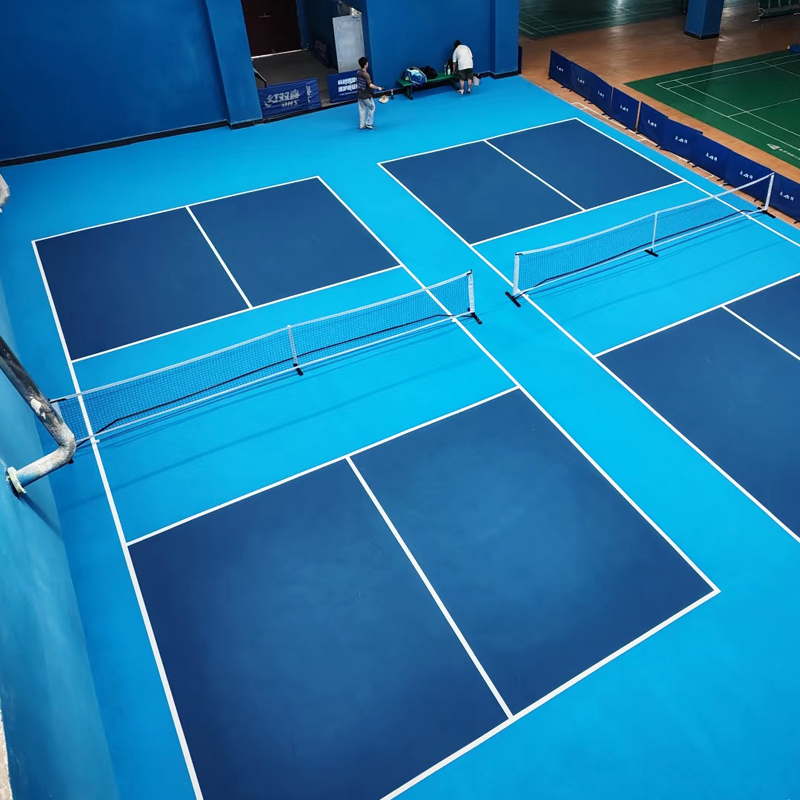
In spaces like pickleball courts, where players of all ages gather, this level of safety is particularly valuable—older adults benefit from the joint protection, while younger players stay secure during energetic matches. In 2026, as awareness of sports injury prevention grows, PVC sports floor’s ability to prioritize safety without sacrificing performance makes it an indispensable choice for responsible facility management.
Versatility Redefined: PVC Sports Floor for Every Indoor Athletic Space
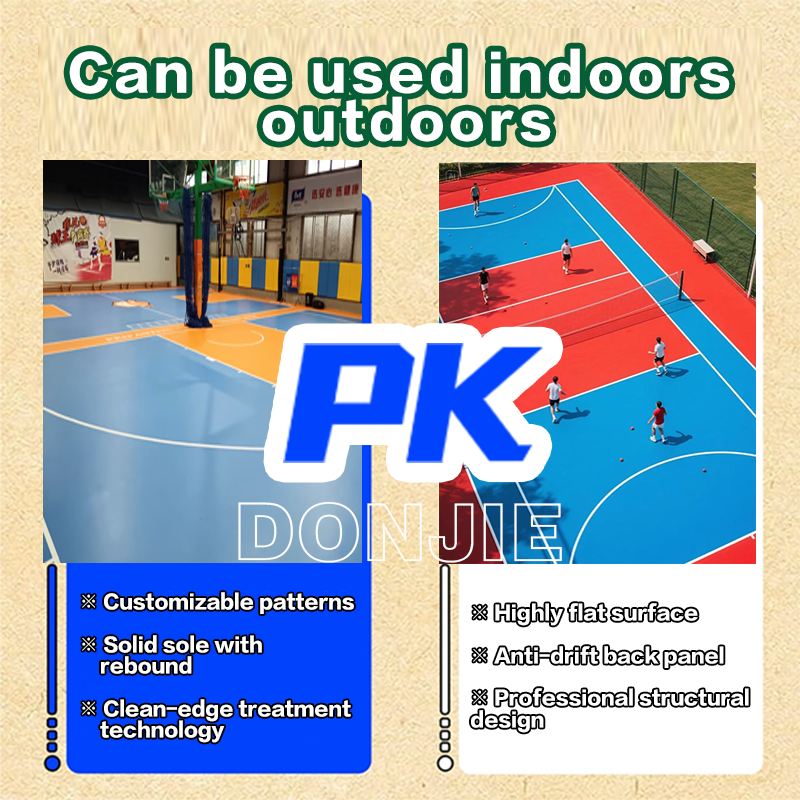
One of the most compelling reasons PVC sports floor has become the ultimate choice in 2026 is its unparalleled versatility, seamlessly adapting to the unique demands of diverse indoor athletic spaces. Take basketball courts, for example—here, PVC sports floor is engineered with a 4mm thickness that strikes the perfect balance between durability and elasticity, capable of withstanding the constant impact of jumps and dribbles while delivering the consistent ball bounce (over 90%) that players rely on. Its color options, from deep blues to rich greens, also allow facilities to align the floor with team branding or facility aesthetics, enhancing the overall ambiance of the space.
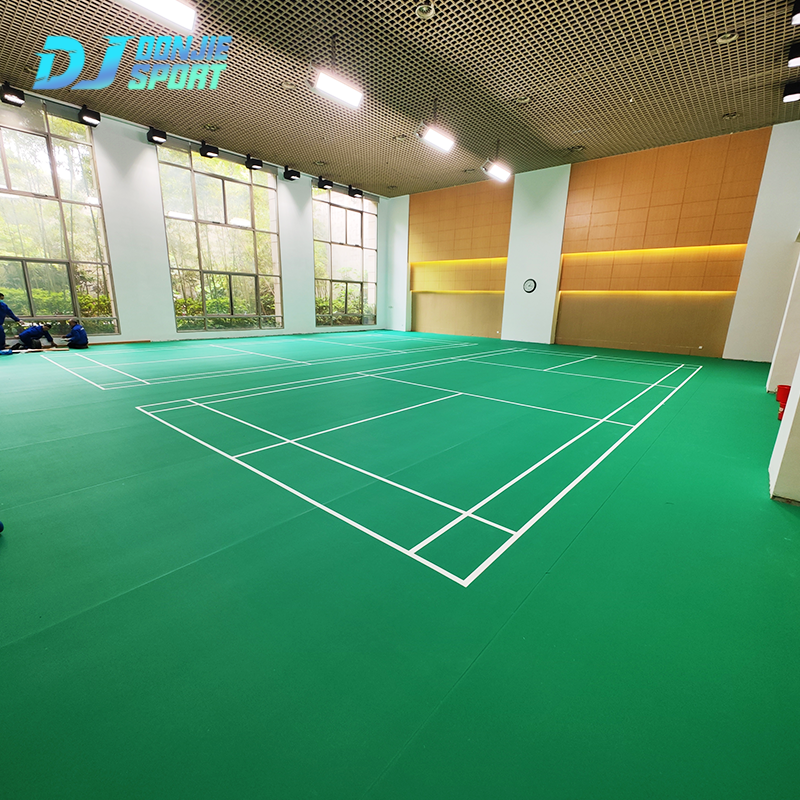
For badminton and pickleball courts, PVC sports floor shifts to meet different needs with thinner profiles (2-3mm) that prioritize precise footwork and quick lateral movements. The surface texture is designed to provide just the right amount of grip—enough to keep players stable during sudden direction changes, but not so much that it hinders smooth glides. Light color options like off-white or soft beige are popular here, as they reflect light evenly and reduce eye fatigue during long matches, a small detail that makes a big difference for competitive players.
Indoor volleyball courts benefit from PVC sports floor’s dimensional stability, a feature made possible by fiber-reinforced foam layers and anti-slip backings. This stability ensures the floor doesn’t shift or buckle under the weight of multiple players diving and landing simultaneously, maintaining consistent performance across the entire court.
Dance studios, too, have embraced PVC sports floor for its flexibility—unlike rigid wood floors, the foam core provides gentle cushioning that supports dancers’ joints during stretches and jumps, while the smooth surface allows for fluid movements without sticking.
Multi-purpose indoor gymnasiums, which host everything from school assemblies to youth sports clinics, find particular value in PVC sports floor’s adaptability. Modular designs allow for easy reconfiguration, and the material’s durability stands up to the wear and tear of varied use—from volleyball nets to temporary seating.
Even indoor football pitches benefit from PVC’s shock absorption, protecting players’ ankles during quick sprints and sudden stops. In 2026, as facilities strive to maximize space efficiency, PVC sports floor’s ability to serve multiple purposes without compromise makes it the most versatile flooring solution on the market.
2026’s Cost-Effective Champion: The Long-Term Value of PVC Sports Floor
In 2026, facility owners are under increasing pressure to balance quality with budget, and PVC sports floor emerges as the clear cost-effective champion in sports flooring. While the initial investment may be competitive with other options, the long-term savings tell the real story.
Unlike hardwood floors, which require annual sanding, polishing, and occasional full refinishing (costing thousands over a decade), PVC sports floor needs only regular sweeping and damp mopping to maintain its performance. Advanced cleaning systems even reduce water consumption by 40% compared to traditional methods, cutting utility costs further.
Installation efficiency adds another layer of savings. PVC sports floor can be installed in as little as 35-40 hours per 100 square meters, significantly
less time than hardwood (which often takes 50+ hours) or rubber flooring (55+ hours). This means facilities can minimize downtime—critical for school gymnasiums that need to host classes or community centers with packed schedules.
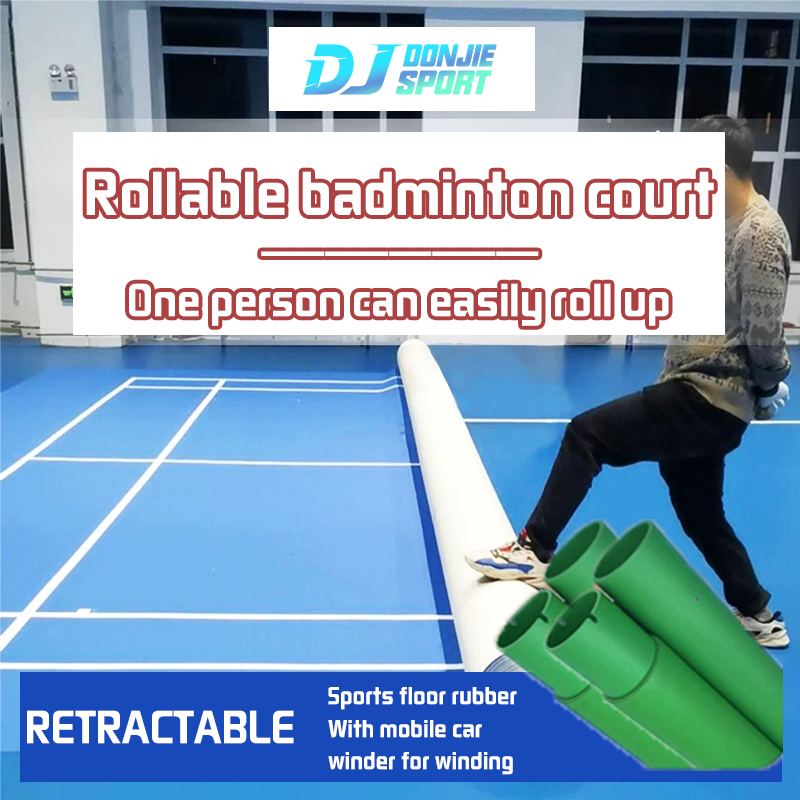
For temporary events like tournaments or pop-up sports clinics, removable PVC systems (installed with adhesive tape instead of permanent glue) offer even more flexibility, eliminating the need for costly permanent installations that can’t be repurposed.
Durability is another key driver of long-term value. High-quality PVC sports floor comes with warranties of 15-20 years, and with proper maintenance under ISO 20146 standards, lifespans can extend to 22-25 years.
When damage does occur—such as a scratch or tear from equipment—it’s easy to replace just the affected section, rather than refinishing the entire floor (a common requirement with hardwood). This “local repair” capability saves both time and money, especially for high-traffic spaces like indoor basketball courts or multi-purpose gymnasiums.
For budget-conscious facilities like school sports halls or community centers, these cost advantages are transformative. They allow organizations to invest in high-performance flooring without sacrificing other critical needs, such as equipment upgrades or coaching programs.
In 2026, as fiscal responsibility remains a priority, PVC sports floor’s combination of low maintenance, quick installation, and long lifespan makes it the most value-driven choice for any athletic space.
Eco-Friendly Advancements: Sustainable PVC Sports Floor in 2026
Gone are the days when sustainability and performance were mutually exclusive in sports flooring. In 2026, PVC sports floor leads the way in eco-friendly innovation, addressing environmental concerns while delivering top-tier functionality.
Leading manufacturers now use brand-new raw materials (avoiding recycled plastics that can compromise quality) and formulate their products without formaldehyde, ensuring indoor air quality remains safe for athletes and staff. This commitment to clean materials aligns with global health standards and makes PVC sports floor a viable choice for facilities prioritizing wellness.
Compliance with strict environmental certifications further underscores PVC sports floor’s sustainability credentials. Many 2026 models meet REACH (Registration, Evaluation, Authorization and Restriction of Chemicals) standards, which regulate the use of hazardous substances in manufacturing, and DIN 18032, a German standard for low-emission building materials.
These certifications guarantee that the flooring is produced with minimal environmental impact, from raw material extraction to production and installation.
Manufacturers are also reducing their carbon footprint through energy-efficient production processes. Innovations like hybrid material layering (combining PVC with recycled rubber for targeted performance) and moisture-control subfloor integration not only enhance the floor’s functionality but also reduce waste.
Additionally, the long lifespan of PVC sports floor means less frequent replacement—lowering the overall consumption of resources compared to shorter-lived flooring options.
For facilities aiming to achieve sustainability goals, such as LEED certification or carbon-neutral operations, PVC sports floor offers a tangible way to reduce environmental impact without compromising on performance.
In school gymnasiums, this sends a powerful message to students about eco-responsibility, while professional facilities can appeal to environmentally conscious athletes and sponsors. In 2026, sustainability is no longer an afterthought—it’s a requirement—and PVC sports floor delivers on this front with innovative, compliant solutions.
How to Choose the Right PVC Sports Floor for Your Space in 2026
With the growing popularity of PVC sports floor in 2026, selecting the right option for your specific space requires careful consideration of sport-specific needs, quality indicators, and customization possibilities.
Start by assessing the primary sport or activity your facility hosts: basketball courts demand thicker flooring (4mm) with high wear resistance and ball bounce efficiency, while badminton and pickleball courts thrive with thinner profiles (2-3mm) that prioritize traction and quick movement.
For dance studios, look for PVC with enhanced cushioning in the foam core to support joint health during repetitive movements, and for multi-purpose gymnasiums, opt for modular designs that allow easy reconfiguration.
Certifications are non-negotiable when evaluating quality. Always verify that the PVC sports floor meets EN 14904 (for athletic performance) and REACH (for environmental safety) standards, as these guarantees ensure the product delivers on its promises.
Pay attention to manufacturer warranties, too—reputable brands offer 15-20 year warranties for commercial use, a reflection of their confidence in durability. Compare surface consistency metrics as well: elite PVC options maintain a variance of ±0.3mm per 3 meters, ensuring uniform performance across the entire floor—critical for competitive spaces like indoor volleyball courts.
Don’t overlook customization opportunities to align the floor with your facility’s brand and functionality. Many manufacturers offer a wide range of colors, from bold team hues for basketball courts to neutral tones for dance studios, and some even provide custom printing for logos or court lines. For temporary or multi-use spaces, explore removable PVC systems that can be installed without permanent glue, offering flexibility for events or seasonal changes.
Embracing the Future with PVC Sports Floor in 2026
As we look at the sports flooring landscape in 2026, PVC sports floor stands head and shoulders above the competition, offering an unbeatable combination of performance, safety, versatility, cost-efficiency, and sustainability. It’s no longer a secondary option but the ultimate choice for facility owners who refuse to compromise on quality—whether they’re outfitting a professional training center, a school gymnasium, a dance studio, or a multi-purpose indoor arena.
The science-backed design of its multi-layer structure delivers consistent power return and shock absorption, while its anti-slip and impact-resistant features prioritize athlete safety in every movement. What truly sets PVC sports floor apart, though, is its ability to adapt to diverse needs without sacrificing excellence.
It works as seamlessly for a high-intensity basketball game as it does for a precision-focused pickleball match or a dynamic dance class, making it the most versatile flooring solution on the market. Add in its long lifespan, low maintenance costs, and eco-friendly advancements, and it’s clear that PVC sports floor isn’t just a smart choice for today—it’s an investment in the future of your facility.
In 2026, the question isn’t whether to choose PVC sports floor, but how to leverage its benefits to create a space that attracts athletes, enhances performance, and supports your long-term goals. Whether you’re upgrading an existing facility or building a new one, PVC sports floor delivers on every front, proving time and again why it’s the ultimate choice for modern athletic spaces.