A sports floor may look simple from the outside, but choosing the right one is rarely as easy as comparing color, thickness and price.
Many buyers receive quotations for PP tiles, PVC rolls and wooden flooring, all described as “sports flooring.” Because these products are promoted for similar applications, it is easy to assume they perform in roughly the same way.
They do not.
A floor designed for an outdoor basketball court must handle rain, sunlight, temperature changes and drainage. Badminton court flooring must support fast lunges and lateral footwork. A wooden basketball court depends on its entire supporting structure to provide the expected ball response and impact behavior. Dance flooring, school sports flooring and workout room flooring introduce completely different requirements.
The right sports flooring is not simply the product with the highest specification or the greatest thickness. It is the system that matches the sport, building conditions, expected traffic, maintenance plan and project budget.
Sports Flooring Is a System, Not Just a Surface
When people discuss a sport floor, they often focus on the visible top layer. In practice, the performance of the floor depends on several components working together.
A complete sports flooring system may include:
- A surface coating or textured playing layer
- A wear-resistant layer
- A reinforcement layer
- A foam or resilient backing
- An interlocking or adhesive system
- An elastic pad or supporting structure
- A moisture-control layer
- The concrete, asphalt or wooden base beneath the floor
The condition of the substrate is just as important as the flooring material.
A premium PVC sports floor installed over uneven or damp concrete can develop visible joints, bubbles, hollow areas or premature adhesive failure. A high-quality PP sports flooring tile installed on a poorly drained outdoor base may still suffer from movement or water accumulation. A wood sport floor installed in an unstable indoor climate may expand, shrink or develop gaps.
This is why professional suppliers normally ask about the project before recommending a product. Without information about the substrate, location and intended activity, even a technically good product can become the wrong choice.
How Sports Flooring Affects Athletic Performance
A sports floor performs several functions at the same time.
It must provide enough grip for players to stop and change direction, but it should not hold the shoe so aggressively that the foot cannot rotate naturally. It should reduce part of the impact created during running and jumping, but it should not feel unstable. It must resist wear while maintaining predictable ball and shoe interaction.
These requirements create a balance rather than a single performance target.
A very hard floor may produce a consistent ball rebound, but it may transmit more impact to the athlete. A very soft floor may feel comfortable when walking, but excessive deformation can affect fast footwork and rolling equipment. A highly textured surface may provide good dry grip while becoming difficult to clean.
The correct balance depends on the sport.
Basketball, badminton, volleyball, handball, table tennis, tennis and dance all involve different movement patterns. A surface that works well for one activity may be acceptable, but not ideal, for another.
PP Sports Flooring: Practical for Outdoor and Multipurpose Courts

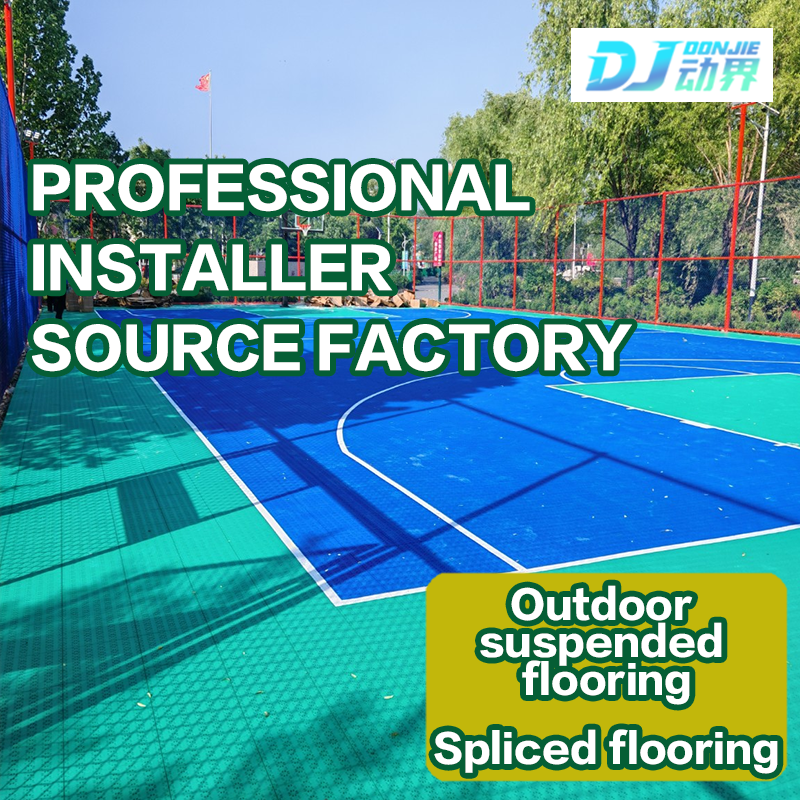
PP sports flooring is normally made from injection-molded polypropylene tiles. The tiles connect through an interlocking system and are installed over a hard, stable base.
This type of flooring is widely used for:
- Outdoor basketball courts
- Pickleball courts
- School playgrounds
- Recreational tennis courts
- Community sports areas
- Outdoor multipurpose courts
One of the main advantages of PP flooring is its modular structure. Individual tiles can usually be removed and replaced without dismantling the entire court. Installation is also relatively fast because the tiles do not normally require full-surface adhesive.
Many outdoor PP tiles use an open-grid structure. Rainwater passes through the tile surface and reaches the base below. This can help the playing surface dry more quickly, but it does not replace proper site drainage. The concrete or asphalt base still needs a suitable slope and a route for water to leave the court.
What Determines the Quality of PP Sports Flooring?
Two PP tiles may have the same dimensions and similar surface patterns while performing very differently.
Important differences can be found in:
- The design of the locking system
- The strength of the support ribs
- Tile dimensional accuracy
- Raw material formulation
- UV resistance
- Low- and high-temperature behavior
- Surface texture
- Expansion design
The locking system deserves particular attention. Weak or poorly molded connections can cause tiles to separate, move or create noise under repeated traffic.
The underside structure also matters. It controls how loads are distributed and how the tile responds underfoot. A tile with insufficient support may feel unstable or deform under concentrated loads.
Outdoor PP sports flooring also expands and contracts as temperatures change. Perimeter clearances and installation layout must allow for this movement. If tiles are installed too tightly against walls, curbs or fixed equipment, thermal expansion may cause buckling.
Limitations of PP Sports Flooring
PP modular tiles are not suitable for every project.
Their ball response and foot feel differ from wood and resilient PVC flooring. Open structures may allow dust, leaves and small debris to collect underneath. Some surfaces can also become noticeably harder or softer depending on temperature.
For high-level competition facilities, the required playing characteristics and governing-body requirements should be confirmed before specifying a modular tile system.
PP flooring is often a strong choice for outdoor recreational courts and fast-renovation projects, but it should not automatically be treated as a replacement for every type of indoor sports floor.
PVC Sports Floor: A Common Choice for Indoor Sports
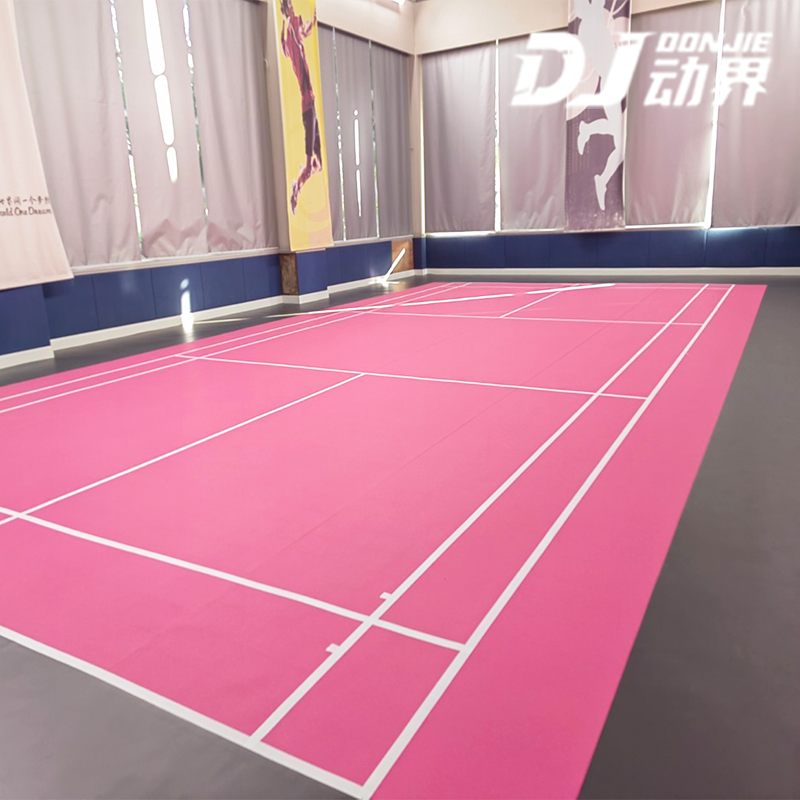
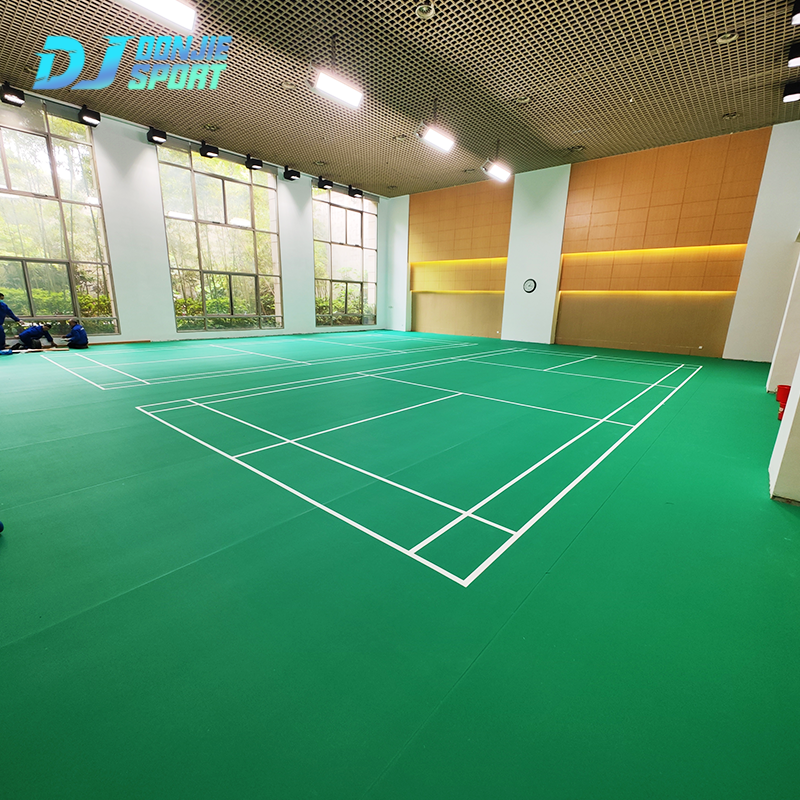
PVC sports floor products are usually supplied in rolls. They may contain several layers, including a surface treatment, wear layer, reinforcement layer and resilient foam backing.
PVC sports flooring is commonly used for:
- Badminton court flooring
- Volleyball flooring
- Sports flooring for handball
- Table tennis flooring
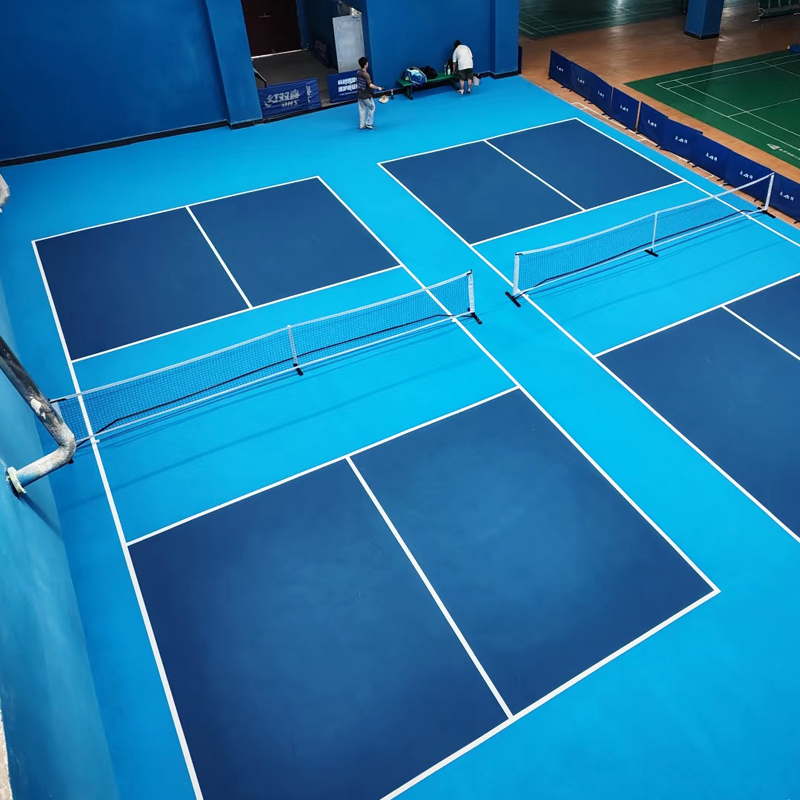
- Indoor pickleball courts
- School gymnasiums
- Multipurpose sports halls
The internal construction of a PVC floor can be adjusted to provide different levels of grip, cushioning, stability and wear resistance. This is why two PVC products with the same total thickness may not provide the same performance.
One product may use a dense wear layer and a stable reinforcement structure. Another may obtain most of its thickness from a softer backing. Their catalog descriptions may appear similar, but their resistance to indentation, rolling loads and repeated use can be very different.
Why PVC Is Often Used for Badminton and Volleyball
Badminton requires rapid lunges, lateral movement and frequent changes of direction. The surface must provide controlled traction without becoming excessively sticky.
PVC badminton court flooring can offer a relatively consistent surface with sport-specific texture. However, the visible PVC layer is only part of the system. The supporting floor underneath also affects cushioning and stability.
Volleyball flooring must handle repeated jumping, landing and occasional player contact with the floor. A suitable system needs enough resilience to reduce impact while remaining stable during takeoff and directional movement.
Handball adds continuous running, fast braking and high levels of shoe contact. A surface that is too smooth may provide inadequate control, while a surface with excessive grip may interfere with natural rotation.
For these applications, buyers should compare the complete floor construction rather than selecting a product based only on thickness.
Installation Requirements for PVC Sports Flooring
PVC sports flooring normally requires more detailed substrate preparation than modular tiles.
The installer may need to evaluate:
- Concrete flatness
- Surface strength
- Residual moisture
- Cracks and joints
- Adhesive compatibility
- Installation temperature
- Material conditioning
- Seam treatment
Small irregularities in the base can remain visible after installation. Moisture can also affect adhesive performance and dimensional stability.
PVC flooring may be suitable for normal sports traffic but not necessarily for concentrated static or rolling loads. Retractable seating, maintenance machines, portable basketball equipment and heavy carts may require protective boards or a specially selected floor system.
Limitations of PVC Sports Flooring
PVC sports floor is mainly used indoors unless the exact product has been designed for outdoor exposure.
It may also be vulnerable to:
- Indentation from heavy equipment
- Damage from sharp objects
- Incorrect cleaning chemicals
- Poor adhesive installation
- Moisture from the substrate
- Visible imperfections in the base
A thin PVC surface installed directly over hard concrete should not be expected to perform like a complete cushioned sports flooring system.
Wood Sport Floor: More Than a Hardwood Surface
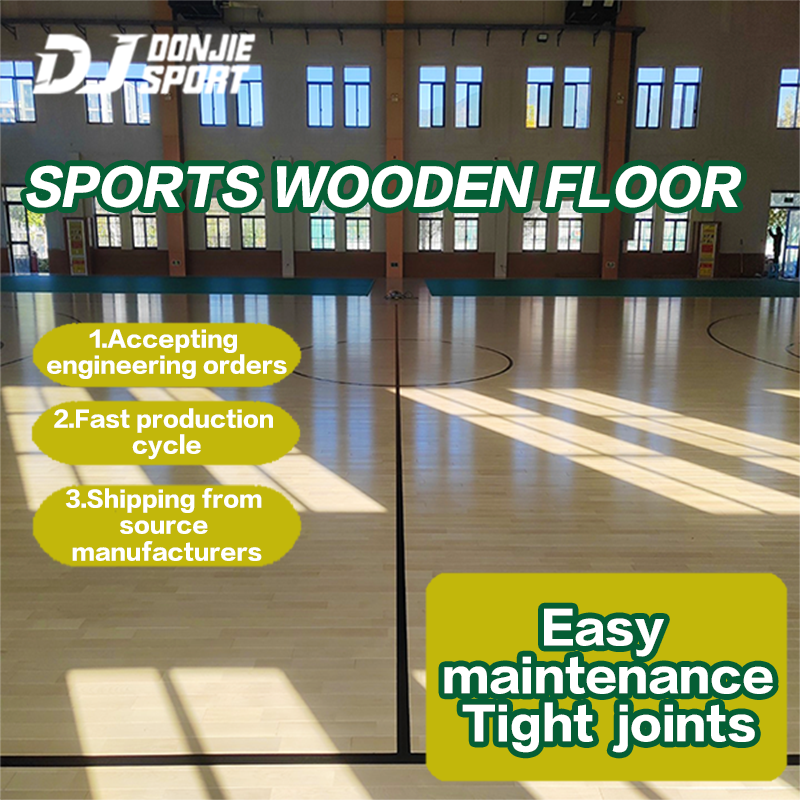
Wood sport floor systems are widely associated with indoor basketball courts, professional arenas and high-quality sports halls.
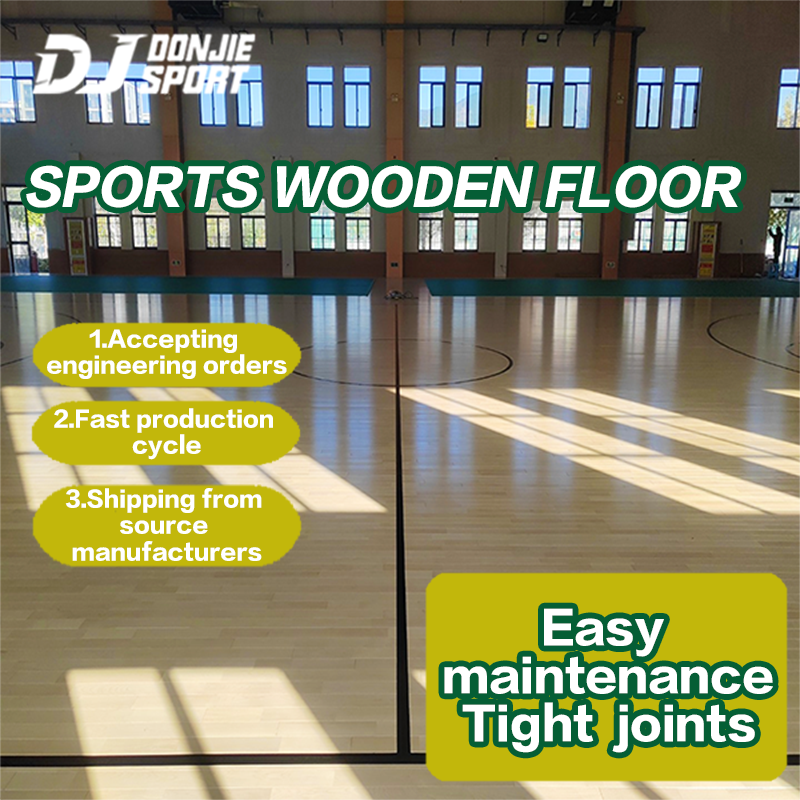
The visible wood surface is only one part of the construction. A proper sports wooden floor may include elastic pads, battens, plywood or engineered panels beneath the playing surface.
This supporting structure helps distribute loads over a wider area. The system can provide a combination of stability, ball rebound and impact response that is difficult to reproduce with a simple hard floor covering.
Why Wood Is Commonly Used for Basketball
Basketball involves running, repeated jumping, rapid stops and direct ball interaction with the floor.
A properly engineered wooden basketball court floor can provide predictable ball rebound and a familiar playing response. It can also be sanded and refinished during its service life, depending on the construction and remaining wear surface.
This does not mean every wooden floor is suitable for basketball.
The timber condition, substructure, pad arrangement, board installation and moisture control all affect performance. A decorative wooden floor installed directly over concrete is not the same as an engineered sports floor.
Limitations of Wood Sports Flooring
Wood requires stable environmental conditions.
Changes in moisture and humidity can cause:
- Expansion
- Shrinkage
- Cupping
- Gaps
- Surface movement
- Finish problems
The building should have appropriate climate control, and the substrate must be evaluated for moisture before installation.
Wood sports flooring may also require periodic recoating, specialist cleaning and protection during non-sport events. It is generally not suitable for uncovered outdoor courts or buildings with uncontrolled water exposure.
For facilities that can support the installation and maintenance requirements, wood can be a long-term sports hall flooring solution. For projects with limited environmental control or a short installation schedule, another material may be more practical.
Which Sports Flooring Is Best for Basketball?
There is no single basketball court floor suitable for every project.
Indoor professional and competition courts often use engineered wood systems because of their ball response and area-elastic behavior.
Schools, training centers and multipurpose halls may use wood or synthetic indoor sports flooring, depending on the level of play and other activities taking place in the building.
Outdoor basketball courts commonly use:
- PP modular flooring
- Acrylic court systems
- Other outdoor-rated synthetic surfaces
The decision should consider drainage, climate, substrate condition, maintenance ability and player expectations.
A buyer should not rely only on a supplier’s statement that a product is “for basketball.” Ask how the floor behaves under repeated impact, temperature change, ball contact and directional movement.
Choosing Badminton Court Flooring
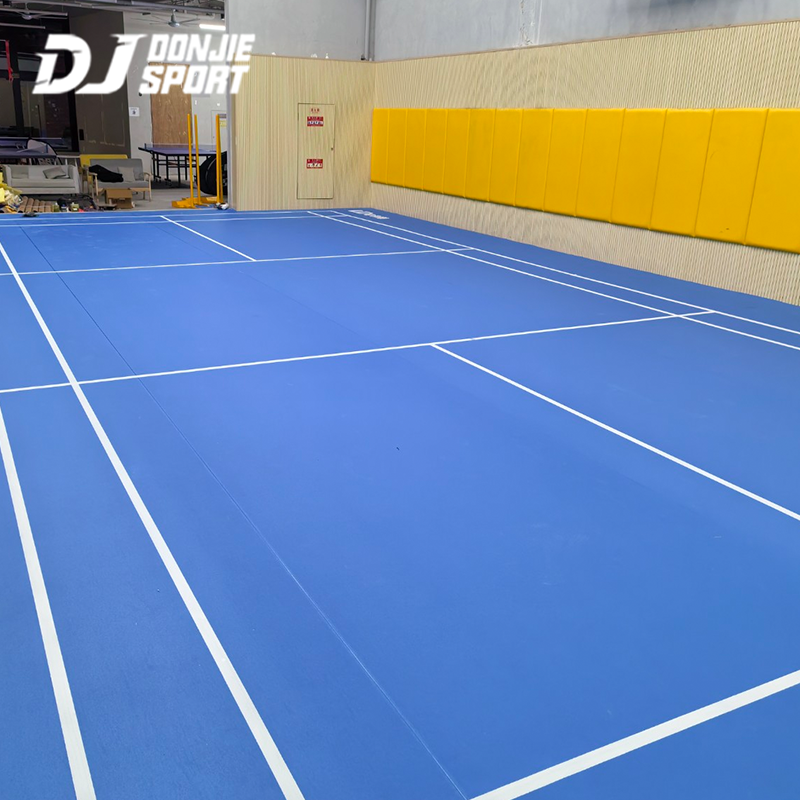
Badminton court flooring must support quick lateral movement, lunging and sudden recovery steps.
The floor should provide stable grip across the entire playing area. Inconsistent friction can be more problematic than a surface that is simply slightly faster or slower.
PVC sports flooring is widely used for badminton, but buyers should check:
- Surface texture
- Cushion structure
- Seam quality
- Subfloor requirements
- Resistance to indentation
- Suitability for temporary or permanent installation
For competition or professional training projects, the complete supporting system and applicable facility requirements should be confirmed.
A product cannot be judged only by pressing a small sample with a hand. The installed floor must be evaluated as a full playing surface.
Sports Flooring for Volleyball and Handball
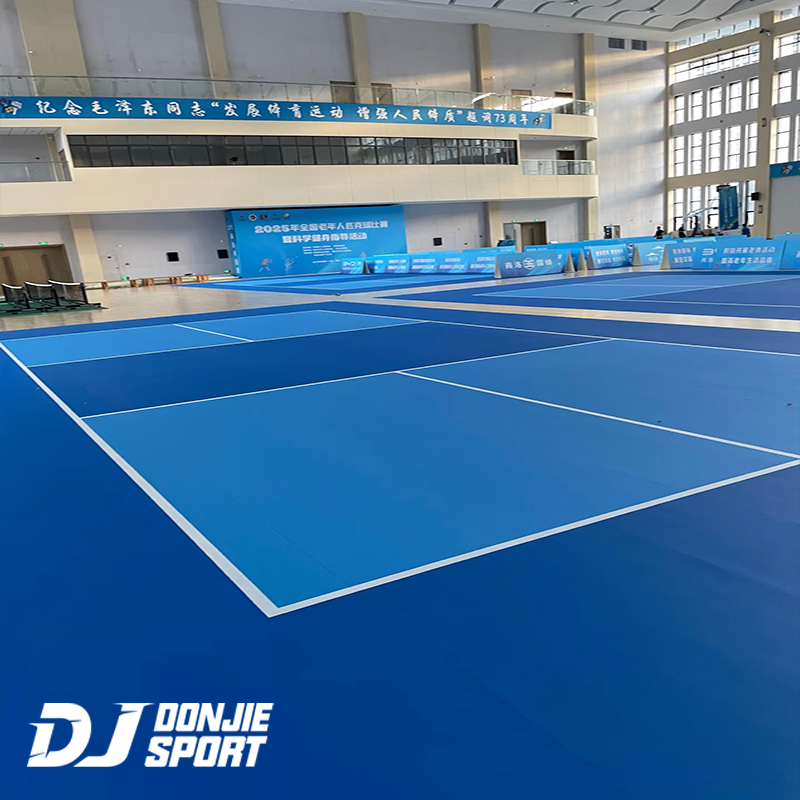
Volleyball flooring needs to manage repeated impact around the net while providing stable movement across the court.
Handball creates a different stress pattern. Players run over a larger area, stop quickly and make frequent changes of direction. The surface must resist wear without becoming too smooth.
PVC systems and engineered wood systems can both be used, depending on project requirements.
For a multipurpose hall, the buyer should identify which sport has the highest performance priority. A floor selected primarily for basketball may still support volleyball, but its movement response may differ from a dedicated volleyball surface.
Pickleball Floor and Tennis Floors
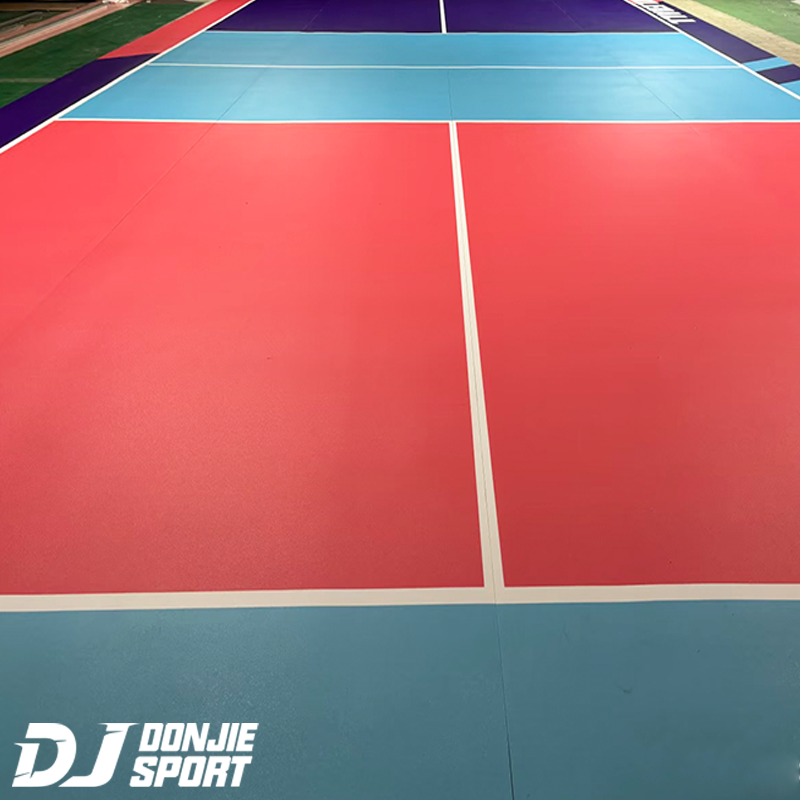
Pickleball and tennis may appear similar because both use rackets and nets, but the expected ball behavior and court use are not identical.
Outdoor pickleball floor projects often prioritize:
- Drainage
- Surface grip
- Fast installation
- Weather resistance
- Line visibility
- Maintenance simplicity
PP modular tiles can be practical for recreational pickleball courts. Acrylic and other dedicated court systems may provide a different ball response and playing speed.
Tennis Floors should be selected according to the expected court speed, player level, outdoor conditions and maintenance plan. A general-purpose modular floor may support recreational tennis but should not automatically be described as equivalent to a dedicated tennis surface.
Table Tennis Flooring
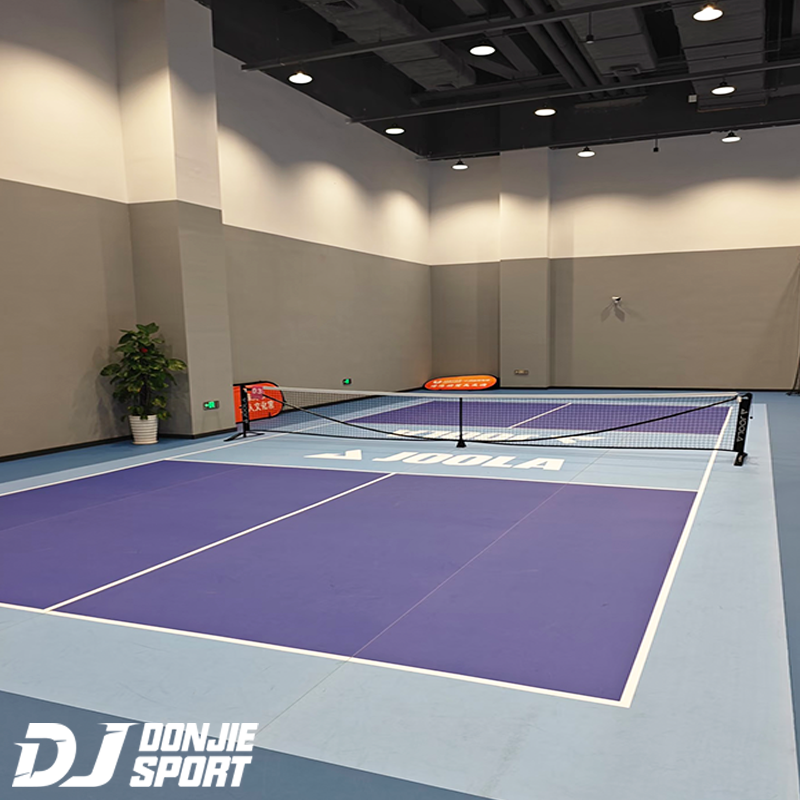
Because the ball is played on the table, ball rebound from the floor is not the main concern in table tennis.
The flooring should instead provide:
- Controlled shoe grip
- Stable lateral movement
- Visual contrast
- Player comfort
- Resistance to table movement
- Easy maintenance
PVC sports flooring is frequently used in table tennis halls and multipurpose facilities. Buyers should consider how tables will be moved and stored, as folded tables and equipment wheels can create concentrated loads.
Dance Flooring Is Not the Same as Court Flooring
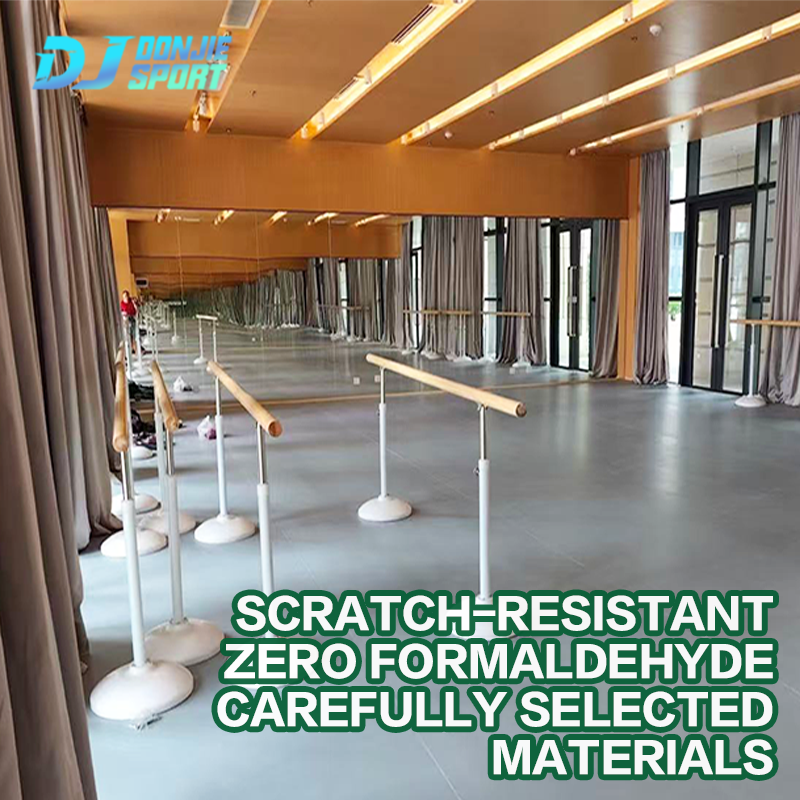
Dance flooring should not be selected using the same criteria as basketball or badminton flooring.
Different dance styles require different combinations of grip, smoothness and resilience. Ballet, contemporary dance, ballroom and commercial dance may not use the same top surface.
A professional dance floor often includes a sprung supporting system and a specialized performance surface.
A basketball floor may be too slippery, too hard or too heavily coated for certain dance activities. A soft workout floor may provide excessive resistance during turns.
The intended dance style should always be discussed before choosing the floor.
Workout Room Flooring Depends on the Activity
The term workout room flooring covers several very different applications.
A yoga room, aerobic studio, functional training area and free-weight room do not place the same demands on a floor.
A resilient PVC sports floor may work well for group exercise and light fitness activities. It may not be suitable for areas where heavy weights are dropped repeatedly.
Free-weight areas often require additional impact-resistant rubber flooring or dedicated lifting platforms. Heavy exercise machines can also create permanent indentation if the load is concentrated through small feet.
The equipment layout should therefore be reviewed before the floor is ordered.
School Sports Flooring Must Handle More Than Sports
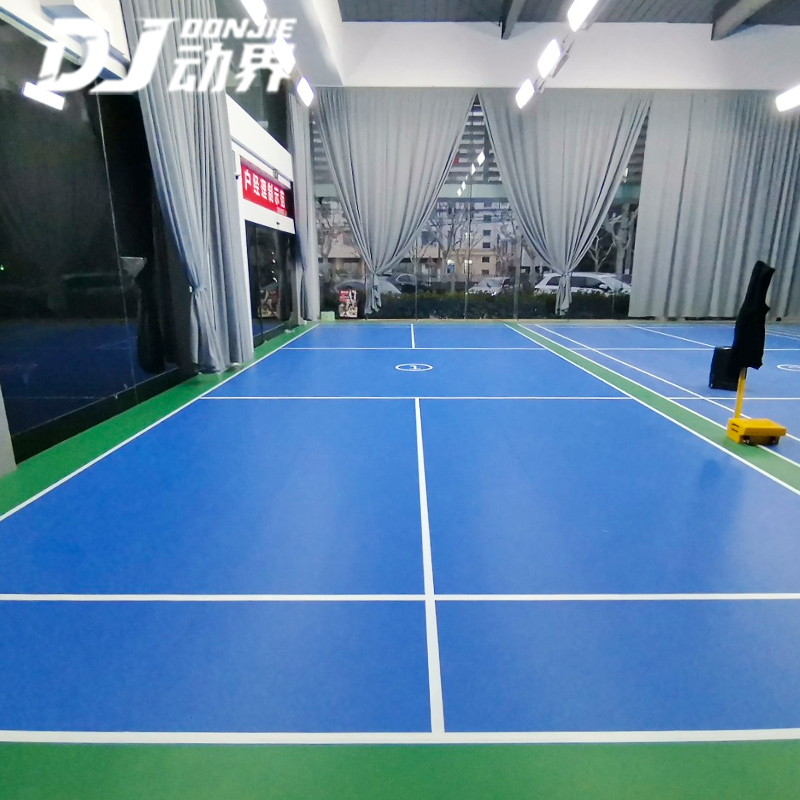
School sports flooring often serves several functions.
The same hall may be used for:
- Physical education
- Basketball
- Volleyball
- Badminton
- Assemblies
- Exams
- Community events
- Temporary seating
- Performances
A specialized competition surface may not always be the most practical school solution.
The floor should be evaluated for athletic performance, cleaning, rolling loads, chair use, repair and maintenance. The school also needs a clear plan for protecting the surface during non-sport events.
For many schools, the best sports flooring is not the one with the highest single-sport specification. It is the one that delivers an acceptable balance across all planned activities.
Indoor Sports Flooring and Outdoor Sports Flooring Are Not Interchangeable
Indoor and outdoor environments place very different demands on flooring materials.
Indoor sports flooring is normally protected from rain, direct sunlight and large temperature changes. Outdoor sports flooring must handle:
- UV exposure
- Rainwater
- High surface temperatures
- Low temperatures
- Thermal expansion
- Dust and leaves
- Ground movement
- Freeze-thaw conditions in some regions
An indoor PVC floor should not be installed outdoors unless the exact product is specifically designed and documented for outdoor use.
Wood should also not be used for uncovered outdoor courts.
Outdoor PP flooring can manage weather exposure more effectively, but it still needs a suitable substrate, drainage and expansion design.
The word “water-resistant” should not be confused with “suitable for permanent outdoor installation.”
Technical Indicators That Matter When Comparing Sports Flooring
A professional quotation should include more than product thickness and weight.
Several technical properties affect how the installed sports floor performs.
Force Reduction
Force reduction describes how much impact the flooring system absorbs compared with a rigid reference surface.
This property is relevant to running, jumping and landing. However, a higher value is not automatically better. Excessive softness can reduce stability and create problems for rolling equipment.
The result should be considered together with deformation and the intended sport.
Vertical Deformation
Vertical deformation indicates how far the floor moves under a specified load.
A floor with very little deformation may feel hard. A floor with excessive deformation may feel unstable during fast movement.
Force reduction and deformation should be reviewed together rather than treated as separate marketing numbers.
Surface Friction
Surface friction affects stopping, sliding and rotational movement.
A suitable sport floor should provide controlled, predictable grip. The highest friction value is not always the safest because excessive grip can prevent natural foot release.
Buyers should ask how friction was tested and whether the result applies to dry, wet or contaminated conditions.
Ball Rebound
Ball rebound matters for basketball and other sports where the ball interacts directly with the floor.
The result depends on the complete installed system. Testing a surface material over one type of supporting structure does not prove that it will behave identically over another.
Wear Resistance
Wear resistance should not be confused with total product thickness.
For PVC sports flooring, the construction and quality of the wear layer matter. For PP tiles, surface geometry, raw material formulation and structural strength influence long-term performance. For wood, the usable surface thickness affects future refinishing.
Rolling-Load and Indentation Resistance
Sports halls often contain equipment that creates loads very different from athlete traffic.
Examples include:
- Portable basketball systems
- Retractable seating
- Cleaning machines
- Equipment carts
- Scissor lifts
- Temporary stages
A floor that performs well during sport may still be damaged by these loads. Buyers should provide equipment information before the system is specified.
Dimensional Stability
Poor dimensional stability may lead to open joints, edge lifting, tile movement or buckling.
This property is especially important for modular PP flooring and roll-based PVC products. Temperature, moisture, installation conditions and production consistency all influence dimensional movement.
How Sports Flooring Is Manufactured
Production methods help explain why products with similar appearances can have different performance.
PP Sports Flooring Production
PP tiles are generally produced through injection molding.
The process includes material preparation, color formulation, molding, cooling, inspection and packaging.
Mold accuracy and cooling control influence the dimensions of the tile. Small dimensional differences can affect the locking system across a large court.
The resin formulation also affects flexibility, impact behavior and outdoor aging. Buyers should avoid assuming that all polypropylene formulations perform in the same way.
PVC Sports Floor Production
PVC sports flooring may be produced through coating, calendaring, lamination, reinforcement, foaming and surface-treatment processes.
The final performance depends on:
- Layer bonding
- Foam density
- Reinforcement structure
- Wear-layer composition
- Surface coating
- Production tolerances
- Roll stability
A product with a thicker foam backing may feel softer but may not offer better resistance to heavy equipment.
Wood Sports Flooring Production
Wood sports flooring production includes timber selection, drying, grading, machining and finishing.
Moisture control is particularly important. Wood that has not been properly conditioned may change after installation.
The supporting components must also be produced consistently. Pads, battens and panels contribute directly to the response of the finished floor.
How to Inspect Sports Flooring Before Purchasing
A physical sample is useful, but one small piece cannot prove the performance of an entire court.
For PP sports flooring, connect several tiles and inspect:
- Joint alignment
- Locking strength
- Surface flatness
- Tile-to-tile consistency
- Edge quality
- Underside support
- Noise under movement
For PVC sports flooring, examine:
- Surface texture
- Edge straightness
- Layer bonding
- Backing density
- Roll curl
- Indentation behavior
- Surface consistency
For wood flooring, review:
- Board grading
- Moisture information
- Machining accuracy
- Surface finish
- Substructure design
- Installation method
Samples should be checked together with technical documents. Neither samples nor reports should be used alone.
How to Compare Sports Flooring Suppliers
A reliable supplier should ask about the project before recommending a product.
Provide each supplier with the same information:
- Indoor or outdoor location
- Main sport
- Secondary activities
- Competition or recreational use
- Court dimensions
- Existing substrate
- Climate
- Drainage conditions
- Expected traffic
- Equipment loads
- Required standards
- Installation location
- Target completion schedule
This allows buyers to compare proposals on the same basis.
Be cautious when a supplier claims that one product is suitable for basketball, badminton, tennis, volleyball, dance, gyms and outdoor use without explaining the trade-offs.
Ask for specific answers:
- Which construction is being offered?
- What substrate does it require?
- Is it designed for indoor or outdoor use?
- What test method supports the performance claim?
- Does the report cover the exact product?
- Who is responsible for installation?
- What maintenance is required?
- What conditions are excluded from the warranty?
A careful, conditional answer is often more trustworthy than a simple promise that the product is suitable for everything.
Common Sports Flooring Purchasing Mistakes
Selecting a Floor by Thickness Alone
A thicker product is not automatically more durable, more comfortable or more professional.
The internal structure and tested performance are more useful than a single thickness figure.
Ignoring the Subfloor
Many flooring failures begin below the visible surface.
Moisture, cracks, poor flatness and weak concrete can affect even a high-quality sports flooring product.
Using Indoor Flooring Outdoors
Indoor flooring may shrink, fade, soften or lose adhesion when exposed to outdoor conditions.
Always confirm that the exact product is designed for the installation environment.
Comparing Only the Price Per Square Meter
The material price does not include the complete cost of the project.
Buyers should also consider:
- Subfloor preparation
- Moisture treatment
- Adhesive
- Installation
- Court line marking
- Freight
- Spare material
- Maintenance products
- Protective covering
- Future repair costs
A lower material price may result in a higher total project cost if extensive preparation or frequent replacement is required.
Accepting General Certification Claims
The word “certified” has little meaning without details.
Ask for:
- The name of the standard
- The tested product code
- The tested construction
- The issuing laboratory
- The report date
- The test result
- The scope of application
A test report for one floor structure should not automatically be applied to another thickness or backing.
Can One Sports Floor Be Used for Multiple Sports?
Yes, but a multipurpose floor always involves compromise.
A school sports hall may support basketball, badminton, volleyball, physical education and community events on one surface. That does not mean the floor will perform exactly like a dedicated surface for each activity.
Before choosing commercial sports flooring for several uses, decide:
- Which sport is played most often?
- Which activity has the highest performance requirement?
- Will formal competitions be held?
- Will chairs or stages be placed on the floor?
- Will heavy equipment be moved through the hall?
- Which performance compromises are acceptable?
A good multipurpose sports floor is not perfect for every activity. It is a system whose compromises are understood before installation.
Final Answer: Is Every Type of Sports Flooring the Same?
No. Sports flooring products differ in material, structure, manufacturing method, athletic response, environmental resistance, installation requirements and maintenance needs.
PP sports flooring is often suitable for outdoor recreational courts, school play areas and projects requiring modular replacement.
PVC sports floor systems are commonly selected for badminton, volleyball, handball, table tennis and indoor multipurpose facilities.
An engineered wood sport floor remains an important option for indoor basketball and professional sports hall flooring where the building can support its installation and maintenance requirements.
Dance flooring and workout room flooring should be selected according to their own movement and equipment demands rather than treated as ordinary court surfaces.
The best sports flooring is not determined by one material name or one technical figure. It is determined by how well the complete system fits the real project.
Before requesting a final quotation, prepare the following information:
- Court size
- Indoor or outdoor location
- Main and secondary sports
- Level of play
- Existing base condition
- Climate and drainage
- Equipment loads
- Required standards
- Installation responsibility
- Maintenance expectations
- Target budget
With this information, a supplier can recommend a suitable sports flooring system instead of offering a generic product based only on price.
For a basketball court floor, badminton court flooring, pickleball floor, school sports flooring or complete sports hall flooring project, request more than a catalog and quotation. Ask for the product structure, technical documentation, substrate requirements, installation method and maintenance plan.
That is the practical difference between buying a floor covering and selecting a sports flooring system.