In today’s fast-paced world of indoor sports, PVC sports flooring has become one of the most reliable surfaces for venues that demand high performance and durability. From community basketball courts to professional sports halls, facility owners face the same challenge: finding a flooring solution that can endure heavy traffic, continuous play, and frequent maintenance cycles without losing its quality or safety.
PVC sports flooring has emerged as a game-changing material that combines flexibility, strength, and aesthetic appeal. Unlike traditional wooden or rubber surfaces that often struggle under extreme wear and moisture conditions, PVC flooring offers excellent resilience, long lifespan, and consistent play performance.
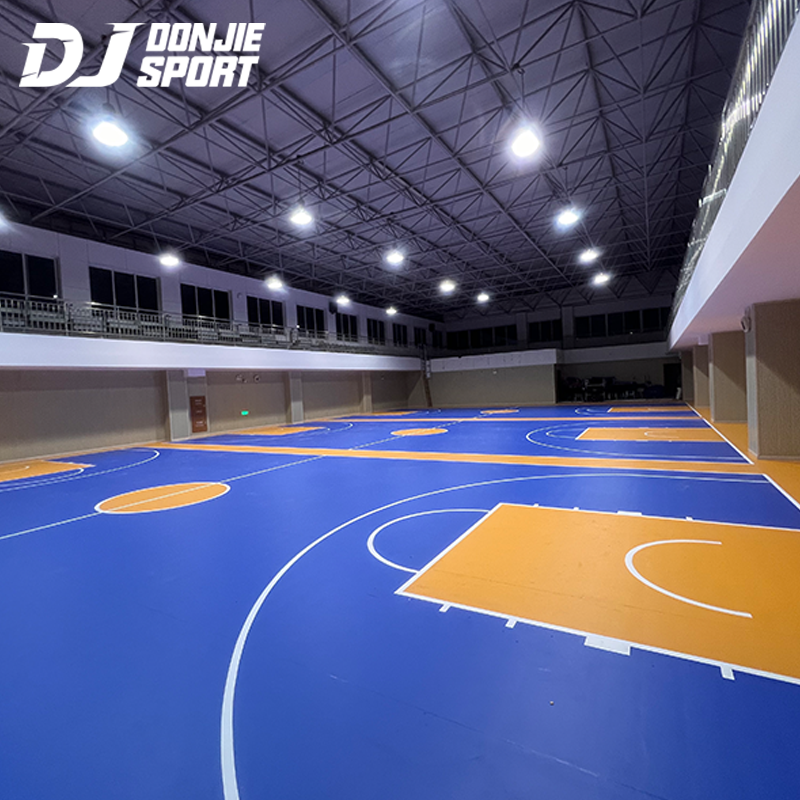
Understanding PVC Sports Flooring
What Is PVC Sports Flooring Made Of?
PVC sports flooring is engineered from polyvinyl chloride (PVC) and designed with multiple functional layers. Typically, it includes:
Wear Layer: A transparent PVC or PUR-coated surface that protects against abrasion, scratches, and stains.
Glass Fiber Reinforcement Layer: Provides dimensional stability, ensuring the flooring doesn’t warp or expand with temperature or humidity changes.
Foam Cushion or Buffer Layer: Offers excellent shock absorption and elasticity, protecting athletes’ joints and enhancing comfort during play.
Base Layer: Ensures strong adhesion to the subfloor and improves durability over time.
Each layer serves a purpose — working together to deliver consistent ball bounce, excellent grip, and long-lasting resilience, even under constant use.
Why PVC Has Become Popular in Indoor Sports Surfaces
PVC sports flooring stands out for its balance of performance, aesthetics, and practicality. Unlike traditional wood that requires polishing and humidity control, or rubber flooring that lacks elasticity for sports like basketball, PVC combines durability with easy upkeep.
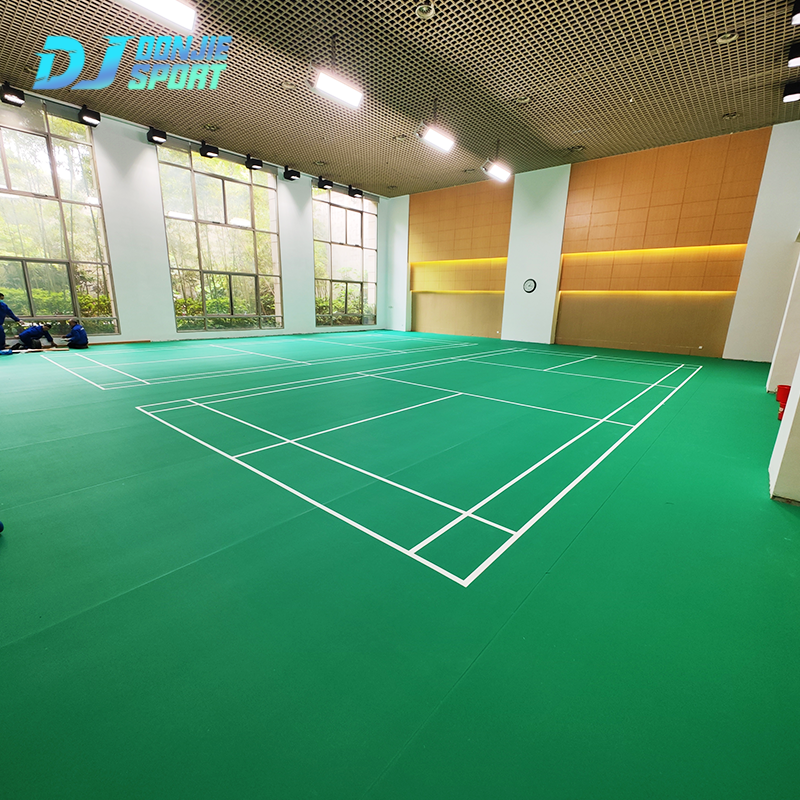
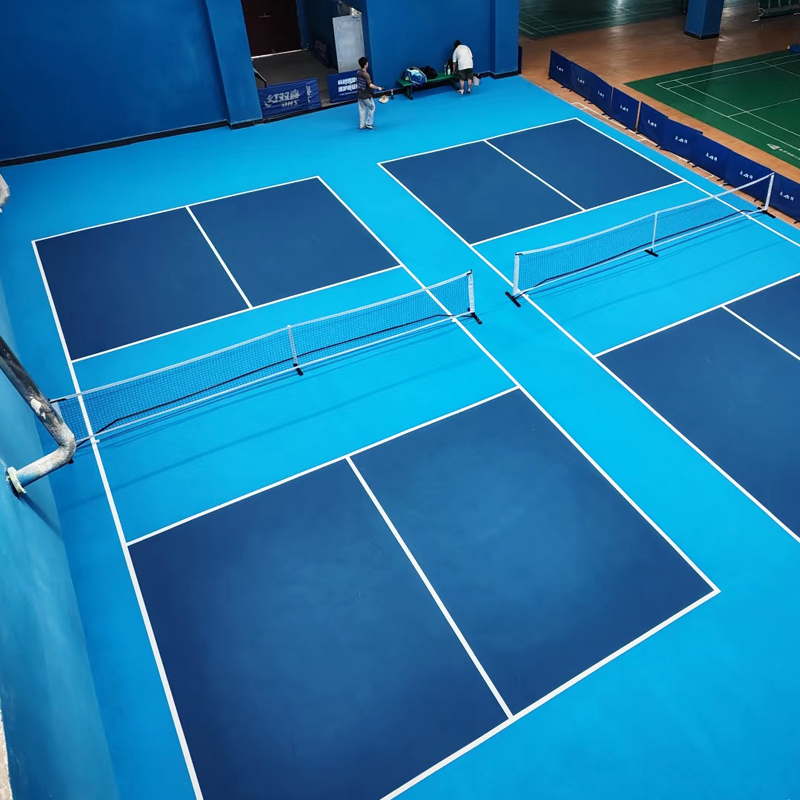
This type of flooring is now widely used in basketball courts, badminton halls, table tennis centers, multipurpose sports arenas, and even indoor pickleball courts. Its versatility, smooth surface, and shock-absorbing properties make it a preferred choice for both competitive and recreational facilities.
Durability Factors of PVC Sports Flooring
High Wear Resistance and Long Lifespan
One of the strongest features of PVC sports flooring is its wear layer—typically treated with a PUR (polyurethane reinforcement) coating. This top layer acts as a shield against scuff marks, shoe friction, and repeated ball impacts. Even in high-traffic areas such as basketball free-throw zones or sideline areas, PVC flooring maintains its shine and integrity.
With proper installation and maintenance, the flooring can last 8 to 15 years or more, offering exceptional long-term value for sports facility owners.
Shock Absorption and Energy Return
Basketball demands fast movement, jumps, and landings. The cushion layer of PVC sports flooring provides optimal shock absorption, which reduces muscle fatigue and the risk of injury. Meanwhile, its elastic rebound ensures excellent energy return, giving players better control and ball bounce consistency—vital for professional-level performance.
Dimensional Stability and Load Resistance
Thanks to its reinforced fiberglass layer, PVC sports flooring remains dimensionally stable under temperature fluctuations or heavy use. It resists deformation even when exposed to sports equipment like basketball posts or retractable seating systems. This makes it perfectly suited for high-traffic sports halls and training centers where constant activity is the norm.
Comparing PVC Sports Flooring with Other Sports Flooring Materials
PVC vs. Wooden Sports Flooring
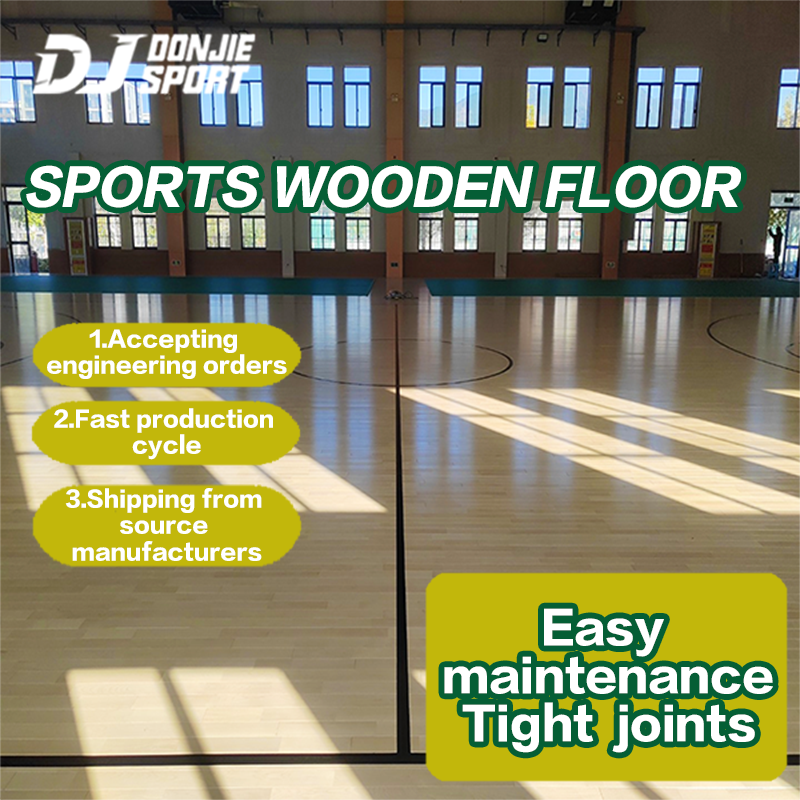
While wooden floors have been the traditional choice for basketball courts, they require constant maintenance—sanding, polishing, and climate control. PVC sports flooring provides a similar professional aesthetic, especially with maple-grain patterns, but eliminates high maintenance costs. It is more moisture-resistant, more adaptable to indoor environments, and retains its grip without needing frequent resurfacing.
PVC vs. Rubber Flooring
Rubber flooring is known for its cushioning, but it often lacks the ball bounce and traction needed for fast-paced sports like basketball. PVC sports flooring offers a better balance between firmness and flexibility, ensuring safety without sacrificing gameplay performance.
Performance in High-Traffic Basketball Courts
Real-World Durability in Competitive Sports Environments
In basketball courts that host daily training or tournaments, the flooring must endure relentless activity. Case studies from sports halls using PVC basketball flooring show minimal surface degradation even after years of use. The layered PVC structure resists abrasion, and its textured finish prevents slippage while retaining visual appeal.
Slip Resistance and Surface Safety
Safety is paramount in basketball. The anti-slip texture of PVC flooring enhances grip during quick lateral movements and sudden stops. It complies with international sports flooring safety standards, maintaining a reliable coefficient of friction under both dry and slightly damp conditions.
Easy Maintenance for Constant Use
Another advantage of PVC sports flooring is simple daily care. Routine sweeping and occasional mopping with a mild detergent are enough to keep the surface clean and hygienic. Unlike wooden floors that require waxing or oiling, PVC surfaces stay bright and performance-ready with minimal effort.
This low-maintenance feature makes PVC ideal for busy sports complexes, where courts are used back-to-back by schools, teams, and community programs.
Design Flexibility and Aesthetic Value
Multiple Colors and Patterns for Court Customization
PVC sports flooring offers endless design possibilities. Facility owners can choose from maple grain, crystal sand, or matte finishes, creating a professional appearance similar to wooden courts. Lines and logos for basketball, volleyball, or multipurpose courts can be integrated directly into the surface for long-lasting visibility.
Seamless Installation for Professional Look
PVC flooring installation is efficient and seamless. Rolls are hot-welded or adhered using strong sports adhesives, resulting in a uniform surface without gaps or uneven edges. The installation process is quick, allowing sports halls to resume operations in a short time — a key benefit for commercial venues.
Environmental and Health Considerations
Eco-Friendly Manufacturing and Materials
Modern PVC sports flooring is designed with environmental responsibility in mind. Manufacturers use recyclable materials and adhere to low-VOC (volatile organic compound) standards, ensuring safe indoor air quality. Many PVC floors also meet international environmental certifications for sustainability.
Comfort and Noise Reduction
The cushioned underlayer not only absorbs shock but also reduces noise levels, creating a quieter playing environment. This makes PVC an excellent choice for indoor basketball courts, badminton halls, and school gymnasiums, where sound control enhances the overall experience.
Packaging, Shipping, and Global Availability
Professional Packaging and Quality Control
Each roll of PVC sports flooring undergoes thorough inspection before packing. The flooring is rolled tightly, wrapped in protective film, and reinforced to prevent damage during transport. This ensures it arrives at the construction site in perfect condition, ready for immediate installation.
Convenient Global Shipping Options
Leading manufacturers like Donjie provide flexible global logistics solutions, ensuring on-time delivery for large-scale sports flooring projects worldwide. Whether it’s a single indoor court or a multi-sport complex, customers receive tailored packaging and shipping plans to fit their needs.
Conclusion
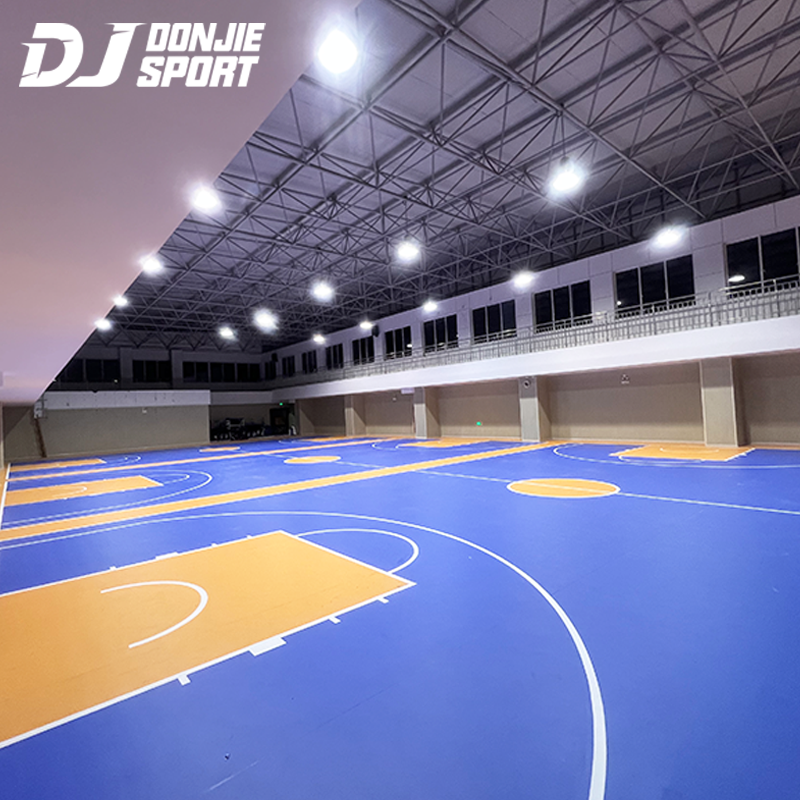
So, is PVC sports flooring durable enough for high-traffic basketball courts? Absolutely. Its combination of multi-layer engineering, wear resistance, dimensional stability, and low maintenance makes it one of the most reliable flooring solutions for indoor sports facilities. From basketball and badminton to pickleball and table tennis, PVC surfaces deliver both performance and longevity—helping athletes perform at their best while reducing facility upkeep costs.
For sports venue owners seeking a balance between professional performance, visual appeal, and long-term value, PVC sports flooring remains a smart, sustainable, and future-ready investment.