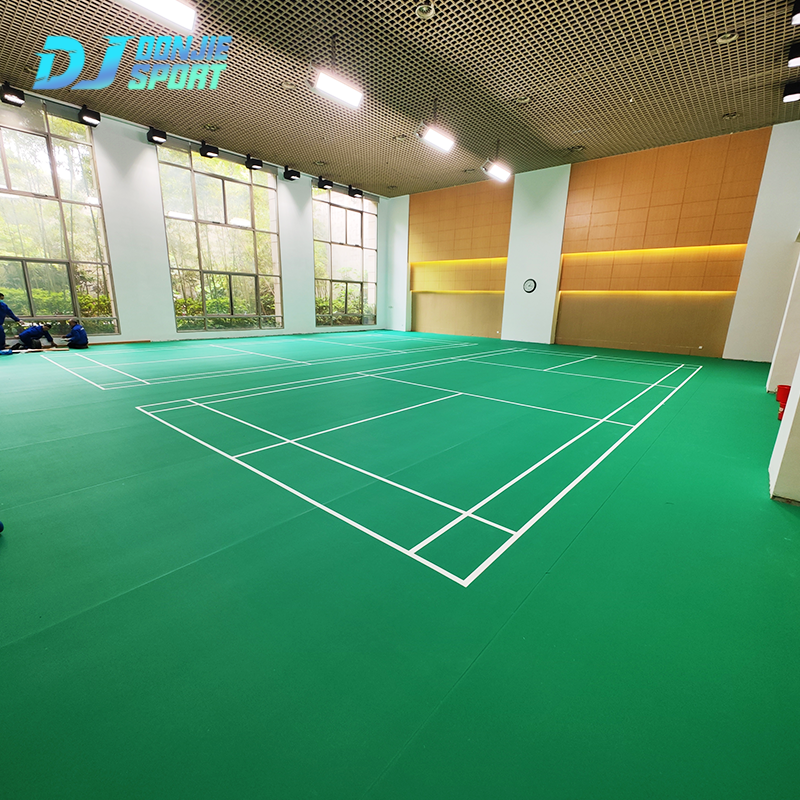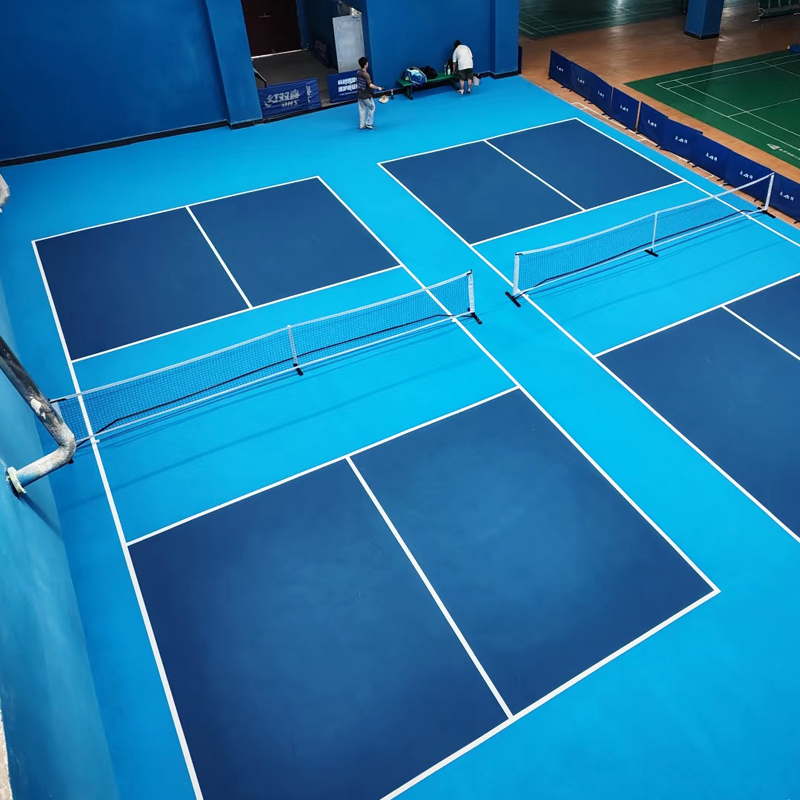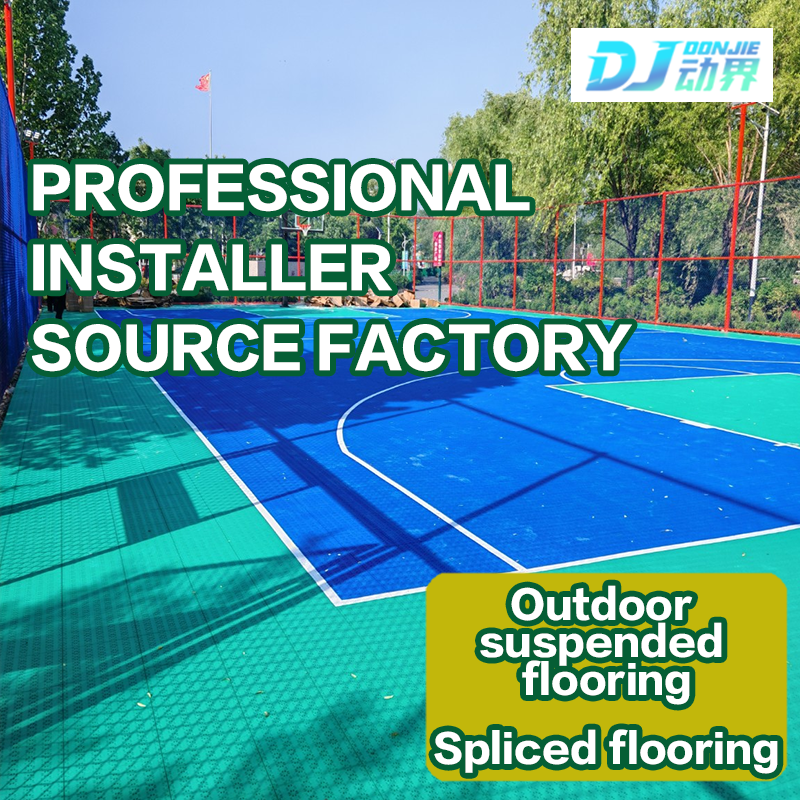
When it comes to designing and building a pickleball court, the surface you choose plays a significant role in the overall performance, safety, and longevity of the court. The flooring of a pickleball court not only affects the gameplay experience but also contributes to player safety and comfort. With various materials available, it is essential to select the right surface based on the type of court (indoor or outdoor) and how it will be used. This article explores the different types of pickleball court flooring and provides insights on selecting the best option for different court needs.
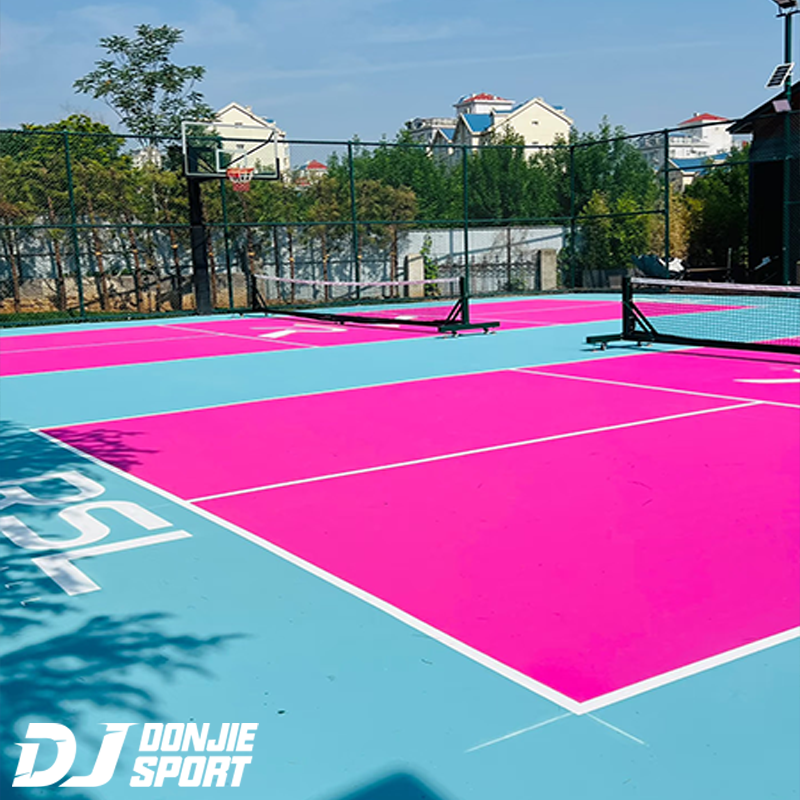
Understanding the Types of Pickleball Court Flooring
Pickleball court flooring is available in several materials, each designed to offer specific benefits depending on the environment and the intensity of use. The most common types of flooring include rubber, PVC, and acrylic surfaces. Let’s look at these materials in detail.
Rubber Flooring for Pickleball Courts
Rubber flooring is a popular choice for both indoor and outdoor pickleball courts, particularly in facilities that experience high traffic. Rubber surfaces are known for their durability and shock absorption properties, making them an ideal option for protecting players’ joints and reducing the risk of injuries during play.
-
Key Features:
Rubber flooring provides an even, cushioned surface that enhances player comfort. It also helps to reduce noise, making it ideal for indoor courts. The material is resistant to wear and tear, making it suitable for high-traffic environments. -
Advantages:
-
Excellent shock absorption and comfort
-
Durable and long-lasting
-
Low maintenance
-
Non-slip surface for safety
-
-
Disadvantages:
-
May retain heat in outdoor settings
-
Can be challenging to install on certain sub-surfaces
-
Limited color options compared to other materials
-
PVC Flooring for Pickleball Courts
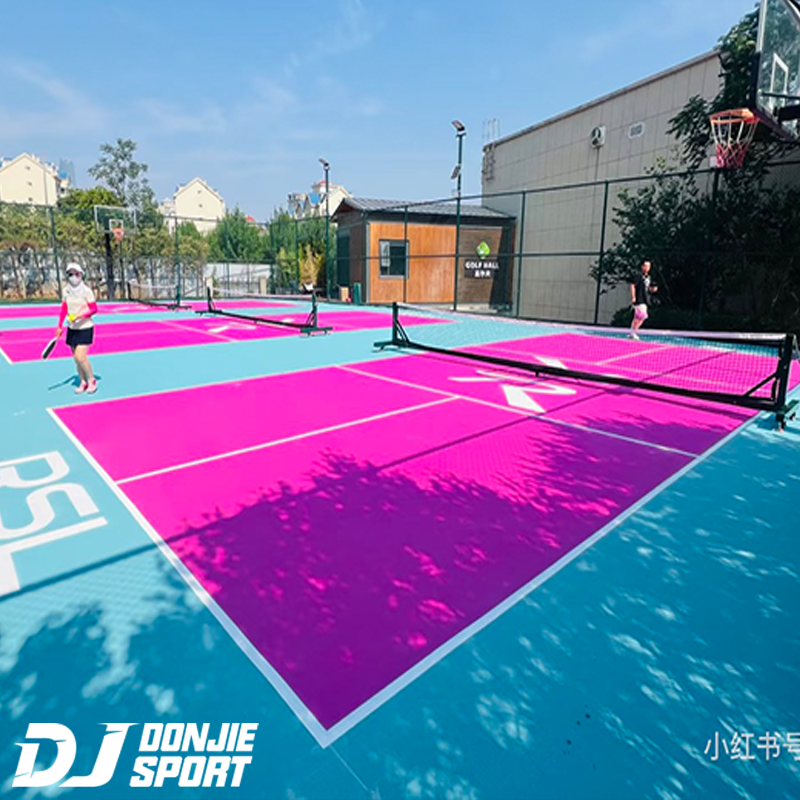
PVC flooring is another excellent choice for pickleball courts. Known for its flexibility, durability, and easy maintenance, PVC flooring provides a stable playing surface that can be used in both indoor and outdoor settings. PVC surfaces are designed to resist wear, moisture, and UV damage, making them a long-term investment for pickleball courts.
-
Key Features:
PVC flooring is a resilient material that offers good traction for players. It is available in interlocking tiles, making installation straightforward and cost-effective. PVC surfaces are resistant to stains and moisture, which makes them easy to maintain. -
Advantages:
-
High durability and long-lasting performance
-
Resistance to moisture, stains, and UV rays
-
Easy installation with interlocking tiles
-
Low maintenance
-
-
Disadvantages:
-
Can be slippery when wet if not maintained properly
-
May require periodic sealing for outdoor courts
-
Can get hard over time, leading to less shock absorption
-
Acrylic Flooring for Outdoor Pickleball Courts
Acrylic surfaces are often used for outdoor pickleball courts due to their ability to withstand the elements. Acrylic is a popular option for recreational courts, as it provides a smooth playing surface that is easy to maintain.
-
Key Features:
Acrylic surfaces offer excellent ball bounce consistency and are available in a variety of colors. These surfaces are resistant to UV rays, making them a good choice for outdoor courts exposed to sunlight. -
Advantages:
-
Ideal for outdoor courts due to weather resistance
-
Smooth surface with consistent bounce
-
Available in multiple colors for aesthetic customization
-
Easy to maintain with simple cleaning
-
-
Disadvantages:
-
Not as shock-absorbing as rubber or PVC
-
Can get slippery when wet if not treated with a non-slip coating
-
Requires regular resealing to maintain quality
-
Choosing Flooring Based on Court Usage
The type of flooring you choose also depends on how often the court will be used and the intensity of play. For recreational courts, you may prioritize comfort and ease of maintenance, while professional courts may require a surface that enhances performance and offers superior durability.
-
Recreational Courts:
For casual play, rubber or PVC flooring may be ideal. These surfaces provide ample comfort and safety while being easy to install and maintain. -
Professional Courts:
Professional courts typically require a more robust surface that can withstand high-intensity play. PVC or acrylic surfaces are commonly chosen for this purpose, as they provide superior bounce and durability.
Installation Considerations for Pickleball Court Flooring
Installing the right flooring is just as important as selecting the material. The installation process can vary greatly depending on the type of flooring chosen. For some materials, like rubber or PVC, installation is relatively straightforward, while others may require professional help to ensure optimal performance and longevity. Let’s look at some key considerations for installing pickleball court flooring.
-
Rubber Flooring Installation:
Rubber flooring can be installed as rolls or tiles, depending on the design of the court. Rolls are typically used for large court spaces, while tiles can be more flexible and easier to replace. It’s crucial to ensure that the subfloor is level and clean to avoid any inconsistencies in the surface. Some rubber floors may also require adhesive to ensure proper bonding. -
PVC Flooring Installation:
PVC flooring often comes in interlocking tiles, making it one of the easiest options for DIY installation. These tiles can be laid over existing surfaces, which can save time and money. It’s essential to ensure that the tiles are aligned properly, and the edges are securely locked to avoid any tripping hazards. For outdoor courts, ensure proper drainage beneath the tiles to prevent water buildup. -
Acrylic Flooring Installation:
Acrylic courts are often installed using a paint system applied to a smooth concrete base. This is typically done by professionals who ensure that the surface is adequately prepped and that the paint layers cure properly. For outdoor courts, it’s crucial to seal the surface after installation to protect it from weather-related wear and tear.
Proper installation ensures the durability and functionality of the flooring. For all types of surfaces, it is recommended to hire experienced installers to guarantee the court meets the necessary standards for play.
Long-Term Maintenance and Care of Pickleball Court Flooring
After your pickleball court flooring is installed, proper maintenance will help ensure that it lasts for years to come while maintaining optimal performance. The care required depends largely on the type of surface you’ve selected.
-
Rubber Flooring Maintenance:
Rubber flooring requires minimal maintenance, but it should be regularly swept or vacuumed to remove debris. Occasionally, clean the surface with a mild detergent and water to remove dirt or stains. It’s also important to inspect the floor for any signs of wear or tears, as these can be repaired easily. -
PVC Flooring Maintenance:
PVC flooring is relatively low-maintenance. It should be swept regularly to prevent the buildup of dirt and grime, especially in high-traffic areas. For outdoor PVC courts, periodic washing with a hose can help maintain the surface. Additionally, be sure to check the tiles for any shifting or gaps between interlocks. -
Acrylic Flooring Maintenance:
Acrylic flooring requires more regular care. To maintain its smooth surface and appearance, the court should be swept and washed regularly, especially after heavy use. Acrylic surfaces may require a fresh coat of sealant every couple of years, depending on the climate and amount of use the court receives. Regular resealing ensures that the surface remains resistant to the elements and maintains consistent playability.
Long-term care of your pickleball court flooring is crucial to ensuring it stays in good condition for both recreational and professional use. Regular maintenance will help preserve the surface, extend its lifespan, and keep players safe.
Conclusion
Choosing the right pickleball court flooring is essential for both performance and safety. Whether you choose rubber, PVC, or acrylic, each surface offers distinct advantages depending on your court’s specific needs. Rubber flooring is great for shock absorption and high-traffic indoor courts, while PVC flooring provides durability and easy maintenance for both indoor and outdoor courts. Acrylic surfaces, on the other hand, are ideal for outdoor courts that require weather resistance and consistent ball bounce.
Ultimately, the best flooring for your pickleball court will depend on how frequently the court will be used, the intensity of play, and the climate of the area. By selecting the right flooring material and ensuring proper installation and maintenance, you’ll enjoy a safe and high-performing pickleball court for years to come.