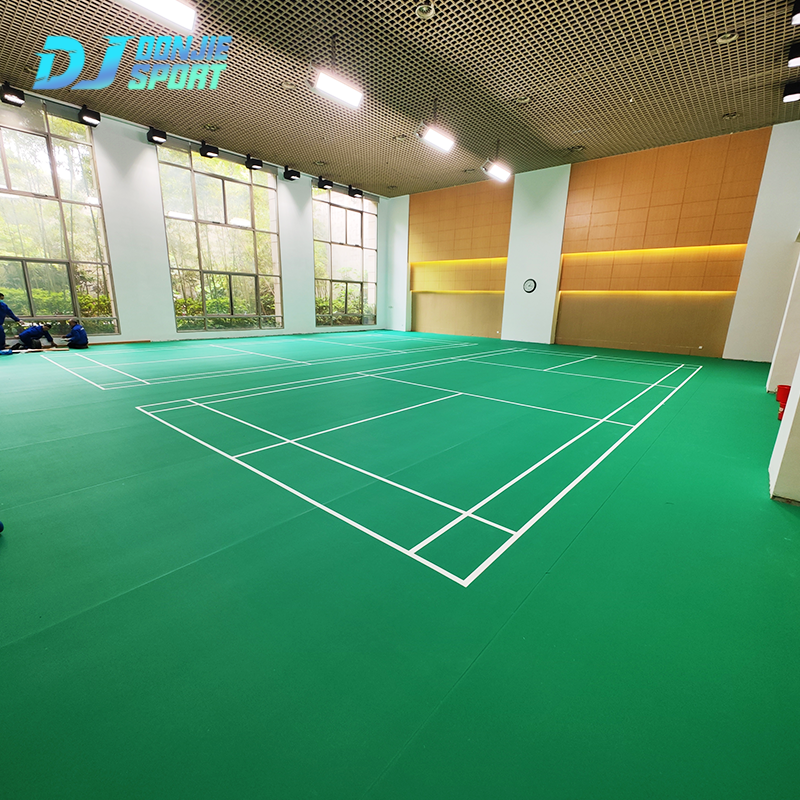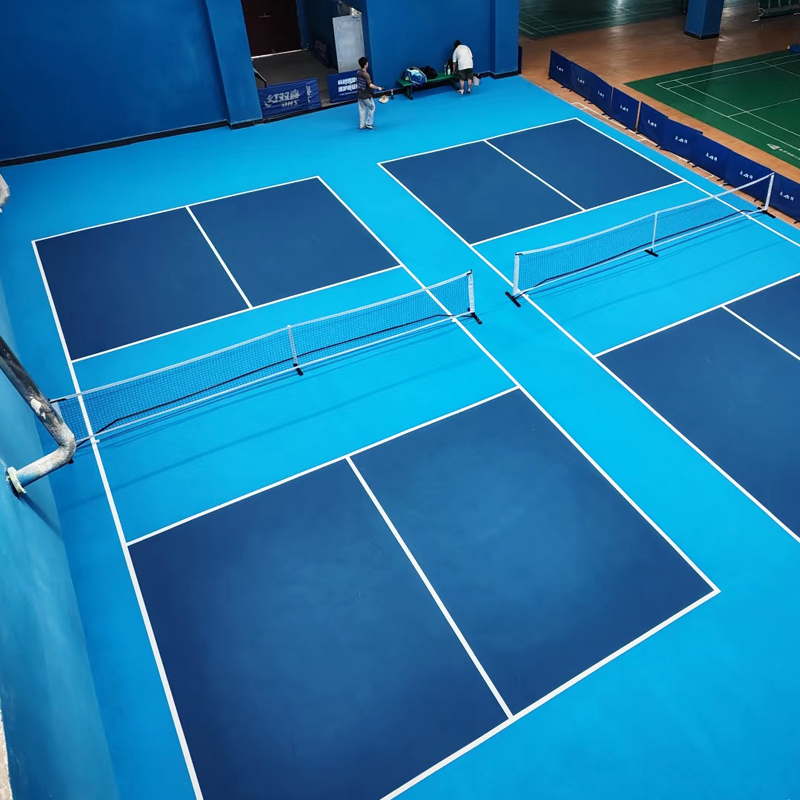
When it comes to creating a high-performance pickleball court, the choice of flooring is crucial. Not only does the right surface affect gameplay, but it also plays a major role in player safety, maintenance costs, and long-term durability. Two of the most popular flooring options for pickleball courts are vinyl and rubber. Both materials come with their unique advantages and limitations, making the decision challenging for court owners and facility managers. In this article, we will compare vinyl and rubber flooring, helping you make an informed choice for your pickleball court.

Why Flooring Choice Matters in Pickleball Courts
Choosing the right flooring for a pickleball court isn’t just about aesthetics or cost. The flooring directly influences the players’ experience, from the bounce of the ball to their overall comfort and safety. A poor flooring choice can lead to higher injury risks, increased maintenance costs, and an unsatisfactory playing experience. The right flooring material, on the other hand, enhances performance, ensures player safety, and can last for many years with minimal upkeep. In this section, we’ll take a closer look at how vinyl and rubber flooring affect these factors.
Vinyl Flooring for Pickleball Courts
Vinyl flooring is one of the most popular choices for indoor pickleball courts. Known for its sleek appearance and cost-effectiveness, vinyl flooring is a top contender in the industry. Let’s explore its characteristics and benefits:
Advantages of Vinyl Flooring:
-
Smooth Surface and Uniform Bounce: Vinyl provides a smooth, consistent surface for pickleball play. It offers a predictable ball bounce, which is essential for competitive play. This makes it a favorite among many professional pickleball players and facilities.
-
Easy to Clean and Maintain: One of the key advantages of vinyl is its low maintenance requirements. Vinyl floors are easy to clean, requiring only a regular sweeping or mopping to keep them in top condition. This makes them an excellent choice for high-traffic courts.
-
Affordable and Cost-Effective: Vinyl flooring tends to be more budget-friendly compared to other materials. Its affordability makes it a good option for facilities looking to upgrade or build multiple courts without a significant investment.
-
Customizable Colors and Designs: Vinyl can be easily customized in terms of color and design, allowing court owners to create aesthetically pleasing courts that match their branding or personal preferences. You can choose from a variety of colors and patterns to match your space.
Potential Drawbacks of Vinyl:
-
Less Cushioning Compared to Rubber: While vinyl provides a smooth playing surface, it does not offer as much shock absorption as rubber. This can potentially lead to more stress on players’ joints, especially during intense matches.
-
Slippery When Wet: One of the common complaints about vinyl flooring is that it can become slippery when wet. For indoor courts with high humidity or outdoor courts exposed to rain, this could pose a risk to player safety.
-
Sensitivity to Temperature Changes: Vinyl flooring can expand or contract when exposed to extreme temperature changes. In environments with fluctuating temperatures, this could lead to warping or damage over time.
Rubber Flooring for Pickleball Courts
Rubber flooring has gained popularity in recent years due to its durability and player-friendly properties. It’s known for offering superior shock absorption and cushioning, making it a great choice for athletes who prioritize comfort and injury prevention. Here are the advantages and drawbacks of rubber flooring:
Advantages of Rubber Flooring:
-
Excellent Shock Absorption and Cushioning: Rubber flooring provides outstanding cushioning, which helps reduce the risk of joint injuries. This feature is especially beneficial for pickleball players who may spend long hours on the court. The soft surface can minimize the impact on knees, ankles, and hips, making it ideal for both recreational and professional players.
-
Ideal for Player Comfort and Safety: Rubber flooring provides superior grip, reducing the chances of players slipping during fast-paced movements. The added traction helps players feel more stable and confident on the court.
-
Resistant to Wear and Tear: Rubber floors are extremely durable and resistant to wear. They can handle heavy foot traffic and intense games without showing signs of wear and tear. This makes rubber flooring a solid long-term investment.
-
Better Grip and Injury Risk Reduction: The inherent texture of rubber flooring offers better traction compared to vinyl, reducing the likelihood of slips and falls. This can be particularly important in competitive environments or facilities with a lot of play.
Potential Drawbacks of Rubber:
-
Higher Initial Cost: While rubber flooring offers several benefits, it generally comes with a higher initial cost than vinyl. This may be a concern for budget-conscious facility owners, especially those looking to build multiple courts.
-
Requires More Maintenance: Rubber floors tend to require more maintenance than vinyl floors. Over time, they may accumulate dirt or debris that can affect performance. Periodic cleaning and upkeep are essential to ensure the surface remains in optimal condition.
-
May Discolor Over Time: Rubber flooring, especially in outdoor settings, may experience discoloration due to exposure to UV rays, chemicals, or frequent use. This can detract from the aesthetic appeal of the court, though it doesn’t affect its functionality.
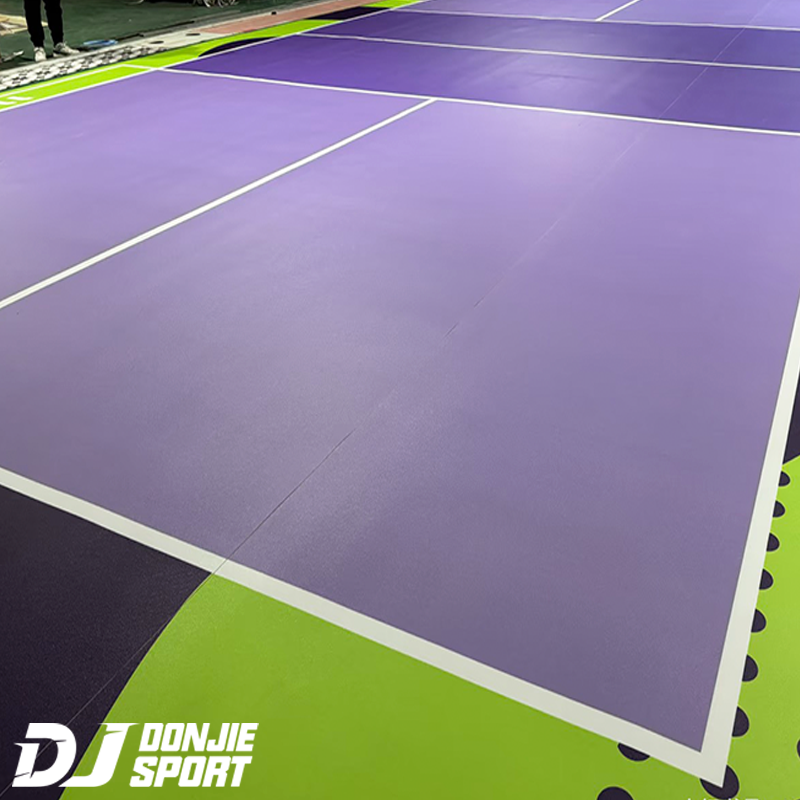
Comparing Vinyl and Rubber Flooring for Pickleball Courts
When it comes to selecting the best flooring for pickleball courts, both vinyl and rubber offer distinct advantages and potential drawbacks. Let’s compare them across a few key categories:
Performance:
-
Ball Bounce: Vinyl flooring tends to offer a smoother and more consistent bounce, making it ideal for high-level competitive play. Rubber flooring, while still providing a good bounce, is generally softer and may affect the speed of the game.
-
Court Speed: Vinyl surfaces are faster, providing a quicker playing experience. Rubber flooring, due to its cushioning properties, may slow down the game slightly.
Safety:
-
Cushioning: Rubber flooring offers superior shock absorption and cushioning, making it a better option for player comfort and injury prevention.
-
Grip: Rubber flooring typically provides better grip, reducing the risk of slipping during gameplay. Vinyl floors may become slippery, especially when wet.
Maintenance:
-
Ease of Cleaning: Vinyl flooring is easier to maintain and clean, requiring minimal effort. Rubber flooring requires more frequent care to maintain its appearance and performance.
-
Durability: Rubber is more durable and resistant to wear than vinyl, particularly in high-traffic areas. However, vinyl’s durability is still considerable, especially in well-maintained indoor environments.
Cost:
-
Initial Investment: Vinyl is generally the more affordable option for building or upgrading a pickleball court. Rubber flooring tends to have a higher initial cost due to its superior durability and player comfort features.
How to Choose the Best Flooring for Your Pickleball Court
Choosing the right flooring depends on several factors, including your budget, the frequency of play, and the specific needs of your players. Here are some tips for selecting the best flooring:
-
Indoor vs Outdoor: If your pickleball court is indoor, both vinyl and rubber are viable options. For outdoor courts, rubber may perform better, as it’s more durable and resistant to the elements.
-
Frequency of Play: High-traffic courts may benefit from the durability of rubber flooring, while lighter-use courts could do well with vinyl.
-
Climate: Consider the climate where the court is located. For areas with high humidity or fluctuating temperatures, vinyl might not be the best choice due to its sensitivity to temperature changes.
-
Budget: If cost is a concern, vinyl is a more affordable option. However, if long-term durability and player safety are priorities, the higher initial investment in rubber flooring may be worth it.
Conclusion
Both vinyl and rubber flooring offer distinct advantages for pickleball courts. Vinyl flooring is an excellent choice for those seeking an affordable, low-maintenance surface that provides a smooth playing experience. On the other hand, rubber flooring offers superior cushioning, durability, and safety, making it ideal for facilities that prioritize player comfort and injury prevention. When choosing the best flooring, consider factors such as performance, safety, maintenance, and cost to make the right decision for your facility.