
When building or upgrading an outdoor basketball court, the choice of surface plays a crucial role in ensuring a safe and high-performing playing environment. The right flooring not only enhances the aesthetics of your court but also significantly impacts the players’ experience. Whether you’re constructing a court for a private residence, a public park, or a professional sports facility, understanding the different surface options and their benefits is key to making an informed decision.
In this guide, we will explore the various types of outdoor basketball court surfaces, from traditional asphalt and concrete to modern modular court tiles and advanced acrylic coatings. We will also discuss the essential factors to consider, such as durability, safety, maintenance needs, and budget constraints. By the end of this article, you’ll have a clear understanding of which outdoor basketball court surface is best suited for your specific needs.
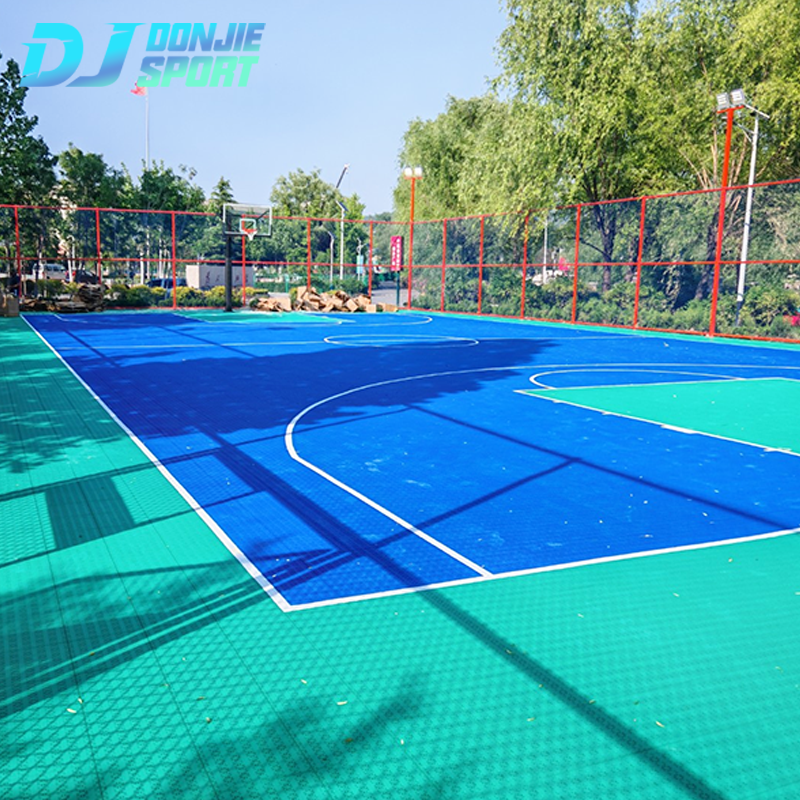
Types of Outdoor Basketball Court Surfaces
When it comes to selecting the right surface for your outdoor basketball court, understanding the pros and cons of different materials is essential. Each surface type offers its unique set of benefits and challenges, so choosing the best one for your court depends on your specific needs and preferences.
Asphalt Basketball Courts
Asphalt is one of the most common materials used for outdoor basketball courts, thanks to its durability and relatively low installation cost. This surface is strong, and when properly maintained, it can last for many years. Asphalt courts are generally low-maintenance but can become quite hard over time, which increases the risk of injury from falls or high-impact play.
-
Advantages:
-
Affordable and easy to install.
-
Long-lasting and resilient to outdoor weather conditions.
-
-
Disadvantages:
-
Hard surface can lead to joint discomfort and injury.
-
Needs to be sealed regularly to prevent cracking.
-
Concrete Basketball Courts
Concrete is another popular option for outdoor basketball courts, known for its solid and stable surface. Similar to asphalt, concrete offers longevity and durability, making it ideal for both residential and commercial settings. However, like asphalt, it tends to be very hard, which can cause discomfort for players, especially during intense games.
-
Advantages:
-
Extremely durable and long-lasting.
-
Suitable for heavy use and outdoor elements.
-
-
Disadvantages:
-
Can be prone to cracking over time, especially in extreme weather.
-
Not as forgiving on the body as softer surfaces.
-
Modular Outdoor Court Tiles
Modular court tiles have become increasingly popular for outdoor basketball courts due to their ease of installation and versatility. These tiles interlock like puzzle pieces, creating a solid surface that is easy to repair and replace. Many modular tiles are designed with shock absorption in mind, providing a more player-friendly experience.
-
Advantages:
-
Easy to install and replace.
-
Customizable with various designs and colors.
-
Offers excellent shock absorption to reduce the risk of injury.
-
-
Disadvantages:
-
Initial installation cost can be higher.
-
Over time, high-traffic areas may wear faster, requiring tile replacement.
-
Rubberized Court Surfaces
Rubberized surfaces are known for their superior comfort and shock absorption. These surfaces are made from recycled rubber and are designed to provide a cushioned play area, making them ideal for preventing joint stress during play. However, rubber surfaces can be more expensive to install and maintain than traditional asphalt or concrete.
-
Advantages:
-
Excellent shock absorption for player comfort.
-
Durable and long-lasting with minimal maintenance.
-
-
Disadvantages:
-
Higher installation and maintenance costs.
-
Can be slippery when wet, especially if not properly maintained.
-
Acrylic Court Surfaces
Acrylic surfaces are commonly used for professional and high-performance outdoor basketball courts. This surface is applied as a coating over a concrete or asphalt base, providing excellent grip and durability. Acrylic is a great option for those looking for a sleek, colorful court that performs well under various weather conditions.
-
Advantages:
-
High performance with great traction.
-
Ideal for sports that require speed and agility.
-
-
Disadvantages:
-
Requires professional installation.
-
Slippery when wet and needs regular maintenance.
-
Key Considerations When Selecting an Outdoor Basketball Court Surface
Choosing the right outdoor basketball court surface requires more than just understanding the available materials. Here are the key factors you should consider when making your decision:
Durability
Durability is one of the most important factors to consider when selecting a basketball court surface. Weather conditions, heavy use, and exposure to the elements will affect the longevity of your court. Asphalt and concrete are known for their durability, but they may require periodic maintenance to prevent cracking and wear. Rubber and acrylic surfaces, on the other hand, are designed to withstand intense use without losing their structural integrity over time.
Safety and Injury Prevention
Safety should always be a priority when selecting an outdoor basketball court surface. A surface that provides adequate shock absorption will help reduce the risk of joint and knee injuries. Modular court tiles and rubberized surfaces are excellent choices for injury prevention, as they offer cushioning during gameplay. Asphalt and concrete, while durable, can be harsh on the body and increase the likelihood of injuries from falls.
Maintenance Needs
Each type of surface requires different maintenance routines. Asphalt and concrete courts may need regular sealing and crack repairs, while modular tiles and rubberized courts only need occasional cleaning and tile replacement. Acrylic surfaces may require periodic resurfacing to maintain their traction and aesthetics. It’s essential to factor in the time and cost of maintenance when choosing your flooring.
Budget Considerations
Budget is a crucial element when choosing an outdoor basketball court surface. While asphalt and concrete are the most affordable options, they may require more frequent maintenance, leading to higher long-term costs. Modular court tiles and rubberized surfaces offer better player comfort and safety but come with higher upfront costs. Consider both initial installation costs and long-term maintenance when determining your budget.
Benefits of High-Quality Outdoor Basketball Court Surfaces
Player Performance
A high-quality basketball court surface can significantly improve player performance. A surface that provides adequate grip and cushioning allows players to make quick movements, change directions easily, and reduce the strain on their joints. For recreational and professional players alike, the right surface can enhance the overall playing experience.
Aesthetic Appeal
A visually appealing basketball court can have a significant impact on its surroundings. Customizable modular tiles and colorful acrylic coatings allow you to design a court that complements your outdoor space. Not only does this improve the aesthetics, but it can also create a community focal point, encouraging more people to engage in physical activity.
Longevity and Sustainability
Sustainable surfaces, such as rubberized courts made from recycled materials, are eco-friendly and long-lasting. Choosing a high-quality surface can save you money in the long run by minimizing the need for repairs and replacement. With proper maintenance, your court can last for many years, providing a reliable space for recreational and competitive play.

Choosing the Right Surface for Your Specific Needs
Residential Courts
For homeowners, budget-friendly options like asphalt or modular tiles can be ideal for residential courts. These surfaces offer the durability needed for casual play and are easy to maintain, allowing you to enjoy your court without excessive repair costs.
Public and Community Courts
Community courts, where heavy use is expected, should be built with durability in mind. Concrete or modular court tiles are excellent choices for high-traffic areas, as they can withstand constant use and exposure to the elements. Additionally, modular tiles provide more flexibility for repairs and customization.
Professional and Competitive Courts
For professional athletes and competitive play, an acrylic surface is often the best option. The high-performance nature of acrylic surfaces ensures excellent grip and smooth playability, providing a professional-level court experience.
Installation and Maintenance Tips
Installation Process
Installation of an outdoor basketball court surface can be a complex process, especially for materials like acrylic and rubberized coatings. It’s important to hire professionals for proper installation, particularly for surfaces that require precise application. For modular tiles, however, installation is relatively simple and can be done by the homeowner with the right tools.
Long-Term Care and Upkeep
Proper maintenance is key to extending the life of your court. Clean your court regularly to prevent debris from accumulating, and inspect the surface for signs of wear. Seal asphalt and concrete courts regularly to prevent cracks, and replace worn tiles as needed. For rubberized and acrylic courts, follow manufacturer recommendations for cleaning and resurfacing.
Final Thoughts on Choosing the Best Outdoor Basketball Court Surface
Selecting the right outdoor basketball court surface is a crucial decision that affects both the performance and safety of players. By considering factors such as durability, safety, maintenance, and budget, you can choose the surface that best fits your needs. Whether you opt for asphalt, concrete, modular tiles, rubberized, or acrylic surfaces, investing in a high-quality court will provide years of reliable use, a visually appealing space, and a safe environment for players of all skill levels.



