Selecting the right outdoor flooring for basketball courts in your community requires an understanding of the specific needs and characteristics of the players. The choice of flooring should cater to a variety of factors including the type of play, age groups, and the weather conditions the court will be exposed to.
Community Usage Patterns
One of the first considerations should be the level of usage. If the court will be used primarily for casual pick-up games, the flooring doesn’t need to meet the same high standards as a court designed for competitive play or league events. On the other hand, if the community hosts regular tournaments, you’ll want a surface that can handle the demands of more intense play without deteriorating too quickly.
Age Group Considerations
The age group of players also plays a significant role in your decision. For example, younger children or recreational players will benefit from a softer, more forgiving surface that reduces the risk of injury. In contrast, more competitive players may need a flooring solution that offers enhanced traction and responsiveness, typically found in firmer, high-performance materials.
Weather Conditions
Different climates require different flooring types. In regions that experience heavy rainfall or intense sunlight, you’ll need flooring materials that are weather-resistant, durable, and low-maintenance. Flooring types like modular interlocking tiles or rubber are typically more resistant to weathering, ensuring that your court remains safe and playable throughout the year.

Types of Outdoor Flooring for Basketball Courts
When it comes to choosing the right outdoor flooring for basketball courts, there are several options available. Each flooring type has its advantages and disadvantages depending on the specific needs of your community, such as performance, durability, and budget. Let’s explore some of the most popular outdoor flooring options for basketball courts.
Rubber Flooring
Rubber flooring is a durable and versatile option for outdoor basketball courts. It offers excellent traction, shock absorption, and comfort for players, reducing the risk of injury from slips or falls. It also provides a cushioned surface that helps to protect joints during intense gameplay. Rubber flooring is weather-resistant and can withstand harsh outdoor conditions such as extreme temperatures and heavy rainfall. However, it may require periodic maintenance to prevent degradation over time, especially in areas with heavy UV exposure.
Modular Interlocking Tiles
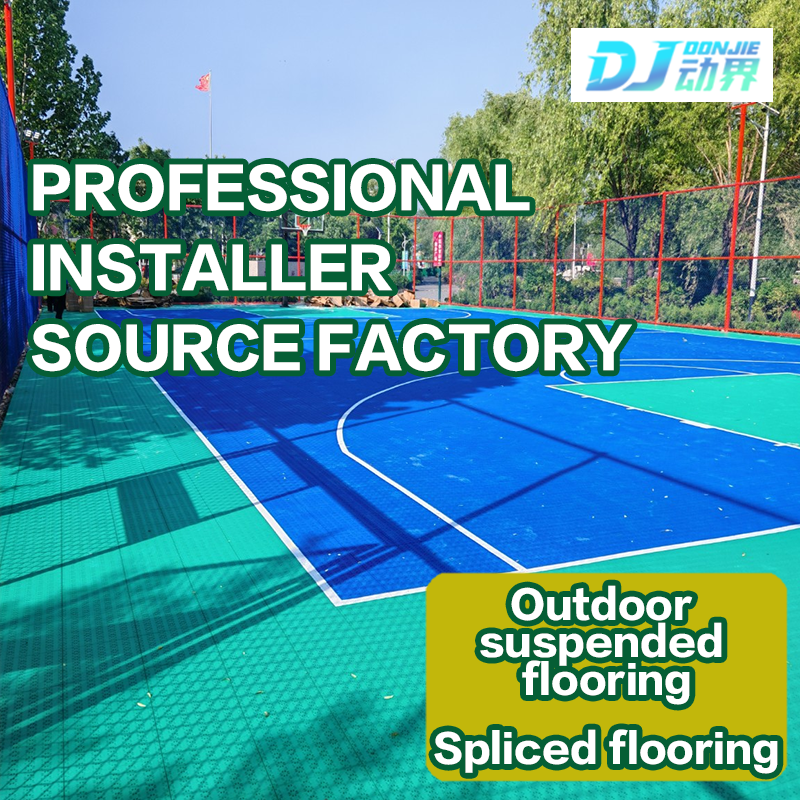
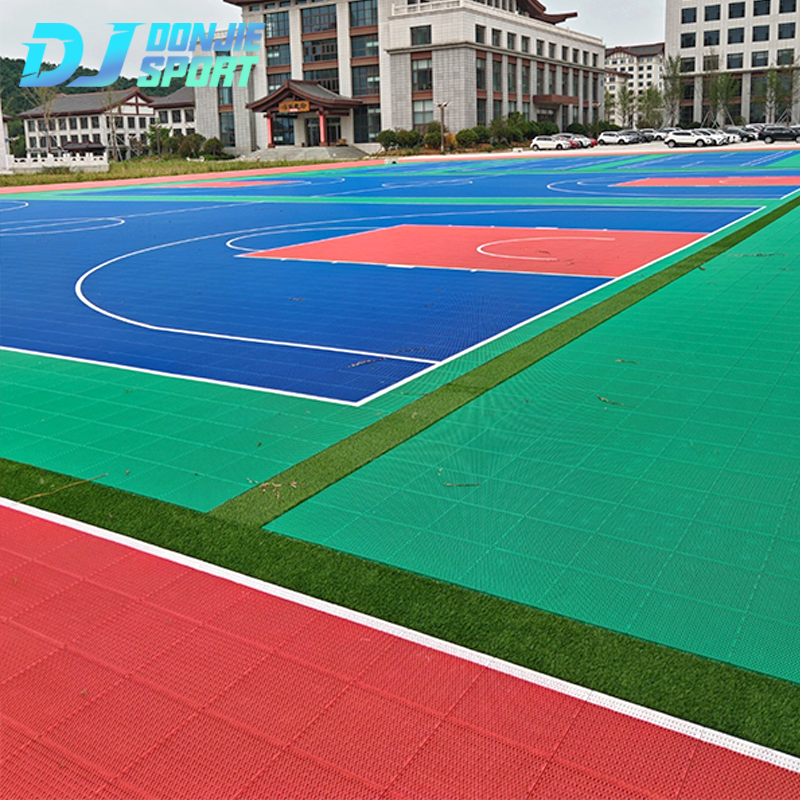
Modular interlocking tiles are becoming increasingly popular for outdoor basketball courts due to their ease of installation and flexibility. These tiles are typically made of durable materials such as high-density polyethylene (HDPE), which can withstand heavy foot traffic and weather conditions. Interlocking tiles are available in a variety of colors and textures, allowing for customization and aesthetic appeal. Additionally, their modular nature makes them easy to replace or repair, making them a cost-effective solution for long-term maintenance. The main drawback is that, depending on the quality, the surface may not offer as much cushion or grip as rubber flooring.
Porous Asphalt or Concrete
Porous asphalt and concrete are traditional flooring options for basketball courts. While these materials are durable and relatively low-maintenance, they can become slippery when wet and may not provide the same level of shock absorption as rubber or modular tiles. Concrete is a popular choice for outdoor basketball courts due to its affordability and longevity. However, it tends to be harder on players’ joints and may lead to higher injury risks over time. It also requires proper sealing and maintenance to prevent cracks and damage caused by weather elements.
Synthetic Turf
Synthetic turf is another flooring option for basketball courts, though it is less common. It is often used for multi-purpose courts that may host other sports such as soccer or tennis. Synthetic turf provides a softer, more forgiving surface than concrete or asphalt, reducing the risk of injury. However, it may not offer the same level of traction needed for basketball, and it can require more maintenance to keep it clean and in good condition, especially in areas with heavy rainfall. If your community needs a multi-sport court, synthetic turf could be a good option, but it may not be ideal for pure basketball play.
PVC Sports Flooring
PVC sports flooring is designed specifically for sports courts and is known for its durability, shock absorption, and performance. This type of flooring offers excellent traction and a smooth, consistent playing surface that is ideal for basketball. PVC flooring is also resistant to weathering, making it suitable for outdoor use. It requires minimal maintenance and is easy to clean, making it a convenient option for busy communities. The downside is that it can be more expensive than other options, but the long-term durability and low maintenance costs make it a solid investment for high-traffic courts.
Key Factors to Consider When Choosing Outdoor Flooring
When selecting outdoor flooring for basketball courts, there are several key factors to consider beyond the type of material. These factors will help ensure that the court remains safe, durable, and functional for years to come.
Durability
Durability is perhaps the most important factor when choosing outdoor flooring. A durable surface can withstand heavy foot traffic, extreme weather, and the physical demands of a basketball game. Materials like rubber, PVC, and modular interlocking tiles tend to be more durable than porous asphalt or concrete, which may crack or wear down over time. Choosing a long-lasting flooring solution ensures that your court will remain in playable condition without frequent repairs or replacements.
Safety
Safety should always be a top priority. The flooring material must provide adequate traction to prevent slipping, especially in wet conditions. It should also have shock-absorbing qualities to reduce the risk of injury from falls or hard landings. Flooring options like rubber and PVC sports flooring offer superior shock absorption, while modular tiles often have built-in slip-resistant surfaces that provide added safety for players.
Maintenance
Maintaining outdoor basketball court flooring is essential to its longevity. Rubber and PVC sports flooring typically require less maintenance compared to concrete or asphalt courts, which may need sealing, crack repairs, or resurfacing. Modular interlocking tiles are easy to replace if damaged, reducing the long-term maintenance costs. Synthetic turf may need more frequent cleaning and upkeep to prevent debris buildup and maintain its appearance.
Weather Resistance
Outdoor flooring must be able to withstand the elements. Some materials, like rubber and PVC, are highly resistant to weathering and can handle exposure to rain, snow, and intense sunlight. In contrast, concrete and asphalt courts may deteriorate over time if not properly sealed or maintained. When choosing outdoor flooring, ensure that it is weather-resistant to avoid issues with fading, cracking, or warping.
Cost
Cost is always an important consideration when selecting outdoor flooring for community spaces. Rubber and PVC flooring tend to be more expensive upfront but offer longer-term savings in terms of durability and maintenance. Modular tiles can be more affordable but may require more frequent replacements. Asphalt and concrete courts are usually the most budget-friendly option but may not provide the best performance or safety features in the long run.
Environmental Impact
Sustainability is becoming increasingly important in community development. Choosing eco-friendly flooring options, such as recycled rubber or PVC made from sustainable materials, can help reduce your community’s environmental footprint. Consider flooring options that are made from recycled or recyclable materials, ensuring that your basketball court is both functional and environmentally conscious.
Comparing Different Flooring Options
When comparing different outdoor flooring options for basketball courts, it’s essential to weigh the benefits and drawbacks of each material. Rubber and PVC offer excellent performance, safety, and durability, making them ideal for high-traffic, competitive courts. Modular tiles provide flexibility and ease of installation, while concrete and asphalt are budget-friendly options that work well for less demanding courts. Synthetic turf is a great choice for multi-purpose courts but may not provide the best performance for basketball.
Choosing the right outdoor flooring for basketball courts ultimately depends on your community’s specific needs, budget, and priorities. Consider the level of play, the age group of users, and the climate conditions to make an informed decision that will provide lasting benefits.
Tips for Maintaining Outdoor Basketball Court Flooring
Once your outdoor basketball court flooring is installed, it’s important to keep it in top condition to ensure its longevity and performance. Regular cleaning, prompt repairs, and seasonal maintenance can help preserve the integrity of the surface and keep it safe for players.
-
Regular Cleaning: Sweep the court regularly to remove debris, dirt, and leaves. This helps prevent wear and tear on the surface and keeps it looking fresh.
-
Repairs: Address any cracks, chips, or damaged tiles as soon as possible to prevent further deterioration.
-
Seasonal Considerations: Before the winter or rainy season, inspect the court for any signs of damage and make necessary repairs. It’s also a good idea to cover the court with a protective tarp if possible to prevent weather damage.
Conclusion
Choosing the right outdoor flooring for basketball courts in your community requires careful consideration of several factors, including durability, safety, maintenance, weather resistance, cost, and environmental impact. Each flooring option has its strengths and weaknesses, but with the right choice, you can create a court that will serve your community for years to come.
Whether you opt for rubber flooring, modular tiles, or synthetic turf, investing in quality flooring will enhance the overall experience for players while minimizing long-term maintenance costs. Make sure to consider the specific needs of your community, and choose the flooring that best meets those needs for a safe, durable, and enjoyable outdoor basketball court.