
Building a professional-grade outdoor basketball court is a dream for many sports enthusiasts, schools, and community centers. However, achieving this dream requires more than just laying down some concrete and marking the lines. The key to creating a court that is safe, durable, and high-performing lies in choosing the right Outdoor Basketball Court Flooring. The right flooring can make a significant difference in terms of safety, player comfort, and long-term maintenance. In this guide, we’ll explore how to build a top-quality outdoor basketball court, with a focus on selecting the best flooring materials that will ensure an optimal playing experience.
Choosing the Right Flooring Material for Your Outdoor Basketball Court
When planning an outdoor basketball court, the choice of flooring material is crucial. Not only does it affect the overall appearance of the court, but it also influences how the game is played. There are several flooring options to choose from, each offering unique benefits and drawbacks.
-
Acrylic Flooring: Acrylic surfaces are one of the most popular choices for outdoor basketball courts, especially in high-performance arenas. They provide a smooth and hard surface that offers excellent bounce and ball control. Additionally, they are durable and resistant to weather, making them ideal for outdoor courts. However, they can be costly to install and may require a professional installer.
-
Rubber Flooring: Rubber is another great option for outdoor basketball court flooring. It offers excellent shock absorption, making it safer for players, especially during falls. Rubber floors are also weather-resistant and come in a variety of thicknesses and colors. The downside is that rubber can be slippery in wet conditions, so you’ll need to ensure proper drainage on your court.
-
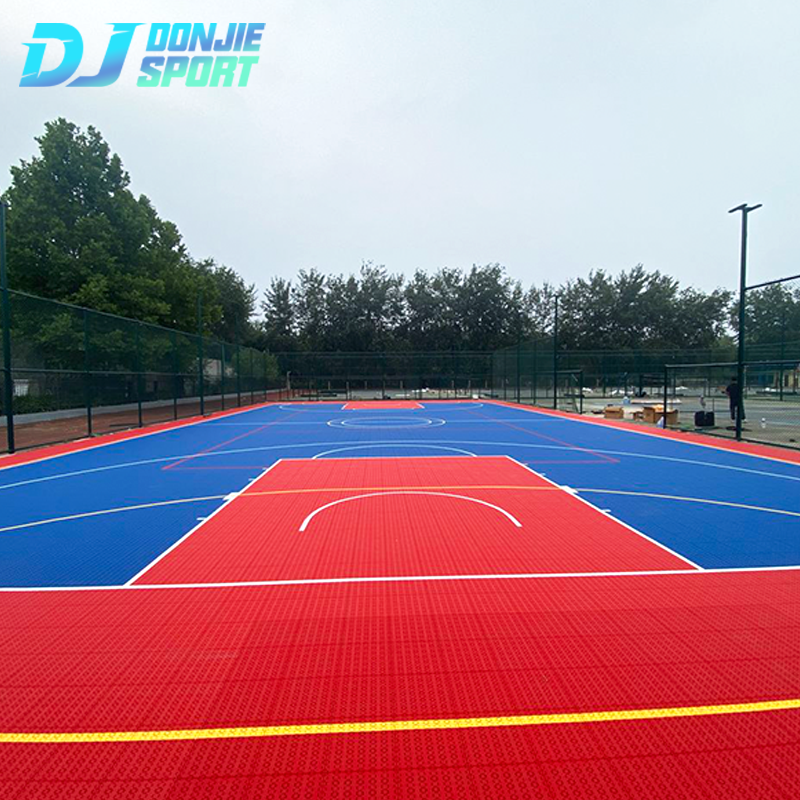
Modular Tiles: Interlocking modular tiles are gaining popularity for both their ease of installation and customizable features. These tiles are typically made from durable plastic or rubber and snap together to create a seamless court surface. Modular tiles are highly resistant to UV damage, moisture, and impact, making them a reliable choice for outdoor courts. Moreover, they can be replaced individually, which saves on long-term maintenance costs.
-
Wooden Surfaces: While less common for outdoor use, wooden surfaces can provide a classic look and excellent grip for basketball games. However, they require significant maintenance to withstand weather conditions, making them less suitable for areas with extreme temperatures or high moisture levels.
When choosing the right flooring, consider factors such as the local climate, the level of play, and your budget. Each flooring material has its pros and cons, and the choice ultimately depends on your specific needs.
Why Outdoor Basketball Court Flooring Matters
The Outdoor Basketball Court Flooring you choose plays a pivotal role in the overall safety and performance of the game. A court surface that is too hard, uneven, or slippery can lead to injuries or affect players’ abilities to perform at their best.
-
Player Safety: Flooring material that offers adequate cushioning helps reduce the risk of injury. Surfaces like rubber or interlocking modular tiles provide better shock absorption, which can protect players from joint stress and impact-related injuries. A smooth, well-maintained surface also helps prevent trips and falls, making it a safer environment for players of all ages.
-
Performance: Flooring also affects how the game is played. A court that offers the right amount of grip can help players make sharp cuts, dribble with ease, and shoot with precision. A high-performance surface enhances the experience for competitive games and recreational play alike. For example, acrylic surfaces offer a smooth, high-bounce surface, perfect for games that require precise ball handling and speed.
-
Aesthetic Appeal: The look of the court matters, especially for public facilities or schools looking to make a statement. Choosing the right Outdoor Basketball Court Flooring allows for customization in terms of colors, designs, and branding, creating an aesthetically pleasing environment that inspires pride and motivation for players.
The Installation Process of Outdoor Basketball Court Flooring
Once you’ve chosen the perfect flooring material, the next step is installation. The process can vary depending on the type of flooring material, but there are a few general steps involved.
-
Preparation of the Ground: Before you lay any flooring, it’s essential to prepare the base. This typically involves clearing the area of debris, leveling the ground, and creating proper drainage to avoid water accumulation, which could damage the flooring over time.
-
Laying the Flooring: For modular tiles, installation is straightforward: simply interlock the tiles to form the court surface. For acrylic or rubber flooring, you’ll likely need to hire professionals to ensure that the material is applied correctly, with proper smoothing and sealing to create a flawless surface.
-
Finishing Touches: After installing the flooring, add court markings, such as the three-point line, free-throw line, and center circle. These can be applied using stencils or specialized paints that are durable and designed for outdoor use.
While DIY installation is an option for modular flooring, hiring a professional for acrylic or rubber flooring ensures the best results in terms of durability and performance.
Maintenance and Care of Outdoor Basketball Court Flooring
Proper maintenance is key to extending the lifespan of your Outdoor Basketball Court Flooring and ensuring consistent performance. Here are a few tips:
-
Cleaning: Regularly sweep or use a leaf blower to remove debris like dirt, leaves, and twigs from the court. For deeper cleaning, use a mild detergent and water, scrubbing the surface with a soft-bristled brush to remove stains.
-
Repairs: Modular tiles can be easily replaced if damaged, while acrylic or rubber floors may require patching. Inspect the court periodically for cracks, peeling, or discoloration, and address any issues promptly to avoid further damage.
-
Seasonal Care: If your court experiences extreme weather conditions, it’s essential to protect the flooring during off-seasons. Covering the court or applying protective coatings can help prevent damage from sun exposure or freezing temperatures.
Design and Aesthetics of Outdoor Basketball Court Flooring
Beyond performance, the Outdoor Basketball Court Flooring can significantly impact the visual appeal of your court. Many flooring options come in a variety of colors and designs, allowing you to customize your court to match your style or branding.
-
Color Selection: Choose colors that complement the surroundings or reflect the team’s identity. Many courts use traditional color schemes, such as blue, green, or red, but you can also create custom designs to make your court stand out.
-
Patterns and Logos: Modular tiles are particularly great for custom designs. You can create patterns, logos, or even sponsor advertising directly on the flooring. This helps personalize the space and make it unique.
Costs and Budgeting for Your Outdoor Basketball Court Flooring
Building a professional-grade outdoor basketball court can be a significant investment, but it’s important to find a balance between quality and budget. Prices can vary widely depending on the flooring material and installation costs:
-
Acrylic Flooring: Acrylic surfaces can be expensive, with prices ranging from $5 to $10 per square foot for materials, plus installation costs. However, it provides a durable, long-lasting court surface.
-
Rubber Flooring: Rubber flooring is generally more affordable, costing between $2 and $4 per square foot for materials. Installation costs may be lower, but it’s important to consider the long-term durability.
-
Modular Tiles: Interlocking tiles are usually priced between $3 to $6 per square foot, with DIY installation bringing down costs. However, if you opt for professional installation, this could increase the overall price.
Remember to factor in the cost of ground preparation, finishing touches, and ongoing maintenance when budgeting for your court.

Why Investing in Quality Outdoor Basketball Court Flooring is Essential
Investing in high-quality Outdoor Basketball Court Flooring ensures that your court remains safe, functional, and visually appealing for years to come. The right flooring not only improves player performance but also reduces the risk of injury, enhancing the overall experience for users. Furthermore, a well-constructed and maintained court adds value to your facility and can serve as a community asset for years to come.
Conclusion
Choosing the right Outdoor Basketball Court Flooring is essential for building a court that is safe, durable, and high-performing. From considering the right materials to ensuring proper installation and maintenance, each step plays a role in creating a professional-grade court. By selecting flooring that meets the needs of your facility and budget, you’re ensuring a long-lasting, high-quality basketball court that will stand up to the demands of both casual players and professionals alike.



