When designing or renovating an outdoor basketball court, one of the most important factors to consider is the flooring. The choice of outdoor basketball court flooring directly affects both the performance of players and their safety during play. Whether for a community court, school facility, or professional arena, selecting the right flooring is crucial for ensuring that the court serves its purpose effectively. In this article, we’ll delve into how outdoor basketball court flooring plays a pivotal role in player performance and safety, highlighting key aspects that every facility manager should consider before making a choice.
Understanding the Basics of Outdoor Basketball Court Flooring
Outdoor basketball court flooring comes in a variety of materials, each with its own set of characteristics that influence both player experience and the longevity of the court. Common flooring materials include asphalt, concrete, rubber, and specialized interlocking tiles, each designed to meet different needs.
Types of Outdoor Basketball Court Flooring Materials
-
Asphalt: This is one of the most common and economical choices for outdoor basketball courts. Asphalt provides a firm surface that supports rapid movement but lacks the shock absorption of other materials. While durable, it can crack over time, especially under extreme weather conditions.
-
Concrete: Concrete is often chosen for its stability and long lifespan. It’s particularly suited for larger-scale courts but can be hard on joints due to its rigid nature. Like asphalt, it is prone to weather-related damage and may need repairs more frequently.
-
Rubber: Rubber is a more modern option, providing excellent shock absorption and grip. Rubber floors are ideal for player safety, reducing the risk of injury from falls and jumps. These surfaces are also weather-resistant and low-maintenance, making them a great choice for high-traffic areas.
-
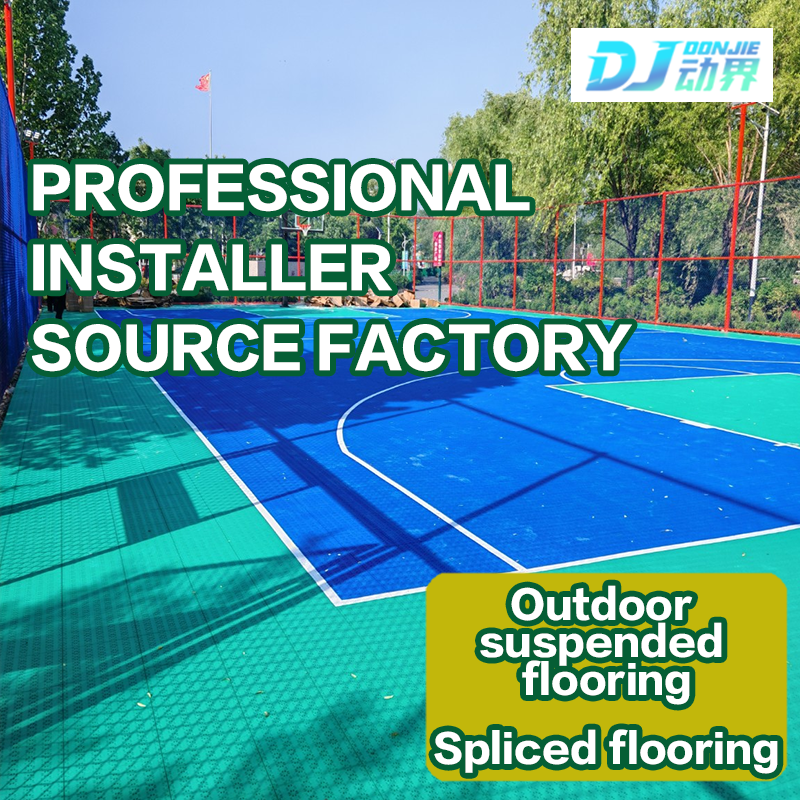
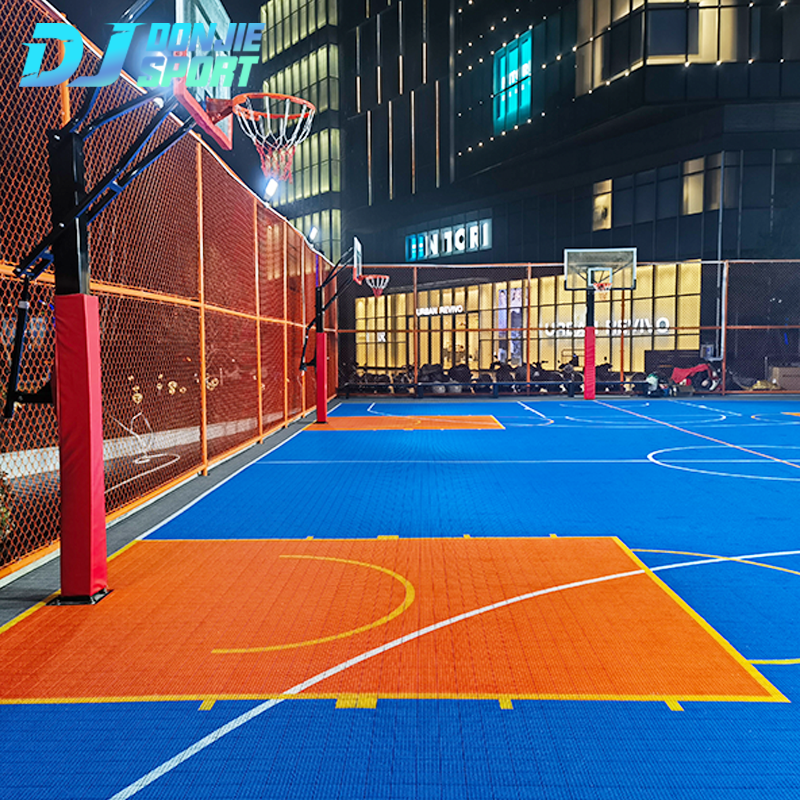
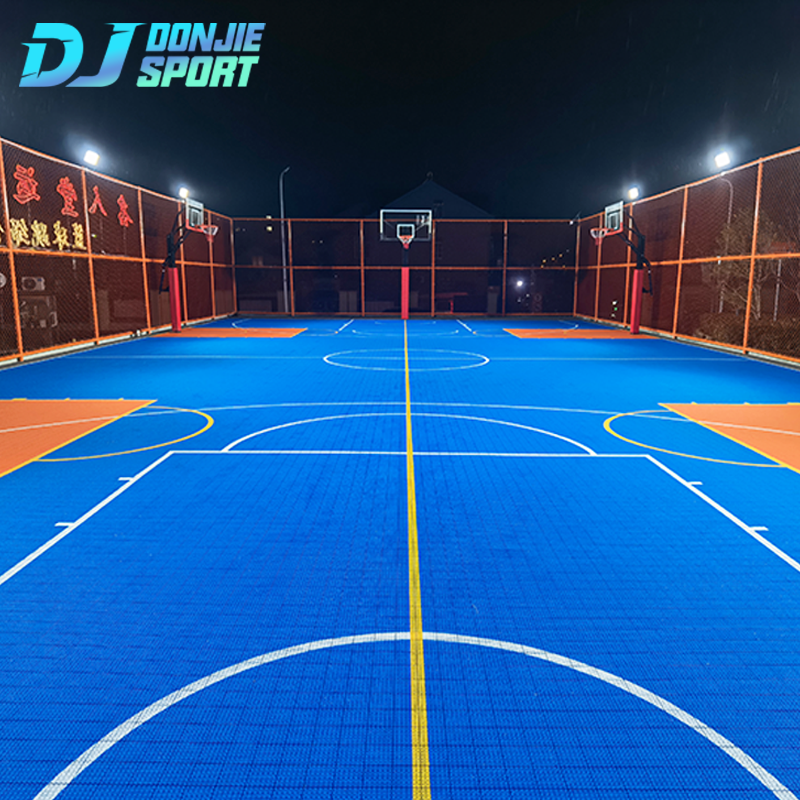
Interlocking Tiles: These tiles are made of durable materials such as PVC or polypropylene and are designed for easy installation and maintenance. They offer great flexibility, allowing court owners to replace damaged sections without much effort. Interlocking tiles also offer cushioning and better grip, enhancing player performance and safety.
Factors to Consider When Choosing Flooring for Performance
When it comes to performance, the type of flooring you choose can significantly affect how players move, react, and perform on the court. Key factors to consider include surface texture, cushioning, and grip, all of which contribute to a better overall playing experience.
Impact of Flooring on Player Performance
The right outdoor basketball court flooring can make all the difference in player performance. A well-chosen surface enhances agility, movement, and overall game flow, while a poorly selected one can hinder players’ abilities and increase the risk of injury.
How Different Materials Affect Player Movement and Agility
Smooth, hard surfaces like concrete and asphalt may provide a fast game but can impede quick directional changes and explosive jumps. On the other hand, rubber and interlocking tile floors tend to be more forgiving, allowing players to pivot and accelerate more easily.
The Role of Surface Texture and Grip in Enhancing Play
The texture of the flooring plays a crucial role in providing the right amount of grip for players. A surface that’s too slippery can cause players to lose control, while one that’s too sticky can hinder movement. Rubber flooring and interlocking tiles typically offer the perfect balance of traction, allowing players to move quickly while preventing slips and falls.
Importance of Shock Absorption for Injury Prevention
Perhaps the most significant advantage of some outdoor basketball flooring materials, like rubber or certain interlocking tiles, is their ability to absorb shock. This cushioning reduces the impact on players’ joints during high-impact movements, such as jumping and landing, minimizing the risk of injuries like sprained ankles or knee problems.
Ensuring Player Safety with the Right Flooring
In addition to enhancing performance, outdoor basketball court flooring must prioritize player safety. Courts are meant to be spaces for athletes to push their limits, but they should not put players at unnecessary risk.
Flooring Durability and Resistance to Weather Conditions
Outdoor basketball courts are exposed to various weather conditions, from intense sunlight to heavy rain. A high-quality flooring material should be durable enough to withstand the elements without deteriorating quickly. Rubber and interlocking tiles are particularly advantageous because they are weather-resistant and designed to withstand extreme temperatures.
Anti-Slip Surfaces and Their Role in Preventing Accidents
One of the most critical aspects of safety on the court is preventing slips and falls. Anti-slip surfaces ensure that players can move confidently without the risk of losing their footing. Materials like rubber or textured tiles are engineered specifically to enhance grip, even in wet conditions, reducing the likelihood of accidents and injuries.
The Importance of Cushioning in Reducing the Risk of Joint Injuries
As mentioned earlier, shock absorption is essential for joint health. Prolonged high-impact activity on hard surfaces like asphalt and concrete can lead to long-term damage, particularly in the knees, hips, and lower back. Rubber flooring, with its natural cushioning properties, helps reduce the risk of such injuries, providing a safer environment for athletes.
How Outdoor Basketball Court Flooring Supports Competitive Play
For competitive basketball, the surface on which the game is played can significantly impact the quality of the match. From professional arenas to local courts, the right flooring ensures consistency in play and supports athletes to perform at their best.
Standardization of Surfaces for Professional-Grade Play
For professional or semi-professional basketball courts, standardization is key. Consistent, high-quality flooring allows players to adjust to the same conditions across different venues. This is why many professional courts use specialized materials, such as synthetic rubber or polyurethane, which provide the ideal balance of performance and durability.
The Influence of Court Flooring on Ball Bounce and Consistency
The material used for the flooring also impacts how the ball bounces. A surface that is too hard may cause the ball to bounce unpredictably, while one that is too soft may absorb too much energy. Floors with good elasticity, like rubber or synthetic tiles, provide a more consistent bounce, which is essential for competitive play.
Flooring Choice for Different Weather Conditions (e.g., Heat, Rain)
Outdoor courts face varying weather conditions that can affect the quality of play. Choosing the right material for your outdoor court ensures it remains playable even in less-than-ideal weather. Rubber surfaces and interlocking tiles are less affected by heat and rain, maintaining a stable and safe playing environment year-round.
Maintenance of Outdoor Basketball Court Flooring
Proper maintenance is crucial to extending the lifespan of your outdoor basketball court flooring and ensuring that it continues to provide safe and high-performance conditions for players.
Cleaning and Upkeep of Various Flooring Materials
Each flooring type has its maintenance needs. Rubber and interlocking tiles are relatively low-maintenance, requiring only periodic cleaning with a hose or broom to remove debris. Asphalt and concrete courts, however, may need more frequent repairs and sealing to prevent cracks and surface deterioration.
Cost Considerations for Long-Term Durability
When choosing flooring, it’s important to consider both the initial cost and long-term maintenance expenses. While asphalt and concrete may seem cheaper initially, the cost of repairs and resurfacing over time can add up. Rubber and interlocking tile floors may have a higher upfront cost but often prove more economical in the long run due to their durability and low maintenance needs.
Conclusion
The right outdoor basketball court flooring can significantly enhance player performance and safety. By considering factors such as grip, shock absorption, weather resistance, and long-term maintenance, facility managers and court owners can create an optimal playing environment. Whether for professional arenas or community courts, investing in the right flooring ensures that players can perform at their best while minimizing the risk of injury. Selecting outdoor basketball court flooring is not just a matter of aesthetics but a crucial decision that impacts both performance and safety in the long run.