Outdoor basketball courts have become a cornerstone of community recreation, offering an accessible and enjoyable space for players of all ages. However, the key to ensuring that these courts are not only functional but also safe and durable lies in the selection of the right flooring materials. Outdoor basketball court flooring plays a significant role in enhancing the overall game experience, from providing adequate shock absorption to ensuring traction for players during intense movements. With various flooring options available, understanding the advantages of each material is essential for facility owners, coaches, and players alike. This article will explore the most popular outdoor basketball court flooring materials, their benefits, and why making the right choice is critical for both performance and safety.
The Role of Outdoor Basketball Court Flooring
When it comes to outdoor basketball courts, the flooring material directly influences the quality of the game played on it. The right flooring ensures proper ball bounce, adequate traction, and optimal grip, all of which are vital for a fast-paced game. Whether it’s an urban court or a school playground, outdoor basketball flooring helps players achieve peak performance by providing a consistent surface that allows for controlled movements. It also helps players to focus on the game, reducing distractions caused by poor surface conditions.
Moreover, the flooring material has a substantial impact on the safety of the players. A court with inadequate flooring may lead to serious injuries due to slipping or uneven surfaces. Thus, choosing flooring that enhances both safety and playability is crucial in providing an enjoyable experience while minimizing risks.
Key Materials for Outdoor Basketball Court Flooring
There are a variety of materials used in outdoor basketball court flooring, each offering distinct advantages. The most popular options include rubber, acrylic, polyurethane, and interlocking tiles. Let’s examine these materials and their benefits:
Rubber Flooring
Rubber is one of the most durable materials used for outdoor courts. It offers excellent shock absorption, which can reduce the impact on players’ joints during intense play. Rubber flooring is also weather-resistant, able to withstand the harsh conditions of the outdoors, including extreme temperatures and heavy rain. This makes it a top choice for high-performance courts that require long-lasting durability.
Acrylic Flooring
Acrylic flooring is a popular option for outdoor basketball courts due to its affordability and low maintenance needs. It provides a smooth, fast surface that is perfect for players who need excellent ball bounce. However, it is not as shock absorbent as rubber, which may be a consideration for courts where player comfort is a priority.
Polyurethane Flooring
Polyurethane flooring is known for its high-performance qualities. It offers excellent traction and shock absorption, making it ideal for reducing injury risks during competitive play. While more expensive than other options, it provides superior durability and is resistant to the elements, ensuring a long-lasting, reliable surface for any outdoor basketball court.
Interlocking Tiles
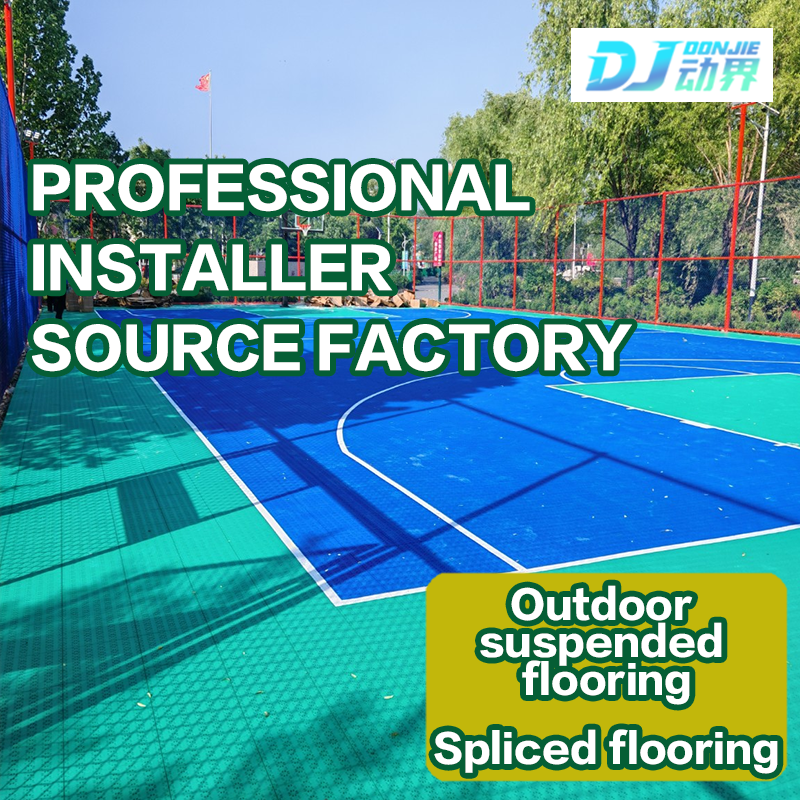
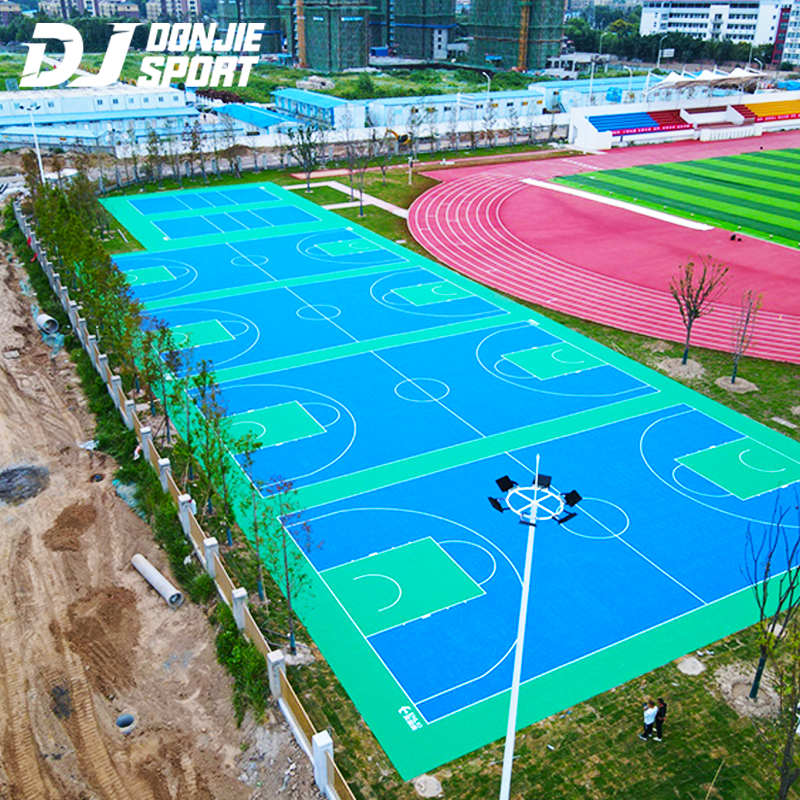
Interlocking tiles are a versatile option for outdoor basketball courts, especially for temporary setups or multi-purpose areas. These tiles are easy to install and maintain, and they offer the flexibility of being moved or replaced as needed. They also provide excellent traction, making them safe for play. However, they may not provide the same level of durability as rubber or polyurethane for permanent installations.
Durability and Weather Resistance
Outdoor basketball courts must be built to withstand the elements, from scorching sun to heavy rain and freezing temperatures. The durability of a flooring material is one of the primary factors to consider when making a choice.
Rubber flooring, for example, is highly resilient to weather conditions. It doesn’t crack under extreme temperatures and can handle rain without losing its grip or performance. On the other hand, acrylic flooring, although durable, may fade and crack after prolonged exposure to UV rays, which reduces its aesthetic appeal and functionality.
Materials like polyurethane are designed to be UV-resistant, ensuring that their color and integrity are preserved even under harsh sun. Interlocking tiles also perform well in outdoor environments, as their modular design can be replaced piece by piece if damage occurs, making maintenance easier in the long run.
Player Safety and Injury Prevention
The safety of players should always be a top priority when selecting outdoor basketball court flooring. A court that lacks sufficient shock absorption and traction can lead to serious injuries such as sprains, fractures, and ankle twists.
Rubber flooring is an excellent choice for injury prevention, as it provides the highest level of shock absorption, minimizing the risk of joint stress. Polyurethane flooring also offers superior protection by offering a cushioned surface that helps reduce the impact of falls and sudden movements. Acrylic flooring is less forgiving, and while it provides good traction, it does not offer the same level of shock absorption as rubber or polyurethane.
Interlocking tiles offer moderate protection and stability, making them suitable for recreational courts but less ideal for professional, high-intensity play.
Aesthetic Appeal and Court Design
The aesthetic appeal of an outdoor basketball court can have a significant impact on its use and community engagement. Courts with vibrant colors and customized designs attract players and spectators alike, creating a visually appealing environment for the sport.
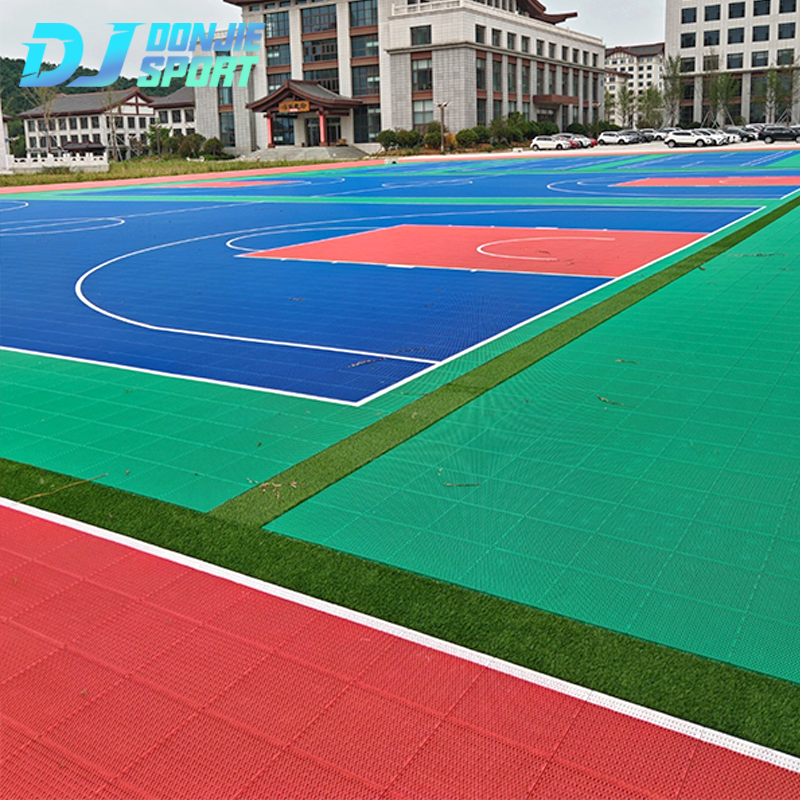
Acrylic and polyurethane floors are often used for their ability to offer a wide range of colors and finishes. They can be customized with logos, team names, or unique designs, which enhances the court’s visual appeal. Rubber flooring typically comes in a more limited range of colors but still offers a solid, professional look. Interlocking tiles also provide customization options, with various colors and patterns available to match a team’s branding or the aesthetic of the surrounding environment.
Maintenance and Longevity of Outdoor Basketball Flooring
While outdoor basketball courts are exposed to the elements, proper maintenance can significantly extend the life of the flooring. Some materials require more upkeep than others, and understanding these needs will help ensure that the court stays in top condition over the years.
Rubber and polyurethane flooring require minimal maintenance. Cleaning is as simple as sweeping and hosing down the court occasionally. Acrylic floors, however, may need periodic resurfacing to maintain their smooth finish. Interlocking tiles are low-maintenance as well, and individual tiles can be replaced if damaged, making repairs easy and cost-effective.
Choosing a material that is easy to maintain and resistant to the elements can save you time and money in the long run.
Cost Considerations for Outdoor Basketball Court Flooring
When building or renovating an outdoor basketball court, cost is always a consideration. The initial cost of the flooring material, as well as the long-term maintenance expenses, should be factored into the budget.
Rubber flooring is typically the most expensive upfront but offers excellent durability and performance, making it a worthwhile investment. Polyurethane flooring is also on the pricier side, but its performance and longevity justify the higher cost. Acrylic floors are relatively affordable, but their maintenance costs can add up over time. Interlocking tiles are an affordable and flexible option, ideal for temporary courts, though they may not offer the same long-term value as other materials.
Conclusion
In conclusion, understanding the advantages of various outdoor basketball court flooring materials can significantly impact the performance, safety, and longevity of your court. Whether you’re installing a new court or renovating an existing one, selecting the right flooring material is an essential step in ensuring that players have a high-quality, safe, and enjoyable experience. From rubber flooring offering excellent shock absorption to acrylic and polyurethane floors providing customizable options and high-performance qualities, each material has its unique benefits. By considering factors like durability, safety, aesthetics, and cost, facility owners can make a well-informed decision that meets their needs and budget.