
When building or upgrading an outdoor basketball court, selecting the right flooring is crucial to ensure both durability and player performance. While aesthetic considerations and budget often dominate the decision-making process, understanding the specific environmental conditions and how frequently the court will be used is just as important. The right outdoor flooring for basketball courts not only enhances the playability and safety of the surface but also extends the lifespan of the court itself. Whether you live in a region with extreme heat, freezing temperatures, or frequent rainfall, there is a perfect flooring solution that caters to your climate and usage needs. This article will guide you through the process of selecting the best outdoor flooring based on climate conditions and how your court will be used.
Understanding the Impact of Climate on Outdoor Flooring
Choosing outdoor flooring for basketball courts is more than just a design decision—it’s a matter of how well the flooring can withstand the demands of different climates. The local weather conditions will directly influence the longevity and performance of the court’s surface. Understanding these factors will help you select a material that can stand up to the elements.
Rain and Humidity
Regions with frequent rainfall or high humidity present unique challenges for outdoor basketball flooring. Moisture can cause some flooring materials to degrade faster, leading to cracking, warping, or the growth of mold and mildew. To ensure your court remains in top condition, opt for flooring materials that are water-resistant or designed with built-in drainage systems.
For example, porous tile systems or rubber flooring with drainage features are ideal choices for rainy regions. These materials allow water to drain through, preventing water buildup and reducing the risk of slipping hazards during wet conditions. Choosing water-resistant coatings for wood or synthetic floors can also help prevent swelling and deterioration.
Heat and Sun Exposure
In areas that experience prolonged exposure to the sun, UV rays can significantly damage outdoor basketball court flooring over time. This is particularly true for plastic and rubber materials, which can fade, become brittle, and lose their elasticity. The best flooring materials for hot climates are those designed to reflect sunlight and resist heat buildup, preventing surface cracks and ensuring that the court remains safe and playable.
Polyurethane coatings are highly effective in UV protection, maintaining both color and integrity despite intense sun exposure. Additionally, interlocking sports flooring tiles provide flexibility and heat resistance, making them a great option for areas with high temperatures.
Cold and Frost
For regions where winters are harsh and temperatures regularly dip below freezing, choosing flooring that can withstand the freeze-thaw cycle is essential. Some materials, like certain types of rubber, may crack or degrade when subjected to freezing conditions. Flooring options with high elasticity and temperature resistance, such as high-density polyethylene (HDPE) tiles, are less prone to damage in freezing weather.
It’s also important to consider how snow and ice will be handled. Opting for flooring that can be easily cleared of snow and ice without causing damage will ensure your court is ready to use even in the winter months.
Considering Court Usage and Player Needs
The level of court usage and the type of play will also determine the best flooring choice for your basketball court. Whether it’s a high-traffic, multi-purpose court or a dedicated basketball facility, the flooring should cater to the specific demands of your players.
High-Traffic vs. Low-Traffic Areas
If your court will see heavy foot traffic, such as from daily use or organized events, durability is paramount. Flooring materials that are resistant to wear and tear are essential. In contrast, a low-traffic court might not require the same level of durability, allowing you to opt for materials that are more affordable but still functional.
Rubber flooring is often a great choice for high-traffic areas as it provides a durable surface with shock absorption. Interlocking tiles are another option for high-use courts, as they are both durable and easy to replace if one tile becomes damaged.
Indoor vs. Outdoor Play
While indoor basketball courts generally require flooring that offers superior grip and bounce, outdoor courts must withstand a broader range of environmental factors. Outdoor courts must handle everything from UV rays to rain, so materials that are designed specifically for outdoor use, such as interlocking tiles or porous rubber systems, are preferable.
Additionally, outdoor flooring should offer both performance and comfort for players. Flooring systems that absorb impact without compromising traction help reduce the risk of injuries, particularly during aggressive play.
Key Flooring Materials for Outdoor Basketball Courts
Several types of flooring materials are well-suited to outdoor basketball courts, depending on the specific needs and climate conditions. Below are some of the most popular options:
Rubber Flooring
Rubber is one of the most versatile and durable materials for outdoor basketball courts. It is slip-resistant, shock-absorbing, and able to withstand a variety of weather conditions. Rubber flooring is especially ideal for hot climates, as it remains cool underfoot even in intense sun. Additionally, rubber’s elasticity offers a safe, comfortable playing surface that reduces the risk of injury.
However, rubber flooring can be more expensive to install and may require more maintenance than other materials.
Porous Tile Systems
Porous tile systems are perfect for wet climates. These tiles feature integrated drainage capabilities that allow water to flow through the surface rather than pooling on top. This not only helps prevent water accumulation but also minimizes the risk of slipping. The tiles are easy to install, highly durable, and come in various colors and designs.
These systems are particularly beneficial in regions with heavy rainfall, as they prevent water damage and keep the court dry and playable.
Polyurethane Coatings
Polyurethane coatings are commonly used as a protective layer for wood and other flooring materials. These coatings provide excellent UV resistance, helping to prevent fading and cracking from sun exposure. They are also resistant to chemicals and water, making them a great option for maintaining the quality of the court surface for extended periods.
Interlocking Sports Flooring Tiles
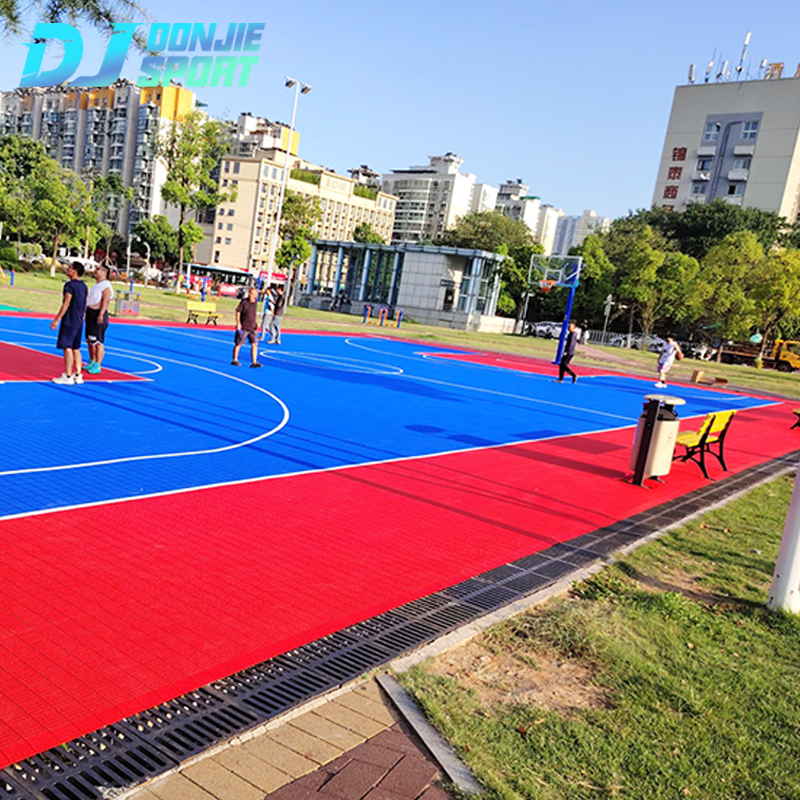
Interlocking tiles offer flexibility and easy installation. These tiles are made from durable, high-performance materials like PVC and are designed to withstand harsh weather conditions. They provide a cushioned, slip-resistant surface ideal for high-impact sports like basketball. Interlocking tiles are also low-maintenance and easy to replace if any part of the court becomes damaged.
Durability and Maintenance
Selecting a durable material is just one part of the equation—maintaining your outdoor basketball court is equally important. The climate of your region plays a significant role in the amount of maintenance required. Courts in areas with harsh winters, for example, will need to be regularly cleared of snow and ice, while those in hot climates may require frequent cleaning to prevent buildup of dirt and dust.
Choose flooring materials that are easy to maintain, and factor in the climate when planning your upkeep schedule. Some materials, like rubber, are more resistant to wear and can handle extreme weather conditions with minimal upkeep, while others may require more frequent inspections and repairs.
Budget Considerations
While it’s tempting to focus solely on the initial cost of outdoor flooring, it’s essential to consider the long-term savings that come with choosing high-quality materials. Durable flooring will last longer and require less maintenance, reducing the need for costly repairs and replacements down the line.
When planning your budget, keep in mind both the installation costs and the potential for long-term value. Some flooring materials might have a higher initial cost but save you money in the future due to their durability and low maintenance.
Conclusion
Choosing the right outdoor flooring for basketball courts is essential for ensuring that your court remains functional, safe, and aesthetically pleasing throughout the year. Climate and usage patterns should be primary factors when selecting flooring materials. Whether you’re looking for something that can handle rain, withstand the heat, or perform well in cold temperatures, there are flooring solutions that meet the demands of any environment.



