Choosing the right flooring for your pickleball court is one of the most critical decisions you’ll make when building or upgrading your facility. The type of flooring you select not only impacts the aesthetic appeal of the space but also plays a significant role in the performance of the game, the safety of the players, and the long-term maintenance costs.
This guide will provide a breakdown of the best pickleball flooring options available today, with a focus on their benefits, drawbacks, and suitability for different environments. Whether you’re setting up a court indoors or outdoors, understanding the materials at your disposal will help ensure that your flooring choice enhances both the gameplay and the longevity of the court.
Understanding Pickleball Court Flooring: What You Need to Know
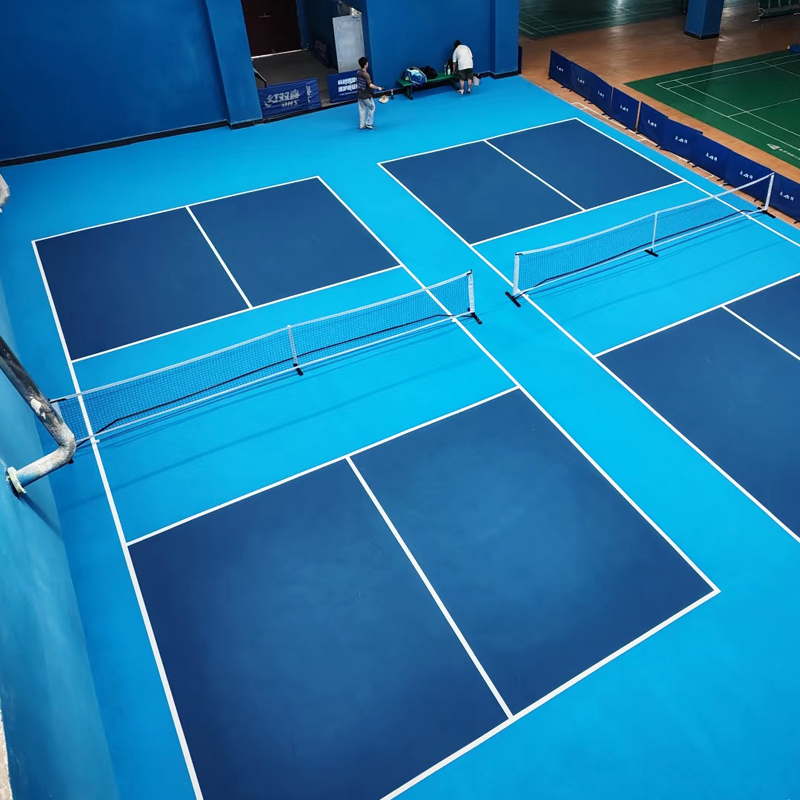
Pickleball, a fast-growing sport, requires a specific kind of flooring that can provide the right balance of traction, comfort, and durability. The unique nature of the game, which combines elements of tennis, badminton, and ping-pong, demands a court surface that can handle quick movements, lateral shifts, and sudden stops without compromising player safety.
Pickleball court flooring needs to be firm yet slightly forgiving, offering some cushioning to reduce the impact on joints. Additionally, the surface must provide adequate grip to prevent players from slipping while allowing for smooth and consistent ball bounce. A well-chosen floor will contribute significantly to both the speed and safety of the game.
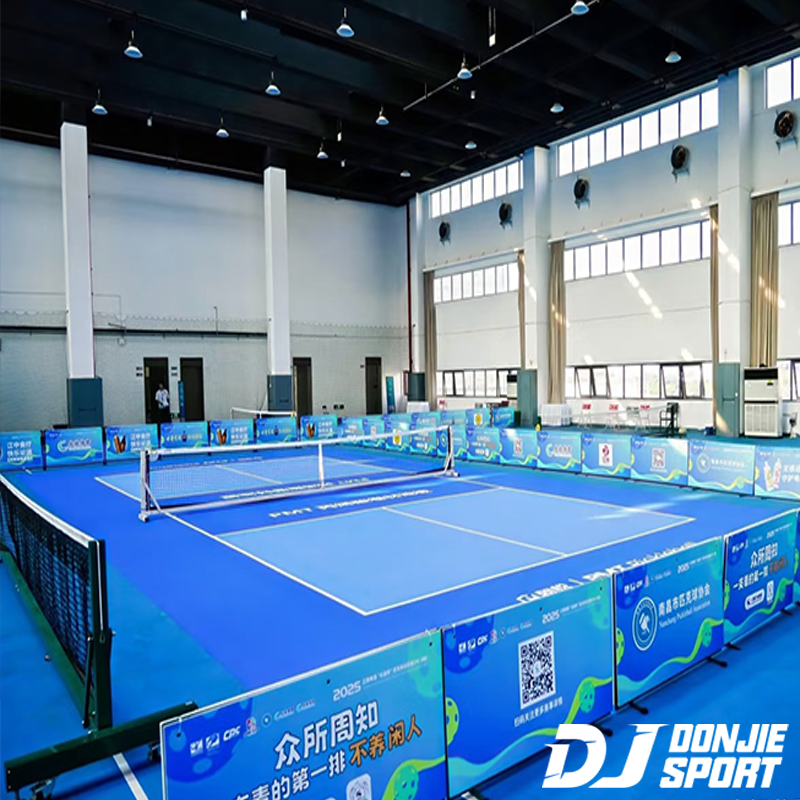
Key Factors to Consider When Choosing Pickleball Flooring
When deciding on the right flooring for your pickleball court, several key factors should be evaluated to ensure optimal performance and longevity:
Durability and Wear Resistance
Pickleball courts, especially in high-use areas, need floors that can withstand constant foot traffic and repeated ball impacts. Materials like rubber and vinyl are often favored for their resistance to wear and tear, offering long-lasting solutions for both indoor and outdoor courts.
Slip-Resistance and Traction
Traction is essential for preventing accidents. Flooring options must provide a surface that is not too slick but also not too abrasive, ensuring players can move freely without the risk of slipping. Rubber and wood floors typically offer the best combination of grip and smoothness.
Shock Absorption
Since pickleball involves frequent stops, pivots, and fast footwork, shock absorption is crucial to reduce the impact on players’ knees and ankles. Materials like rubber and cushioned vinyl excel in providing the necessary support and cushioning for players.
Maintenance Requirements and Costs
While some materials, such as wood, require regular maintenance (e.g., refinishing), others, like vinyl and rubber, are much easier to maintain. Understanding the long-term maintenance costs and effort required is crucial when considering your budget.
Indoor vs. Outdoor Flooring
Indoor courts typically use hardwood, vinyl, or rubber flooring, while outdoor courts require materials that can withstand weather changes. Consider your court’s location when choosing the flooring material to ensure it performs well in the specific environment.
Best Flooring Materials for Indoor Pickleball Courts
Wooden Flooring: Timeless Appeal and Excellent Traction
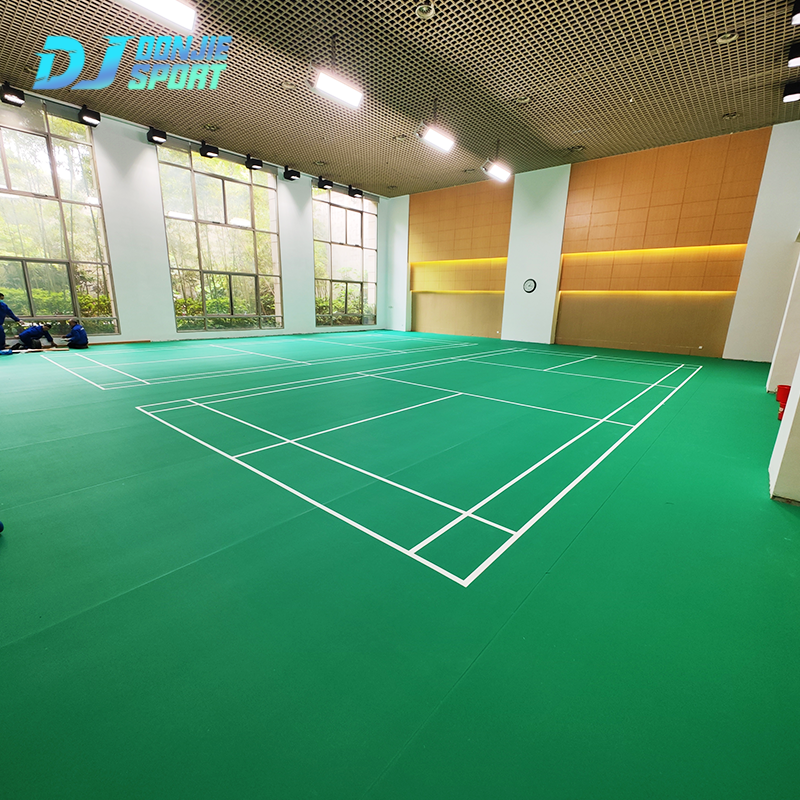
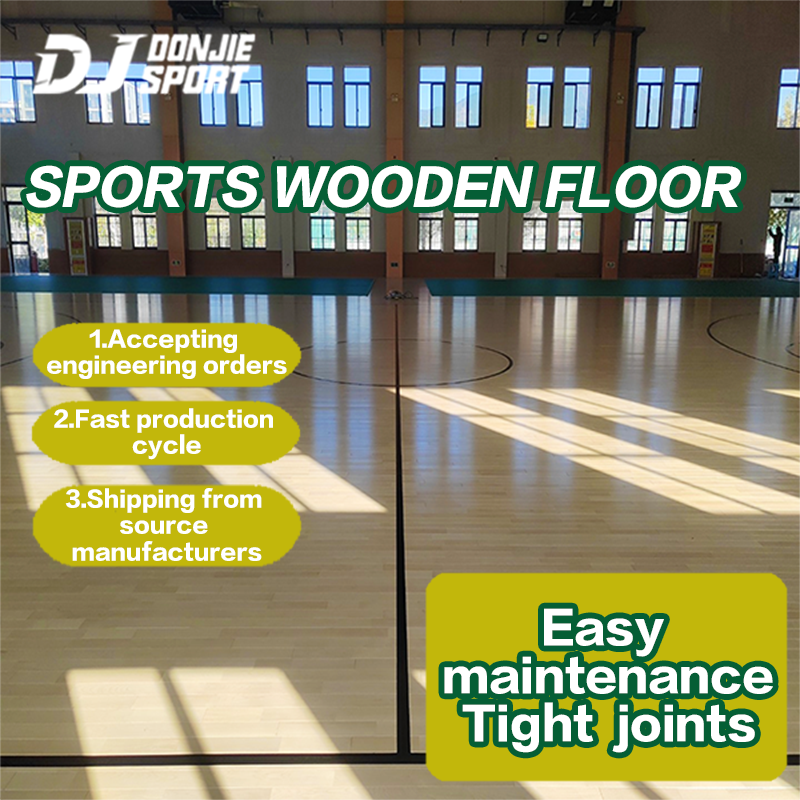
Wooden floors, particularly maple and hardwood, are commonly used for indoor pickleball courts due to their timeless aesthetic and excellent traction. The natural resilience of wood provides a great combination of durability and comfort. However, wood flooring requires regular care, including refinishing, to maintain its surface integrity and to protect it from scratches and wear.
Wood floors are preferred for professional-level courts and are often seen in gyms and community centers. They provide a premium feel, ensuring that players have a reliable and consistent experience.
Rubber Flooring: Durability and Shock Absorption
Rubber flooring is another excellent option for indoor pickleball courts, especially in facilities that see heavy foot traffic. Rubber tiles or rolls are durable, shock-absorbent, and offer superior slip resistance. These floors are known for their comfort, reducing joint strain during long games. They are also easy to clean and maintain, making them an ideal choice for multi-use spaces.
While rubber flooring tends to be more expensive than other options, its long lifespan and performance justify the initial investment. Plus, rubber is available in various colors and styles, which can complement the look of your indoor court.
Vinyl and PVC Flooring: Low-Maintenance Options
Vinyl and PVC flooring offer a budget-friendly alternative to wood and rubber. These materials are easy to install and maintain, making them ideal for schools, recreation centers, and other spaces where budget is a consideration. The smooth surface of vinyl provides consistent ball bounce, while its cushioned properties help with shock absorption.
The main drawback is that vinyl may not have the same aesthetic appeal as wood or rubber, and over time, it can become damaged if not properly maintained.
Top Flooring Options for Outdoor Pickleball Courts
Outdoor Tiles: Modular and Easy to Install
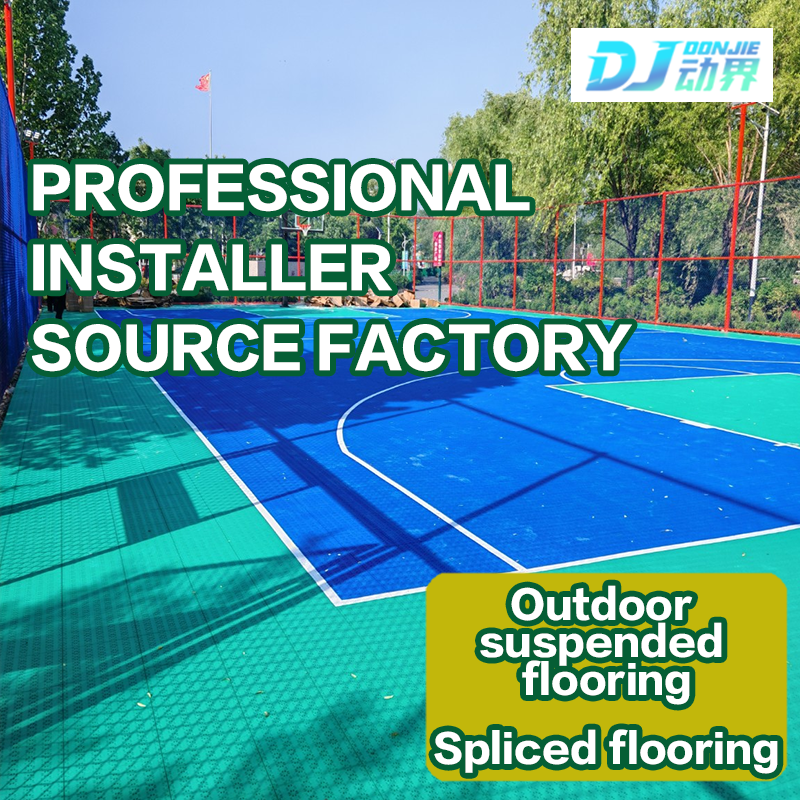
Outdoor pickleball tiles are a popular flooring option because they are modular, durable, and easy to install. These tiles are designed to be weather-resistant and provide a consistent playing surface regardless of the elements. Made from polypropylene, they are UV-resistant and can withstand rain, sun, and cold temperatures without deteriorating.
Outdoor tiles are often favored for their ease of maintenance and quick installation. The modular design also allows for repairs to be done quickly, as damaged tiles can be replaced without needing to replace the entire surface.
Asphalt and Concrete Coating: A Cost-Effective Solution
For recreational or community courts, asphalt or concrete is often used as the base material for outdoor courts. These surfaces are affordable and durable, offering a flat, stable surface for pickleball play. However, asphalt and concrete can be rough, so adding a coating or surface treatment is essential to enhance traction and improve playability.
Coatings, such as acrylic resurfacing, can provide the necessary cushioning and smoothness while protecting the court from weather elements. These treatments are relatively easy to apply and maintain, making them a popular choice for budget-conscious facilities.
Rubber Flooring for Outdoor Courts: Durability and Protection
Rubber flooring for outdoor pickleball courts combines durability with comfort, offering protection against weathering and UV damage. Rubber tiles designed for outdoor use provide excellent shock absorption and traction, ensuring a safe and comfortable playing experience.
While it may be more expensive than asphalt or concrete, rubber is a long-term investment that enhances player performance and provides superior comfort.
Comparison of Popular Pickleball Flooring Materials
When comparing various pickleball flooring materials, it’s important to consider several factors, such as cost, maintenance, durability, and player experience.
Cost vs. Performance
Wooden flooring, while offering premium performance, is typically the most expensive and requires more frequent maintenance. Rubber and vinyl floors, while more affordable, offer long-lasting durability and reduced maintenance costs. For outdoor courts, modular tiles and concrete coatings offer the best balance of affordability and performance.
Maintenance
Wood floors require regular refinishing to maintain their look and feel, while rubber and vinyl flooring require minimal upkeep. Outdoor surfaces like asphalt or concrete with coatings are easy to maintain, requiring occasional cleaning and resurfacing.
Durability and Lifespan
Wood floors, while offering a premium playing experience, may not last as long as rubber or vinyl floors. Rubber flooring, both for indoor and outdoor courts, tends to offer the best durability in terms of wear and tear, especially in high-traffic areas.
Player Experience
Ultimately, the best flooring choice for pickleball depends on the type of play and the overall experience you want to provide. Wooden floors are ideal for a premium indoor experience, while rubber and vinyl flooring excel in terms of comfort and performance.
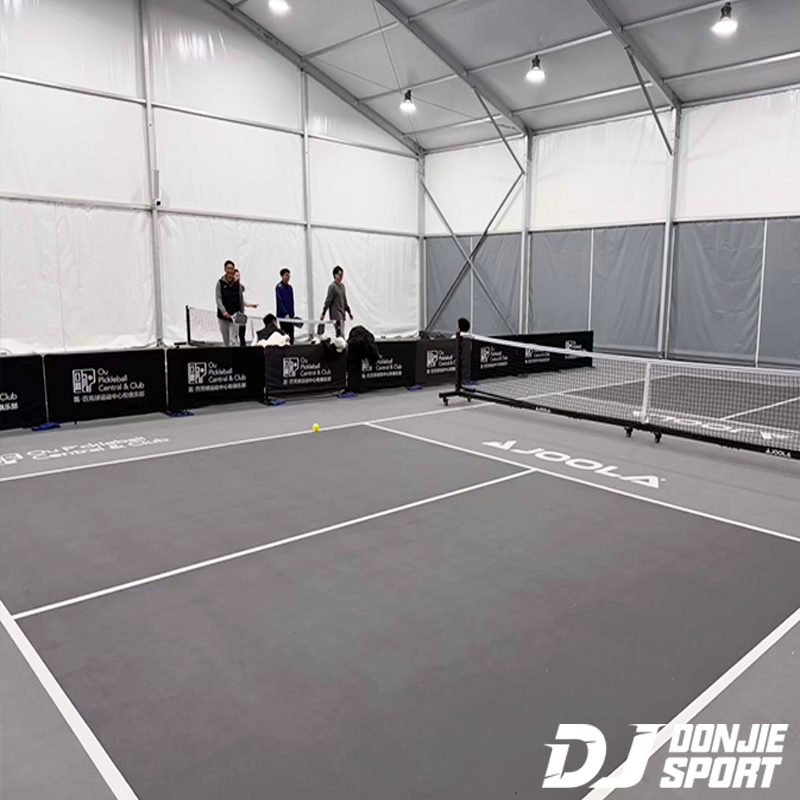
Choosing the Right Flooring for Your Court
When selecting the right flooring for your pickleball court, consider factors such as how often the court will be used, whether it’s indoor or outdoor, and your budget. For professional or high-traffic courts, investing in durable materials like rubber or wood is recommended. For recreational or budget-conscious courts, modular tiles or asphalt coatings may provide the best value.
Installation Tips for Pickleball Court Flooring
Each type of flooring has its own installation process. Wooden floors require professional installation and refinishing, while rubber and vinyl tiles can often be installed by the facility owner. For outdoor courts, modular tiles are the easiest to install, while concrete coatings require specialized expertise. Consider the time, budget, and skill level required when selecting a flooring option.
Conclusion
Selecting the right pickleball flooring is key to ensuring a safe, enjoyable, and long-lasting court. From wooden floors for indoor courts to modular outdoor tiles, the material you choose should align with your facility’s needs, budget, and aesthetic preferences.