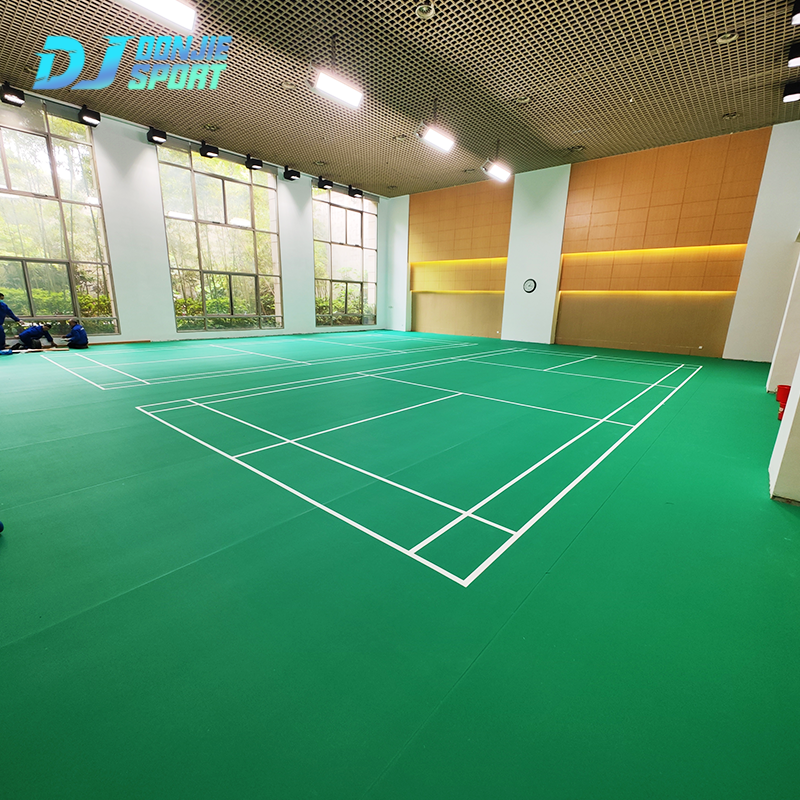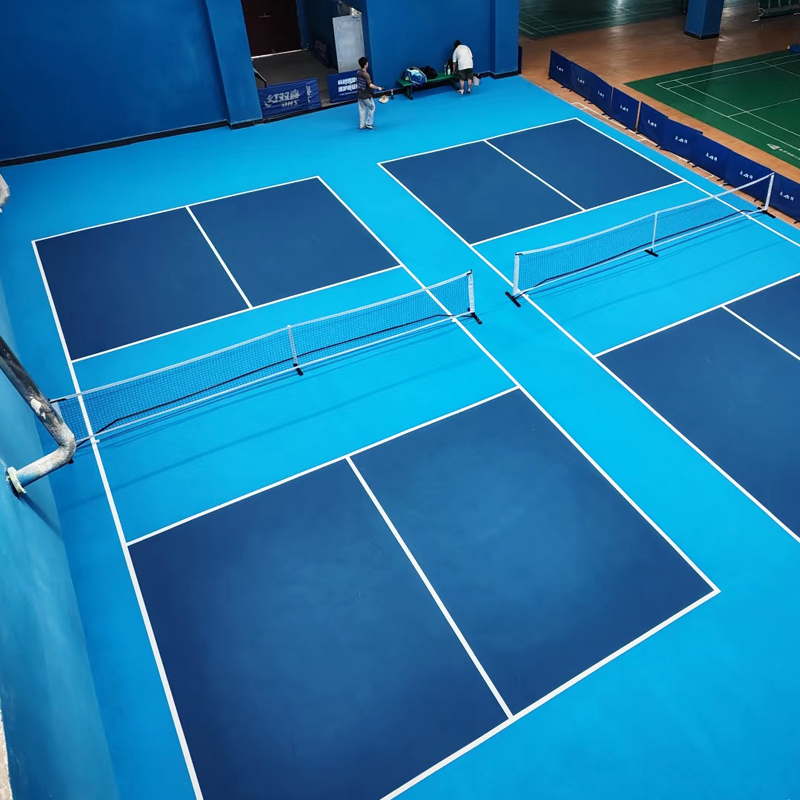
Pickleball has rapidly evolved from a casual recreational activity into a highly competitive sport played in schools, gyms, sports clubs, and professional facilities. As the sport grows, so does the demand for high-performance pickleball court flooring that supports player safety, comfort, and consistent gameplay. Among the most popular options, rubber flooring and PVC flooring stand out as two leading solutions. Understanding the strengths and limitations of each material is essential for selecting the best pickleball court flooring for your specific needs.
Understanding Pickleball Court Flooring Basics
What Defines High-Quality Pickleball Court Flooring
High-quality pickleball court flooring must deliver consistent ball bounce, reliable traction, shock absorption, and long-term durability. Unlike generic sports floors, pickleball court flooring is designed to handle rapid lateral movement, frequent starts and stops, and repeated impact from both players and equipment.
Performance Standards for Indoor and Outdoor Pickleball Courts
Pickleball court flooring must meet different performance standards depending on whether it is installed indoors or outdoors. Indoor courts prioritize comfort, noise reduction, and surface uniformity, while outdoor pickleball court flooring must resist UV exposure, temperature changes, and moisture without compromising playability.
Overview of Rubber Pickleball Court Flooring
What Is Rubber Flooring for Pickleball Courts
Rubber pickleball court flooring is made from natural or synthetic rubber compounds designed to provide exceptional elasticity and impact absorption. It is widely used in multi-sport facilities where player safety and durability are top priorities.
Common Types of Rubber Used in Pickleball Court Flooring
Rubber pickleball court flooring typically comes in rolled sheets, tiles, or poured-in-place systems. Recycled rubber options are also available, offering sustainability benefits without sacrificing performance.
Key Performance Characteristics of Rubber Pickleball Court Flooring
Rubber flooring excels in shock absorption and joint protection. Its naturally elastic structure helps reduce stress on knees and ankles, making it a popular choice for training facilities and recreational pickleball courts with frequent play.
Overview of PVC Pickleball Court Flooring
What Is PVC Pickleball Court Flooring
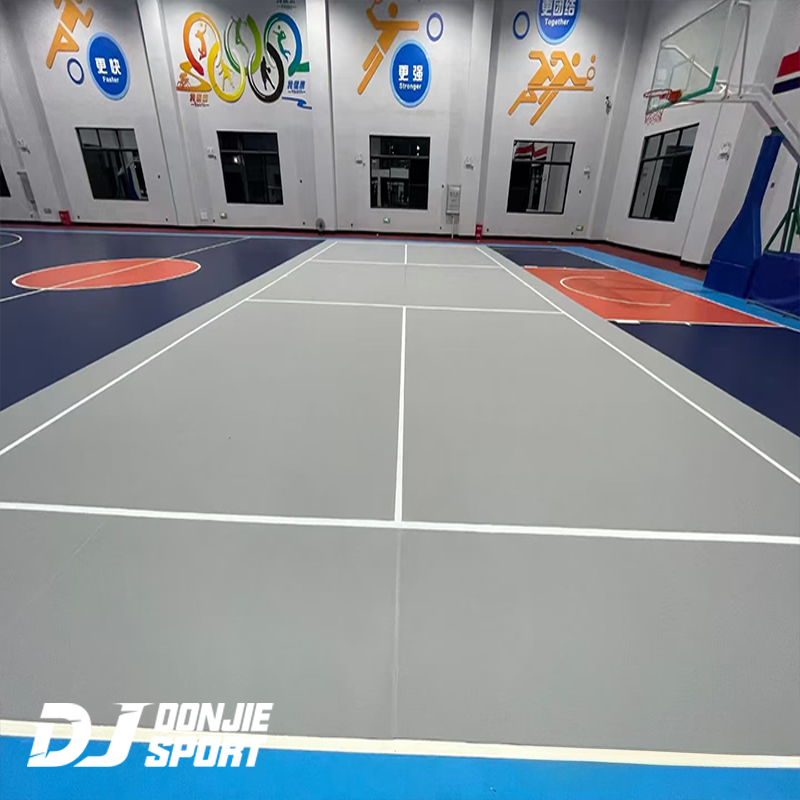
PVC pickleball court flooring is a synthetic vinyl-based sports surface engineered for precision sports performance. It is commonly used in professional and tournament-level pickleball courts due to its uniform surface and controlled ball response.
Structure and Composition of PVC Sports Flooring
PVC pickleball court flooring typically features multiple layers, including a wear-resistant top layer, a reinforced fiberglass layer for stability, and a cushioned backing for comfort. This layered design ensures consistent performance across the entire court.
Performance Characteristics of PVC Pickleball Court Flooring
PVC flooring offers excellent grip, predictable ball bounce, and visual clarity for court markings. These qualities make it ideal for competitive pickleball environments where accuracy and consistency are essential.
Rubber Flooring vs. PVC: Material Comparison for Pickleball Court Flooring
Shock Absorption and Player Comfort
Rubber pickleball court flooring provides superior shock absorption, reducing fatigue during long matches. PVC flooring also offers cushioning but focuses more on balance between comfort and performance, making it suitable for competitive play.
Ball Bounce Consistency and Game Performance
PVC pickleball court flooring delivers more consistent ball bounce due to its engineered surface structure. Rubber flooring may slightly absorb ball energy, which can affect bounce consistency in high-level matches.
Traction, Grip, and Slip Resistance
Both rubber and PVC pickleball court flooring provide excellent slip resistance. Rubber flooring offers natural grip even in high-moisture conditions, while PVC flooring is designed with textured surfaces that enhance traction during fast directional changes.
Noise Reduction and Acoustic Performance
Rubber flooring significantly reduces impact noise, making it ideal for indoor pickleball courts in residential or shared facilities. PVC flooring offers moderate sound control but prioritizes performance responsiveness.
Durability and Longevity of Pickleball Court Flooring
Wear Resistance in High-Traffic Pickleball Courts
PVC pickleball court flooring generally offers superior resistance to surface wear and scuffing, especially in competitive environments. Rubber flooring is extremely resilient but may show surface wear more quickly under intense play.
Performance Under Temperature and Climate Changes
Rubber flooring performs well across a wide temperature range, while PVC pickleball court flooring requires climate-controlled environments for optimal longevity, particularly indoors.
Indoor vs. Outdoor Durability Considerations
For outdoor pickleball courts, specialized rubber systems can outperform standard PVC flooring in weather resistance. Indoors, PVC pickleball court flooring often delivers longer service life with proper maintenance.
Installation and Maintenance Requirements
Installation Process for Rubber Pickleball Court Flooring
Rubber pickleball court flooring can be installed using tiles or rolls, often allowing for faster installation and easier replacement of damaged sections.
Installation Process for PVC Pickleball Court Flooring
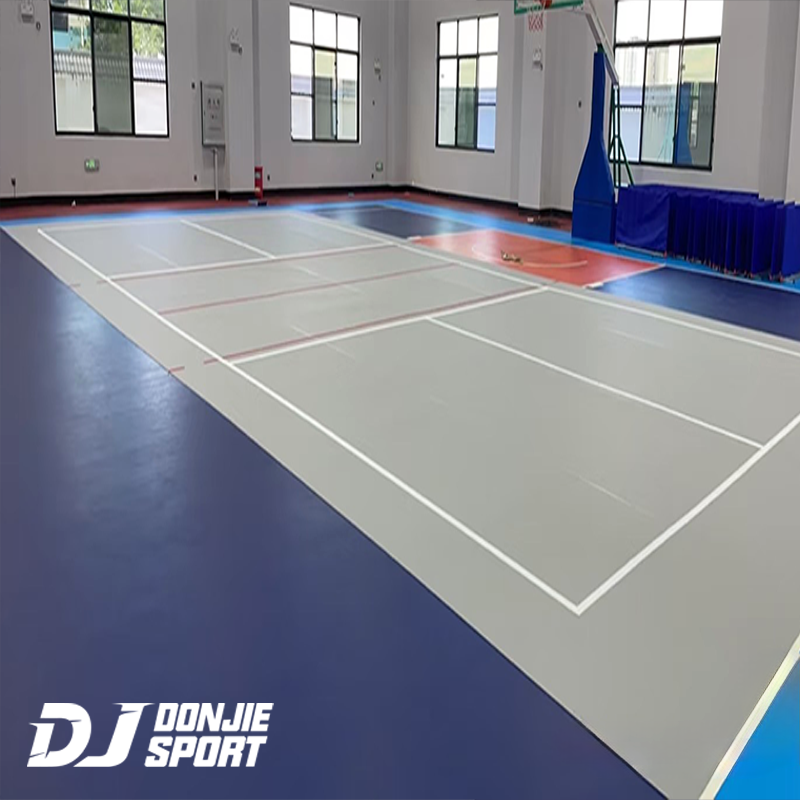
PVC flooring typically requires professional installation to ensure proper alignment, subfloor preparation, and seam welding for consistent performance.
Maintenance Needs and Long-Term Care
Rubber flooring requires minimal maintenance, mainly routine cleaning. PVC pickleball court flooring benefits from regular cleaning and periodic surface treatments to maintain appearance and performance.
Cost Comparison: Rubber vs. PVC Pickleball Court Flooring
Initial Investment and Material Costs
Rubber pickleball court flooring usually has a lower upfront cost, especially for recreational courts. PVC flooring tends to require higher initial investment due to material quality and installation requirements.
Maintenance Costs Over Time
Rubber flooring offers lower ongoing maintenance costs. PVC pickleball court flooring may incur higher long-term costs but provides superior performance stability.
Long-Term Value for Commercial and Residential Courts
PVC pickleball court flooring often delivers greater long-term value for professional and commercial facilities, while rubber flooring is cost-effective for schools and community courts.
Safety and Injury Prevention in Pickleball Court Flooring
Impact Protection and Joint Support
Rubber flooring excels in impact protection, reducing injury risk for players of all ages. PVC flooring balances cushioning with performance responsiveness.
Slip Resistance and Fall Prevention
Both pickleball court flooring options meet safety standards for slip resistance, making them suitable for high-movement sports environments.
Compliance With Sports Flooring Safety Standards
High-quality rubber and PVC pickleball court flooring systems comply with international sports flooring safety and performance standards when properly installed.
Environmental and Sustainability Factors
Recyclability and Eco-Friendly Rubber Flooring Options
Rubber pickleball court flooring often incorporates recycled materials, making it a more environmentally friendly option.
Environmental Impact of PVC Pickleball Court Flooring
Modern PVC flooring manufacturers are improving sustainability through low-emission production and recyclable materials, though environmental impact remains a consideration.
Best Applications for Each Pickleball Court Flooring Type
When Rubber Flooring Is the Best Choice
Rubber pickleball court flooring is ideal for recreational facilities, training centers, multi-purpose gyms, and locations where noise reduction and comfort are priorities.
When PVC Flooring Delivers Better Results
PVC pickleball court flooring is best suited for competitive indoor courts, professional venues, and facilities focused on consistent game performance.
How to Choose the Right Pickleball Court Flooring for Your Facility
Player Level and Frequency of Use
High-level competition benefits from PVC pickleball court flooring, while frequent recreational play favors rubber flooring.
Indoor vs. Outdoor Court Requirements
Indoor courts typically perform better with PVC flooring, while outdoor or semi-outdoor courts may benefit from rubber-based systems.
Budget, Performance, and Maintenance Priorities
Balancing budget, desired performance level, and maintenance capacity will guide the best pickleball court flooring choice.
Final Verdict: Rubber Flooring vs. PVC for Pickleball Court Flooring
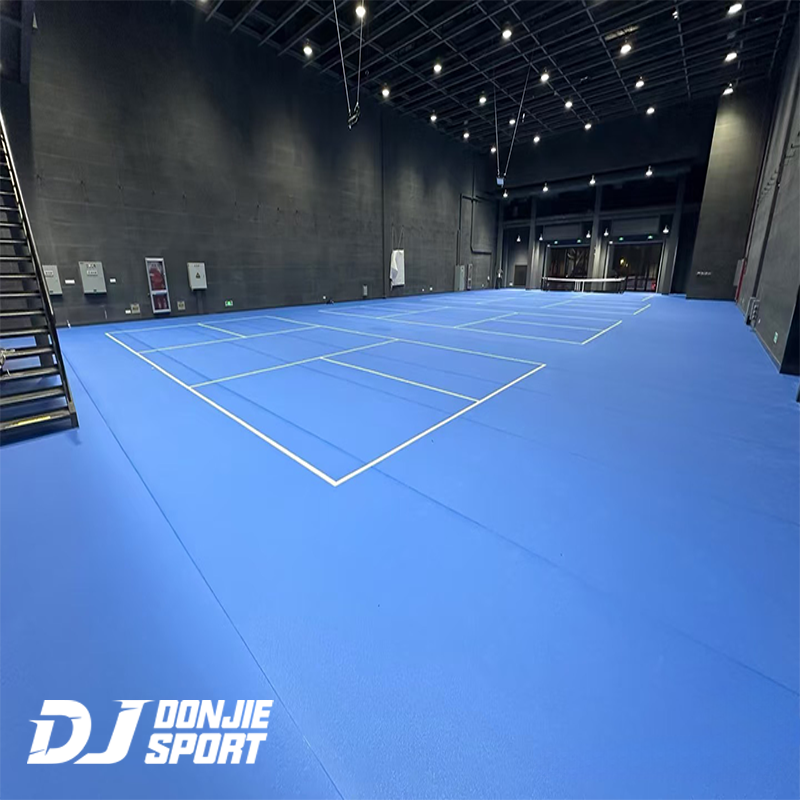
Both rubber flooring and PVC flooring offer distinct advantages for pickleball court flooring. Rubber flooring prioritizes comfort, safety, and versatility, while PVC flooring excels in precision, consistency, and professional-level performance. The best choice ultimately depends on your facility’s usage, player expectations, and long-term goals.