Building a high-quality pickleball ground starts with selecting the right pickleball court flooring and understanding the complete construction process. Whether for recreational use or professional tournaments, the surface you choose directly impacts gameplay, safety, and long-term maintenance. A well-designed pickleball court flooring system ensures consistent ball bounce, optimal traction, and durability under frequent use.
Building a sports facility is an investment in health, community, and athletic development. Whether you are a school administrator, a sports club manager, or a private developer, understanding the anatomy of a top-tier pickleball ground is essential. It is not just about drawing lines on a flat surface; it is about creating an ecosystem where players can dive without fear of injury and where the ball bounces consistently every single time.
At DJsportfloor, we understand that the surface defines the game. As a premier manufacturer of PVC sports flooring materials, we have seen how the right surface transforms a simple patch of land into a world-class arena. In this comprehensive guide, we will walk you through every aspect of creating a pickleball ground, from understanding the critical dimensions to choosing the materials that will ensure your court lasts for years.
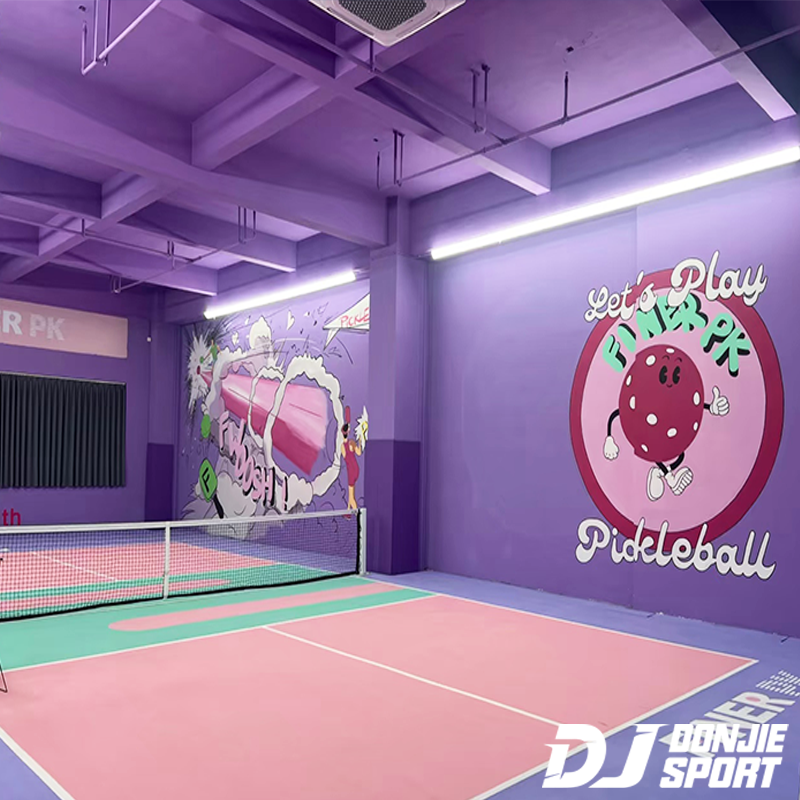
Understanding the Standard Dimensions and Layout of a Pickleball Ground
First up, let’s have a look at the practical side of building a pickleball court. The first thing you’re going to need is the space to put it.
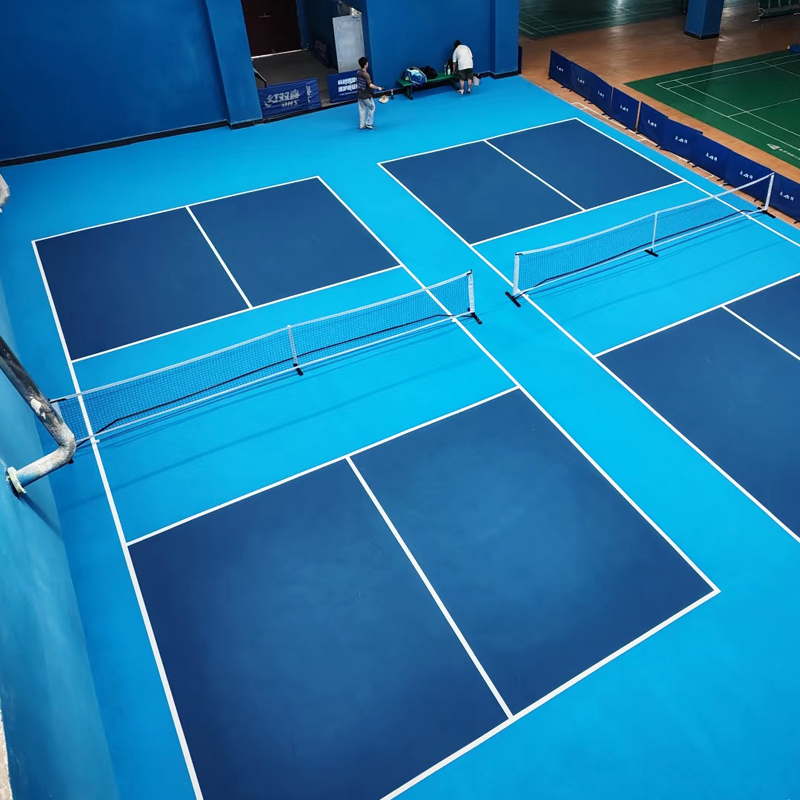
Before installing pickleball court flooring, it is essential to follow official court dimensions. A standard pickleball court measures 20 feet by 44 feet for both singles and doubles play. Adequate surrounding space is also necessary to ensure player safety. Proper layout planning ensures that the pickleball court flooring performs as intended without spatial limitations.
The USA Pickleball rulebook states that players should consider the minimum pickleball total play area to be 30′ by 60′ (9.14m by 18.29m), but that a 10-foot surrounding margin is ideal. That would make the preferred total playing surface dimensions 40′ x 64′ (12.9m x 19.51m).
Ideally, your court will run from north to south, to optimize the direction of the sun. This way, the sun will be coming side-on, rather than in the eyes of the players. Depending on the layout of your yard, this may not be a problem.
Common types of materials for pickleball courts include:
Concrete: This material offers exceptional durability and value. Concrete can provide an excellent slope for drainage and resist cracking. This material can create an even and uniform playing surface while requiring less maintenance to remain in excellent condition.
Asphalt: Asphalt is a great option for businesses looking to save on initial costs. However, this material can require more upkeep than other options, creating a larger total over the long run. Cracking can occur without proper maintenance, but consistent surface treatments can maximize the life span.
Clay: Many outdoor courts utilize clay, and your existing tennis courts could already be equipped with this material. Clay can keep the court cooler during the day for a more enjoyable experience during the game. Clay can also slow ball speed, allowing teams to enjoy more volleys for longer games. However, natural occurrences like wind and rain can cause the clay to erode.
Snap-together plastic: You can apply this material over existing concrete or asphalt. This is an excellent option for businesses that want to prevent permanent alterations on the court. Companies looking to use the same court for multiple sports can rely on snap-together plastic to create an enjoyable space without eliminating other play options.
Grass: Synthetic and natural grass options are another option for pickleball courts. Grass options can be more comfortable for players and offer a softer ground. Businesses that want a temporary pickleball court or a quick solution ready to play can use their natural grass for summer courts. This option offers minimal maintenance, although you will need to use another material to mark the sidelines and boundaries. You will need to ensure the court lines are vibrant and straight, which will likely require frequent visits to the court.
PVC flooring: PVC pickleball court flooring stands out because of its unique combination of flexibility and strength. Unlike traditional hard surfaces, PVC materials provide a slightly cushioned feel that reduces impact on joints while maintaining excellent ball response. This makes it especially suitable for players who engage in long sessions or competitive matches. Additionally, PVC pickleball court flooring is known for its durability and resistance to wear, ensuring consistent performance over time.
Pick Out Perimeter Fencing
Fencing is crucial for multi-court pickleball as it contains the ball within the playing area and provides security for players and spectators. There are a variety of several types of pickleball court fencing to choose from, but fences made from wire are the most common as they allow players and spectators to see into and out of the court. They also allow light to pass through easily. A contractor who is familiar with building pickleball courts can help you choose and install pickleball fencing. Just be sure it is covered with rust-resistant materials to keep players safe from injury.
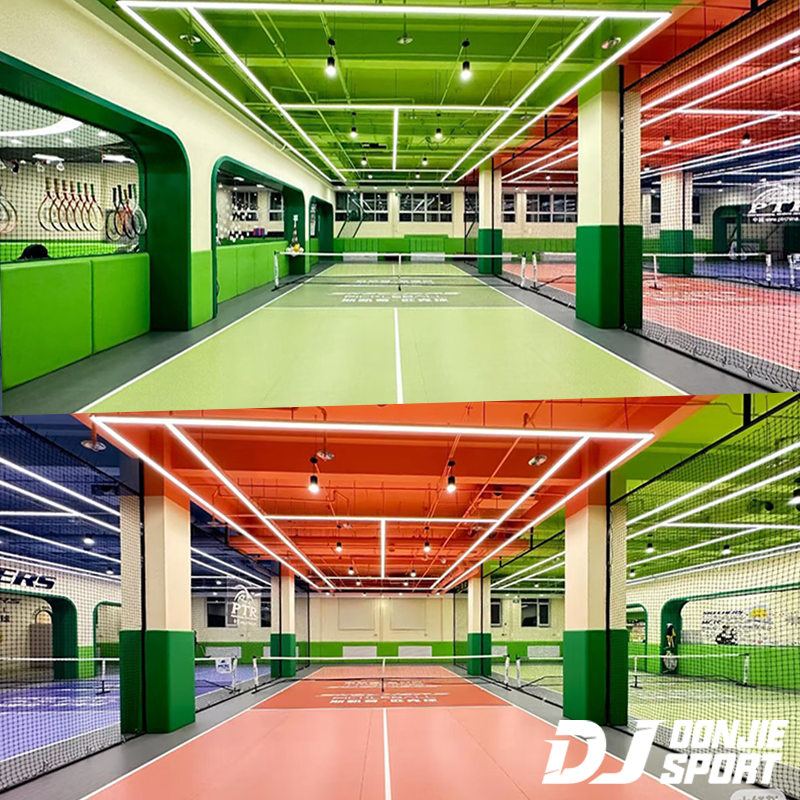
Step-by-Step Installation Process of PVC Pickleball Court Flooring
Surface Preparation
The subfloor must be clean, dry, and level before installation begins. Remove all dust, debris, grease, or loose materials. Any cracks or uneven areas should be repaired using appropriate leveling compounds. A smooth surface is essential for proper adhesion and long-term stability of PVC sports flooring.
Moisture Testing
Check the moisture content of the subfloor to ensure it meets the required standards. Excess moisture can cause the PVC sports flooring to warp or lose adhesion over time. If necessary, install a moisture barrier to prevent future issues.
Layout Planning
Plan the layout of the PVC sports flooring before installation. Measure the area carefully and mark guidelines to ensure accurate placement. This step helps minimize material waste and ensures a professional finish.
Applying Adhesive
Spread the adhesive evenly across the subfloor using a notched trowel. Make sure the adhesive layer is consistent to avoid air pockets or uneven bonding.
Laying the PVC Flooring
Carefully roll out or place the PVC sports flooring onto the adhesive. Press the material firmly to ensure full contact with the subfloor. Use rollers to remove trapped air and improve adhesion.
Seam Cutting and Welding
Trim the edges precisely to fit the area. For roll-type PVC flooring, seams should be heat welded to create a seamless and durable surface. This step is crucial for maintaining hygiene and structural integrity.
Rolling and Pressing
Use a heavy roller to press the entire surface after installation. This ensures the flooring is firmly bonded and eliminates any remaining air bubbles.
Line Marking
Mark court lines according to the required sports specifications. Use specialized paint or tape that adheres well to PVC sports flooring and remains visible over time.
Daily Cleaning of PVC Sports Flooring
Regular cleaning is the foundation of good maintenance. Dust, dirt, and debris can accumulate on the surface and affect traction. Use a soft broom, microfiber mop, or vacuum cleaner to remove loose particles daily. This prevents scratches and keeps the PVC sports flooring in optimal playing condition.
Weekly Deep Cleaning Procedures
In addition to daily cleaning, a more thorough cleaning should be performed weekly. Use a neutral pH cleaner diluted with water and mop the surface evenly. Avoid excessive water, as standing moisture can damage the adhesive layer beneath the PVC sports flooring. After cleaning, allow the surface to dry completely before use.
Stain Removal and Spot Cleaning
Spills and stains should be addressed immediately to prevent permanent marks. Use a soft cloth with a mild cleaning solution to gently remove stains. For tougher spots, specialized PVC floor cleaners can be used. Avoid abrasive tools or harsh chemicals, as they may damage the surface texture of the PVC sports flooring.
Preventive Maintenance Measures
Preventive care plays a significant role in extending the life of PVC sports flooring. Place entrance mats at doorways to reduce the amount of dirt brought onto the court. Encourage players to wear proper non-marking sports shoes to avoid scuffs and surface damage. Heavy equipment should not be dragged across the floor, as it can cause scratches or dents.
Periodic Inspection and Repairs
Regularly inspect the PVC sports flooring for signs of wear, loose edges, or seam damage. Early detection allows for quick repairs, preventing minor issues from becoming major problems. Seam welding areas should be checked to ensure they remain intact and secure.
Moisture Control and Environmental Conditions
Maintaining stable indoor conditions is crucial for PVC sports flooring. Excess humidity or temperature fluctuations can affect the material and adhesive. Keep the environment well-ventilated and maintain consistent temperature and humidity levels.
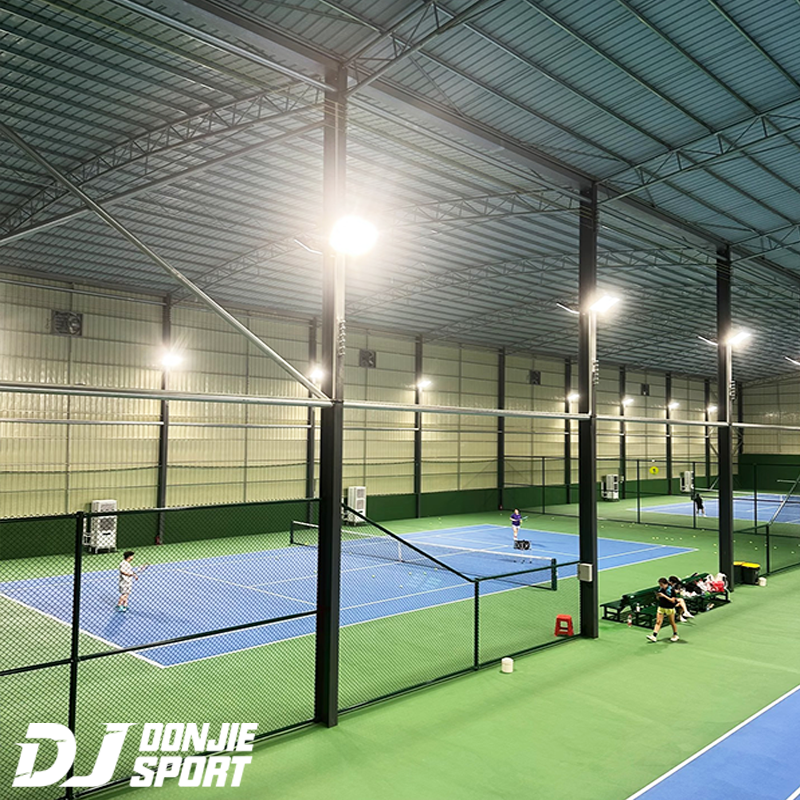
Creating a Professional Pickleball Ground with the Right Flooring
Building a top pickleball ground requires careful planning, quality materials, and expert installation. By focusing on premium pickleball court flooring, you can create a surface that enhances performance, ensures safety, and stands the test of time.
The answer to “How To Make A Top Pickleball Ground?” goes beyond digging a hole or pouring concrete—you choose a surfacing system that respects the athlete by offering grip without abrasion, cushion without softness, and durability without harshness.
At DJsportfloor, our years of expertise in manufacturing synthetic acrylic sports flooring materials position us as your ideal partner in this journey. Whether you are building a community court or a professional arena, the quality of the materials you choose today will define the game for years to come.